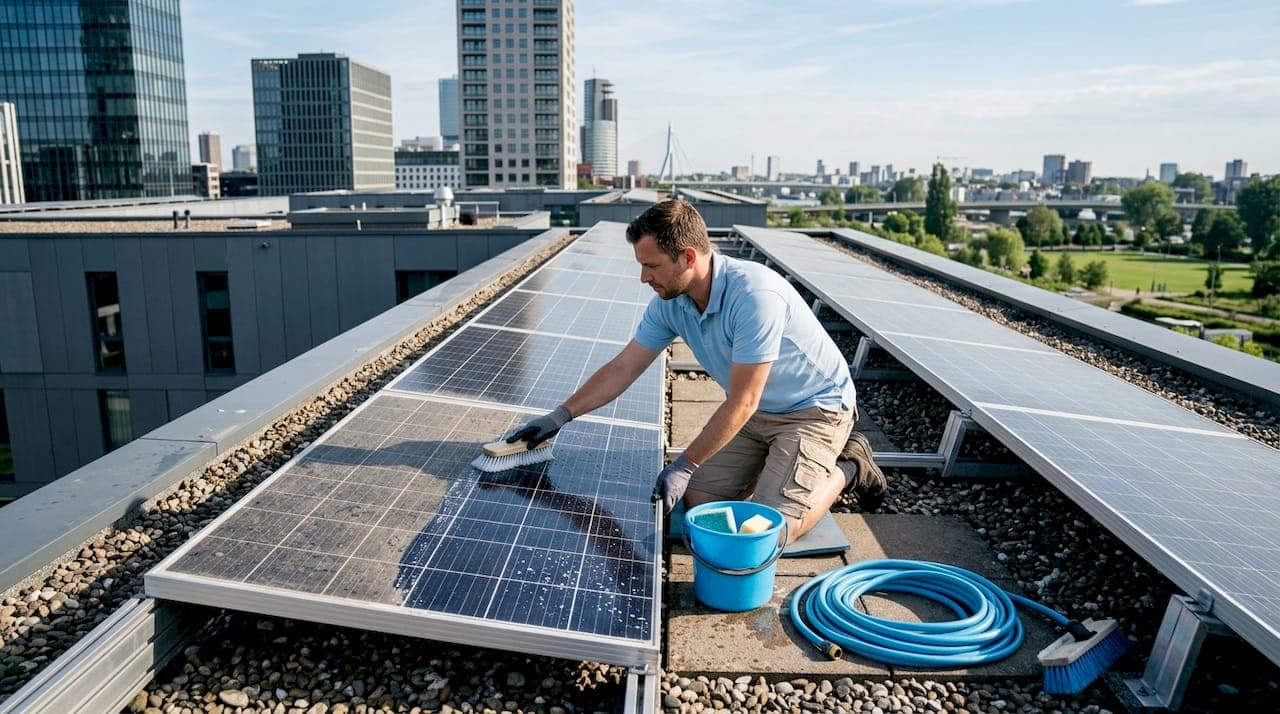
Cleaning your solar panels sounds simple. Grab a hose, maybe a brush, and you're done. But the most common solar panel cleaning mistakes are not obvious, and they quietly chip away at your system's output, sometimes permanently. Dirty panels can lose 5% to 30% of their energy production depending on soiling severity. The gap between cleaning panels correctly and cleaning them carelessly is the difference between protecting a long-term investment and slowly destroying it.
Table of Contents
- Key takeaways
- 1. Using the wrong cleaning tools and materials
- 2. Cleaning at the wrong time of day
- 3. Walking or standing on your panels
- 4. Ignoring performance dips and skipping regular monitoring
- 5. Comparing the most common cleaning mistakes at a glance
- What I have learned from years of watching these mistakes repeat
- Protect your panels with professional cleaning from Solaralchemist
- FAQ
Key takeaways
| Point | Details |
|---|---|
| Wrong tools cause permanent damage | Abrasive brushes and harsh chemicals scratch coatings and corrode frames in ways that cannot be reversed. |
| Timing matters more than most owners realize | Cleaning hot panels with cold water causes thermal shock that can crack tempered glass. |
| Never walk on your panels | Body weight creates micro-cracks that reduce output and can void your manufacturer warranty. |
| Rain is not a cleaning substitute | Rain leaves mineral deposits behind and cannot remove sticky residues like bird droppings or pollen. |
| Monitoring output guides cleaning decisions | A drop in energy production is often the earliest and most reliable signal that your panels need attention. |
1. Using the wrong cleaning tools and materials
This is where most DIY solar panel cleaning errors begin. The instinct to grab whatever scrubbing tool is under the sink makes sense for most household chores. Panels are different.
The anti-reflective coating on solar panels is a porous silica layer that sits on the glass surface to maximize light absorption. It is extremely thin and permanently damaged by abrasive contact. Steel wool, rough sponges, stiff-bristle brushes, and even some common household scrub pads will scratch this coating on the first pass. Once scratched, that coating does not recover, and your panel's efficiency drops for the life of the system.
Harsh chemicals are equally destructive. Ammonia-based cleaners and bleach corrode aluminum frames and degrade the encapsulant material that seals your cells. The damage from a single chemical cleaning may not show up immediately, but it accelerates long-term degradation.
The tools that actually work are straightforward:
- Soft microfiber cloths or a gentle squeegee
- A soft-bristle brush designed for solar panels
- Deionized or distilled water (tap water leaves mineral residue)
- A low-pressure garden hose for rinsing
Pro Tip: Deionized water is the gold standard for solar panel cleaning because it leaves zero mineral deposits behind. Solaralchemist uses professional-grade deionized water systems for exactly this reason.
High-pressure washers deserve a special warning. Pressure washers force water behind panel seals, causing moisture ingress and delamination. This is one of the fastest ways to void your warranty and cause irreversible internal damage, all while thinking you are doing a thorough job.
2. Cleaning at the wrong time of day
Most people clean their panels when it is convenient. That usually means midday on a sunny weekend. That is one of the worst times to do it.
When panels sit in direct sunlight for hours, their surface temperature can exceed 104°F (40°C). Spraying cold water on hot glass creates thermal shock comparable to pouring ice water into a hot glass. The tempered glass can crack. The thermal expansion and contraction stress the entire panel structure, and repeated exposure to this kind of stress compounds over time even if visible cracking does not happen immediately.
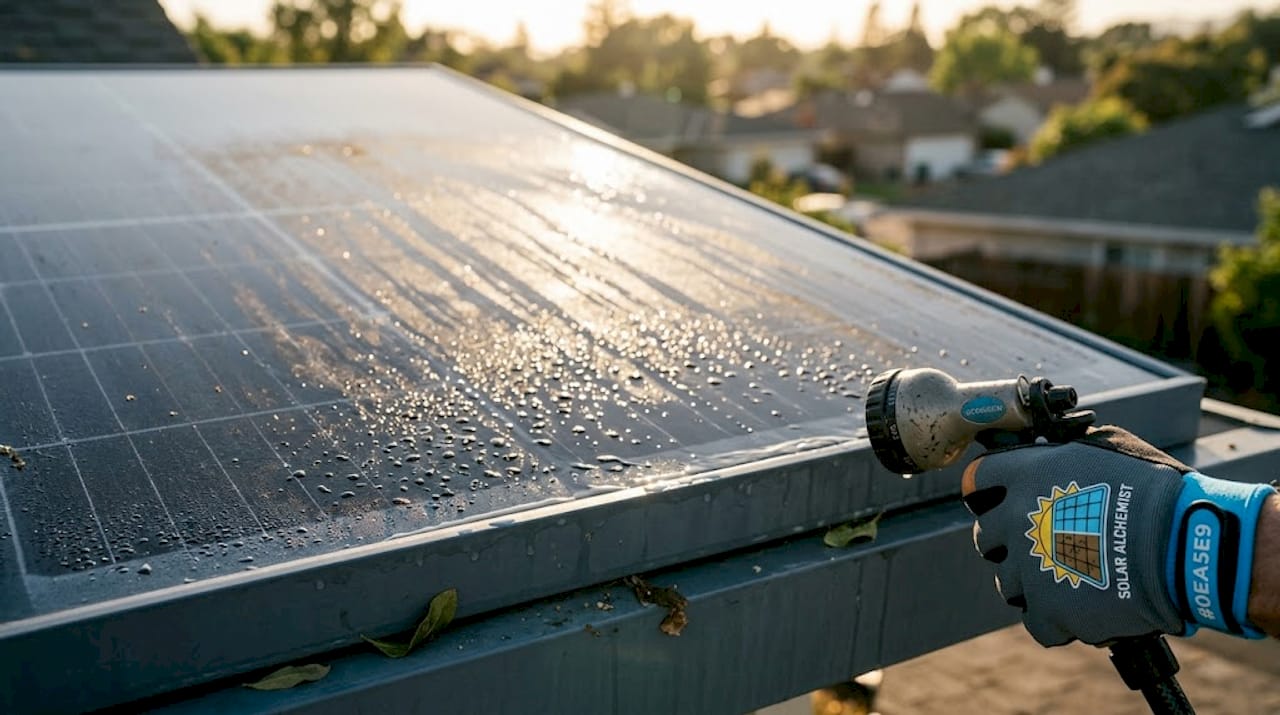
Ideal cleaning times are early morning before the panels heat up, late evening after they cool down, or on overcast days when surface temperatures stay manageable. These windows also prevent the water from drying too fast and leaving streaks that reduce light transmission.
The practical impact is significant. Panels cleaned at the wrong time of day often end up with streaks, water spots, and in worst cases, stress fractures that are invisible to the naked eye but show up as reduced output over months.
3. Walking or standing on your panels
Some rooftop installations make it tempting to step onto panels for better reach. Do not do it. Not even once.
Solar panel glass is designed to withstand hail and environmental loads, but it is not rated for concentrated point pressure from a person's weight. Walking on panels causes micro-cracks in the silicon cells beneath the glass. These micro-cracks are invisible on the surface but create hot spots inside the panel where current flow is disrupted.
Hot spots are not just an efficiency problem. They concentrate heat in specific cell areas, and over time they can escalate to fire risks. The output loss from micro-cracks is cumulative and permanent. A panel that looks physically intact can be producing 15% to 20% less power than it should because of invisible internal damage.
The warranty consequences are equally serious. Many manufacturer warranties explicitly exclude damage from walking on panels. One misstep can cost you not just efficiency but your entire warranty coverage.
If you cannot safely reach your panels from a ladder without stepping on them, that is a clear signal to call a professional. No cleaning job is worth the output loss or the safety risk.
Safer access methods include extension-handle cleaning tools, water-fed poles, and working from a secured ladder positioned at the panel edge rather than on the panel surface.
4. Ignoring performance dips and skipping regular monitoring
One of the most overlooked solar panel upkeep mistakes is treating cleaning as a scheduled calendar event rather than a response to actual system data. Your inverter or monitoring app tells you exactly when output drops. Most owners ignore it.
Here is how to use your system data to guide cleaning decisions:
- Check your inverter's production data weekly or monthly and compare it to the same period in prior years.
- Note any gradual decline that cannot be explained by weather or seasonal changes.
- Inspect panels visually after heavy pollen seasons, dust storms, or extended dry periods.
- Pay attention to bird activity near your array. Bird droppings are highly acidic and block light more aggressively than dust.
- Schedule a cleaning whenever output drops more than 5% below your baseline without a weather-related explanation.
A common misconception is that rain handles the cleaning for you. Rain leaves mineral deposits and cannot remove sticky residues like pollen film or bird droppings. In areas like Madison, Wisconsin, where seasonal pollen is heavy and dry summers follow wet springs, rain-washed panels are rarely clean panels.
Pro Tip: If you notice a consistent output drop in the same season each year, that is your system telling you it needs a cleaning at that specific time. Build your cleaning schedule around that pattern, not around a generic quarterly calendar.
Regular inspection also catches physical damage early. A crack, a loose seal, or a buildup of debris in the frame channels can all be addressed before they become expensive repairs. Cleaning solar panels effectively means staying connected to your system's performance, not just its surface.
5. Comparing the most common cleaning mistakes at a glance
Understanding each mistake individually is useful. Seeing them side by side makes the stakes clearer.
| Mistake | Type of damage | Warranty risk | Energy loss potential | Ease of avoidance |
|---|---|---|---|---|
| Abrasive tools or harsh chemicals | Permanent coating and frame damage | High | 5% to 15% | Easy: use soft cloths and deionized water |
| Cleaning during peak heat hours | Glass cracking from thermal shock | Medium | Variable | Easy: clean in morning or evening |
| Walking on panels | Micro-cracks, hot spots, fire risk | High | 15% to 20% | Easy: use extension tools or hire a pro |
| Relying on rain for cleaning | Mineral deposits, residue buildup | Low | 5% to 30% over time | Easy: schedule regular manual cleaning |
| Using pressure washers | Seal damage, moisture ingress, delamination | High | Significant and irreversible | Easy: use low-pressure hose only |
The pattern across every row is consistent. Each of these mistakes in solar panel care is easy to avoid once you know what causes the damage. The problem is that most owners do not find out until the damage is already done. Cleaning that improves output by 5% to 12% compared to rain-washed panels is only possible when the cleaning itself does not introduce new problems.
The best practices for solar panel cleaning are not complicated. Soft tools, the right water, the right time of day, and a habit of monitoring your output. That combination protects your panels, your warranty, and your return on investment.
What I have learned from years of watching these mistakes repeat
I have seen every one of these mistakes in person, and the one that surprises homeowners most is always the pressure washer. People assume that more pressure means more clean. It does not. It means more damage, faster.
What I have found is that the simplest methods are the most neglected. Owners spend thousands on their solar systems and then clean them with a gas station squeegee and tap water. The warranty protection implications alone should change that behavior, but most people do not read their warranty documentation until something goes wrong.
My honest take is that DIY cleaning is fine for accessible, ground-mounted, or low-slope systems where you can work safely from the ground or a stable ladder. The moment you are stretching, stepping, or improvising your reach, the risk-to-reward ratio flips against you. A professional cleaning for a residential system costs a fraction of what a cracked panel or voided warranty costs to address.
The other thing I want to say plainly: small mistakes compound. One cleaning with a rough brush does not destroy a panel. Ten cleanings over five years with that same brush will. The damage is gradual and invisible until your monitoring data tells a story you cannot ignore.
— Marquis
Protect your panels with professional cleaning from Solaralchemist
Avoiding these mistakes on your own is absolutely possible. But if your system is roof-mounted, hard to reach, or overdue for a thorough cleaning, Solaralchemist is built for exactly this situation.
Solaralchemist serves Madison, Wisconsin and the surrounding Dane County area with professional-grade deionized water cleaning systems and manufacturer-compliant techniques that protect your panels and your warranty. Every cleaning follows the safe professional process that eliminates the risks covered in this article. Not sure if your panels need attention? Check out the 8 signs you need a cleaning to find out before your output takes a bigger hit. Your panels work hard. Make sure the way you clean them does not work against you.
FAQ
What are the most damaging solar panel cleaning mistakes?
Using pressure washers, abrasive scrubbing tools, and harsh chemicals cause the most severe and irreversible damage. These methods destroy coatings, compromise seals, and void manufacturer warranties in a single cleaning session.
Can I clean solar panels with tap water?
Tap water leaves mineral deposits on panel surfaces that reduce light transmission over time. Deionized or distilled water is the recommended choice because it evaporates without leaving residue.
Does rain keep solar panels clean enough?
No. Rain leaves mineral deposits and cannot remove sticky soiling like bird droppings or pollen film. Manual cleaning is necessary to maintain peak output.
When is the best time to clean solar panels?
Early morning or late evening on overcast days is ideal. Cleaning hot panels with cold water causes thermal shock that can crack the glass and stress internal components.
Will walking on my solar panels void the warranty?
Yes. Most manufacturer warranties exclude damage caused by walking on panels. Beyond the warranty risk, walking on panels creates micro-cracks that permanently reduce output and can create hot spots over time.
Recommended
- When to Clean Solar Panels | 8 Signs You Need a Cleaning | Solar Alchemist
- Solar Panel Cleaning Madison WI | Professional Solar Maintenance | Solar Alchemist
- Solar Panel Warranty Protection | Manufacturer Cleaning Guidelines | Solar Alchemist
- Solar Panel Cleaning Before & After Results | Our Work | Solar Alchemist