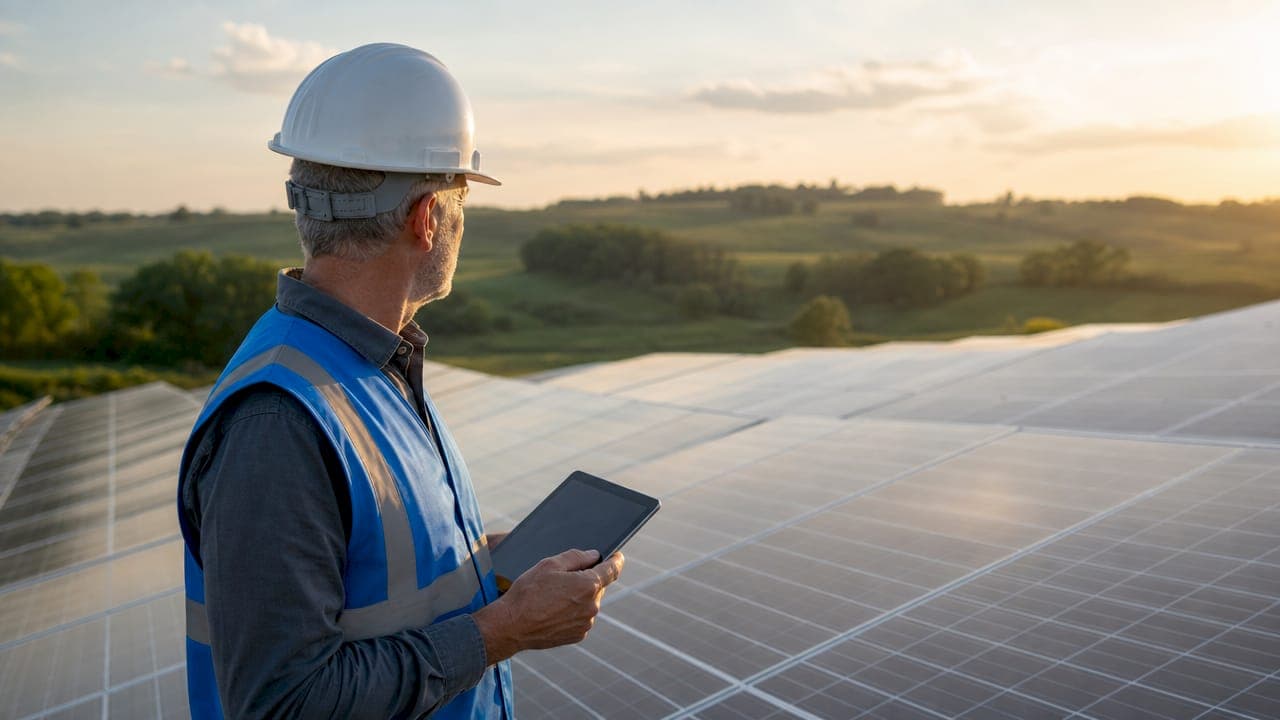
Solar energy production in Illinois is defined as the conversion of sunlight into usable electricity through photovoltaic (PV) panels, community solar arrays, and grid-connected systems supported by state incentive programs. The industry term is "solar photovoltaic generation," and understanding it is the first step toward making a sound investment decision. Illinois has grown into a Midwest solar leader, ranking 10th nationally for solar generation. The state's Illinois Shines program, net metering policies, and the Climate and Equitable Jobs Act (CEJA) have combined to make solar energy in Illinois one of the most financially supported renewable options in the region.
What is solar energy production in Illinois?
Solar energy production in Illinois relies primarily on photovoltaic technology. A PV panel contains silicon cells that absorb photons from sunlight and release electrons, creating direct current (DC) electricity. An inverter then converts that DC electricity into alternating current (AC), which powers homes, businesses, and feeds back into the grid.
Illinois solar production happens across three system types: residential rooftop installations, commercial ground-mount or rooftop arrays, and community solar projects. Community solar is particularly significant in Illinois because it lets renters, condo owners, and businesses subscribe to a shared solar farm without installing panels on their own property. Subscribers receive credits on their utility bills based on their share of the farm's output.
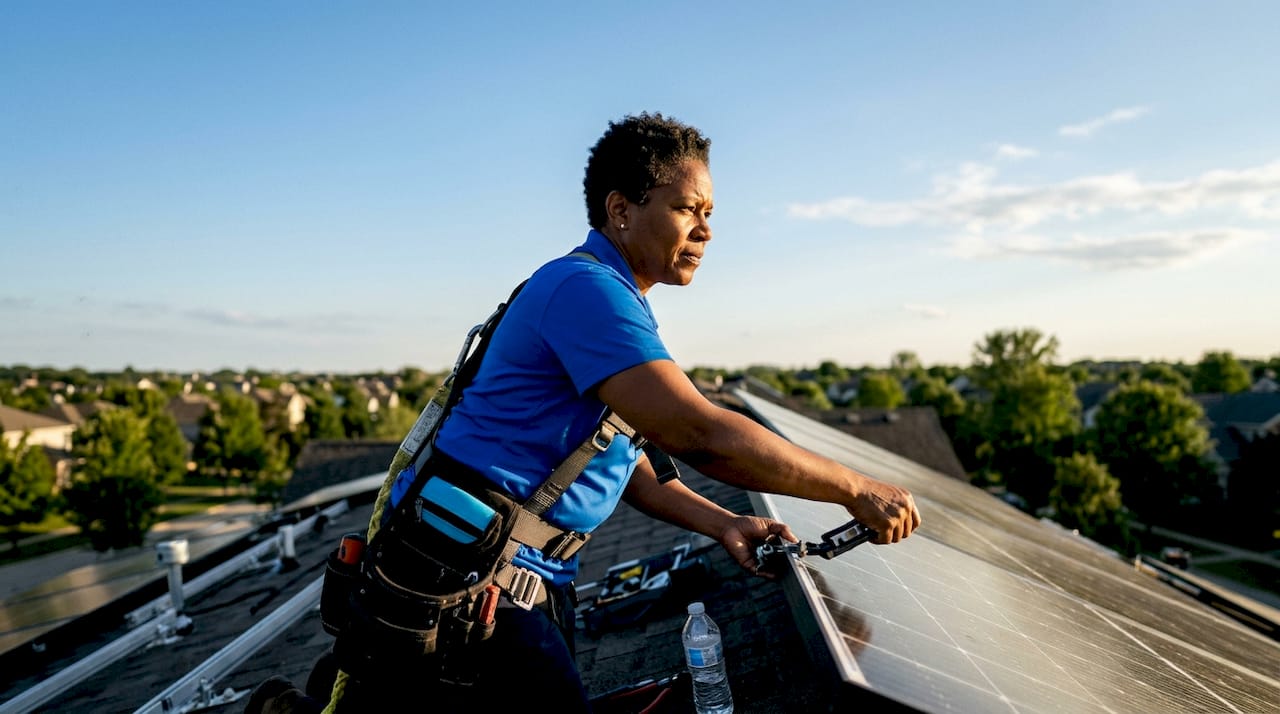
The grid connection is where net metering enters the picture. Net metering in Illinois allows customers with systems up to 40 kW to receive bill credits for excess electricity sent to the grid. That credit offsets future consumption, reducing annual electricity costs meaningfully for most residential and small commercial customers.
Illinois Shines is the state's Adjustable Block Program, which pays solar owners Renewable Energy Credits (RECs) for every megawatt-hour their system produces. RECs are a separate revenue stream on top of net metering savings. Together, these two mechanisms define the financial logic of solar energy systems in Illinois.
- Residential rooftop PV: Installed on a home's roof, sized to offset household consumption, typically 6–12 kW.
- Commercial arrays: Larger systems on warehouses, schools, or ground-mounted on commercial land, often 50 kW to several megawatts.
- Community solar farms: Utility-scale projects where multiple subscribers share output; no on-site installation required.
- Inverter types: String inverters handle whole-system output; microinverters optimize each panel individually, which matters on partially shaded roofs.
Pro Tip: If your roof has any shading from trees or neighboring structures, ask your installer about microinverters or power optimizers. They prevent one shaded panel from dragging down the output of your entire array.
How much solar capacity does Illinois have?
Illinois solar capacity has grown at a pace that surprises most residents. Solar, wind, and geothermal now account for approximately 25% of electricity consumed in Illinois, with solar production alone generating enough electricity to power over 810,000 homes. That figure represents a dramatic shift from just a few years ago, when Illinois was considered a mid-tier solar state.
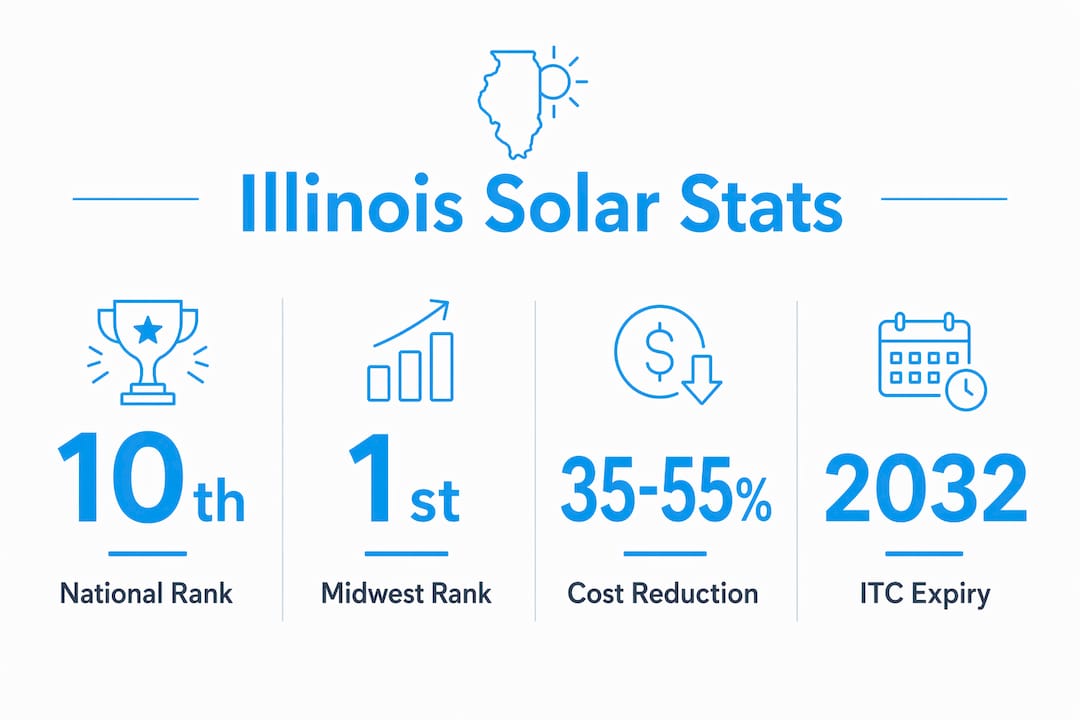
Illinois ranks 10th nationally for solar generation and leads all Midwest states in output. That ranking reflects both the scale of utility and commercial installations and the rapid uptake of residential systems following CEJA's passage. The Climate and Equitable Jobs Act drives this expansion with a target of 100% carbon-free electricity by 2050, making solar projects a priority for faster deployment compared to traditional energy infrastructure.
| Metric | Detail |
|---|---|
| National solar rank | 10th in the United States |
| Midwest rank | 1st among Midwest states |
| Homes powered by solar | Over 810,000 |
| Share of state electricity | Approximately 25% (solar, wind, geothermal combined) |
| Carbon-free target year | 2050 under CEJA |
The growth trajectory matters for buyers making decisions now. Systems installed today lock in current incentive rates under Illinois Shines program years, which are set in advance. Waiting means potentially lower REC values as the program adjusts to higher adoption levels.
What financial incentives support Illinois solar?
The cost of a residential solar installation in Illinois typically runs $2.60 to $3.20 per watt before incentives, putting a 7 kW system in the $18,000 to $22,000 range. That sounds steep until you apply the available incentives, which can cut net costs substantially.
Here are the primary financial mechanisms available to Illinois solar buyers in 2026:
- Federal Investment Tax Credit (ITC): The ITC provides a 30% credit on the full installed cost of your system, applied directly to your federal income tax liability. It remains at 30% through 2032. On a $20,000 system, that is a $6,000 reduction in taxes owed.
- Illinois Shines RECs: The Illinois Shines Adjustable Block Program pays solar owners for the renewable energy their system produces. REC incentives are performance-based and sometimes structured as upfront discounted payments or long-term payments over years. Clarify the structure with your installer before signing, because upfront offers may represent a discounted total value compared to long-term payments.
- Net metering credits: Illinois net metering policies credit excess generation against future bills. Systems up to 40 kW qualify for standard net metering; larger systems may require a two-meter setup with utility-specific terms.
- Utility-specific programs: Ameren Illinois and ComEd each administer their own net metering and interconnection rules. Municipal utilities and rural electric cooperatives operate under different frameworks, and their credit rates do not always match the retail rate.
Pro Tip: Ask your installer to show you the REC payment schedule in writing before you sign a contract. Some installers bundle the REC value into a lower upfront price, which can reduce your total return over the system's life.
The combined effect of the ITC and Illinois Shines incentives can reduce net costs by 35–55% depending on system size and program year. That range is wide because REC values shift with each program block. Buyers who move early in a program year typically capture higher REC rates.
One underappreciated challenge is administrative red tape at the local permitting level. Permitting requirements vary significantly across Illinois jurisdictions, and inconsistencies add soft costs and delays that erode financial returns. Early contact with your local building department is not optional. It is a necessary step before you commit to a timeline.
What should you know before installing solar in Illinois?
Site evaluation is the single most important step before committing to a solar installation. Shading and seasonal sun angle changes can reduce winter production significantly in Illinois, given the state's northern latitude. An installer who relies solely on satellite imagery for shading analysis will give you less accurate production estimates than one who performs an on-site 3D shading analysis.
Key factors to evaluate before installation:
- Roof condition and orientation: South-facing roofs at a 30–40 degree pitch produce the most energy in Illinois. East or west orientations reduce output but can still be viable.
- Shading analysis: Trees, chimneys, and neighboring buildings all cast shadows that shift with the seasons. A thorough on-site analysis accounts for winter sun angles, which are much lower in Illinois than in summer.
- System sizing: Match system size to your actual annual consumption, not just your summer bills. If you plan to add an electric vehicle or heat pump, size the system for future load.
- Utility requirements: Contact your utility before installation to understand interconnection timelines and any specific technical requirements. Some utilities in Illinois require additional equipment or inspections that affect project cost and schedule.
- Battery storage: Solar plus storage projects are increasingly prioritized in Illinois as the state prepares for mandatory storage targets by 2032. Adding battery storage at installation is typically cheaper than retrofitting later.
Selecting a qualified installer matters as much as the equipment itself. Look for installers certified by the North American Board of Certified Energy Practitioners (NABCEP), who are required to perform on-site assessments rather than remote estimates. Local installers familiar with your specific utility's interconnection process will also reduce permitting delays. Solaralchemist serves Illinois solar owners in communities like Crystal Lake and Marengo, where utility net metering policies and local permitting requirements directly affect system performance and financial outcomes.
Key Takeaways
Illinois solar energy production is defined by photovoltaic generation supported by CEJA policy, Illinois Shines RECs, and net metering, making it one of the most financially supported solar markets in the Midwest.
| Point | Details |
|---|---|
| Illinois solar rank | Illinois ranks 10th nationally and 1st in the Midwest for solar generation. |
| Core technology | Photovoltaic panels convert sunlight to DC electricity; inverters convert it to AC for grid use. |
| Key incentives | The federal 30% ITC and Illinois Shines RECs can reduce net system costs by 35–55%. |
| Net metering limit | Systems up to 40 kW qualify for standard net metering; larger systems face utility-specific rules. |
| Installation priority | On-site 3D shading analysis and early utility contact are the two steps most buyers skip and regret. |
Illinois solar is moving faster than most buyers realize
I have watched Illinois go from a solar afterthought to a genuine Midwest leader in a short period of time. The CEJA legislation was the turning point. Before it, Illinois had decent incentives but no clear long-term signal. CEJA gave developers, installers, and buyers a reason to commit. The growth in installed capacity since then has been real and measurable.
What I find underappreciated is how much the financial outcome varies based on when you buy and how well you navigate the incentive structure. Two neighbors with identical roofs can end up with very different payback periods if one locked in a higher REC block rate and the other accepted a discounted upfront REC payment without understanding the tradeoff. The technology is straightforward. The financial engineering is where buyers need to pay attention.
The permitting situation frustrates me more than anything else in this market. Illinois has built a strong state-level incentive framework, but local jurisdictions have not kept pace. I have seen projects in otherwise favorable locations delayed by months because of inconsistent municipal requirements. The fix is simple: call your local building department before you sign anything. That one step saves more time and money than any equipment upgrade.
Battery storage is the next chapter for Illinois solar owners. The state is moving toward mandatory storage targets, and the economics of solar plus storage are improving every year. Buyers who plan for storage now, even if they do not install it immediately, will be in a much better position when grid conditions and incentive structures make it the obvious next step.
— Marquis
Keep your Illinois solar system producing at its best
Owning a solar array in Illinois is a long-term investment, and production losses from dirty panels are both common and preventable. Dust, pollen, bird droppings, and hard water deposits accumulate on panel surfaces and reduce output without triggering any alarm.
Solaralchemist uses professional-grade deionized water systems and specialized equipment to clean panels safely and thoroughly, without leaving mineral deposits that accelerate future soiling. Regular cleaning is one of the simplest ways to protect the financial return you calculated when you went solar. Check when to clean your solar panels to understand the signs that your system needs attention. Solaralchemist serves Illinois solar owners across the region, including Belvidere and surrounding communities.
FAQ
What is solar energy production in Illinois?
Solar energy production in Illinois is the generation of electricity from photovoltaic panels and community solar arrays, supported by state programs like Illinois Shines and net metering policies. Illinois ranks 10th nationally for solar generation and leads the Midwest in output.
How does net metering work for Illinois solar owners?
Illinois net metering credits solar owners for excess electricity sent to the grid, with standard eligibility for systems up to 40 kW. Credit reconciliation is typically monthly, and annual rollover terms depend on your specific utility.
What incentives reduce the cost of solar in Illinois?
The federal 30% Investment Tax Credit applies through 2032, and Illinois Shines RECs provide performance-based payments for solar generation. Together, these incentives can reduce net system costs by 35–55% depending on system size and program year.
What is the Illinois Shines program?
Illinois Shines is the state's Adjustable Block Program that pays solar owners Renewable Energy Credits for each megawatt-hour their system produces. REC payments can be structured as upfront lump sums or long-term performance-based payments, so buyers should clarify the structure before signing.
Does battery storage make sense for Illinois solar owners?
Battery storage is increasingly combined with solar in Illinois as the state moves toward mandatory storage targets by 2032. Installing storage at the same time as your solar system is typically more cost-effective than adding it later.