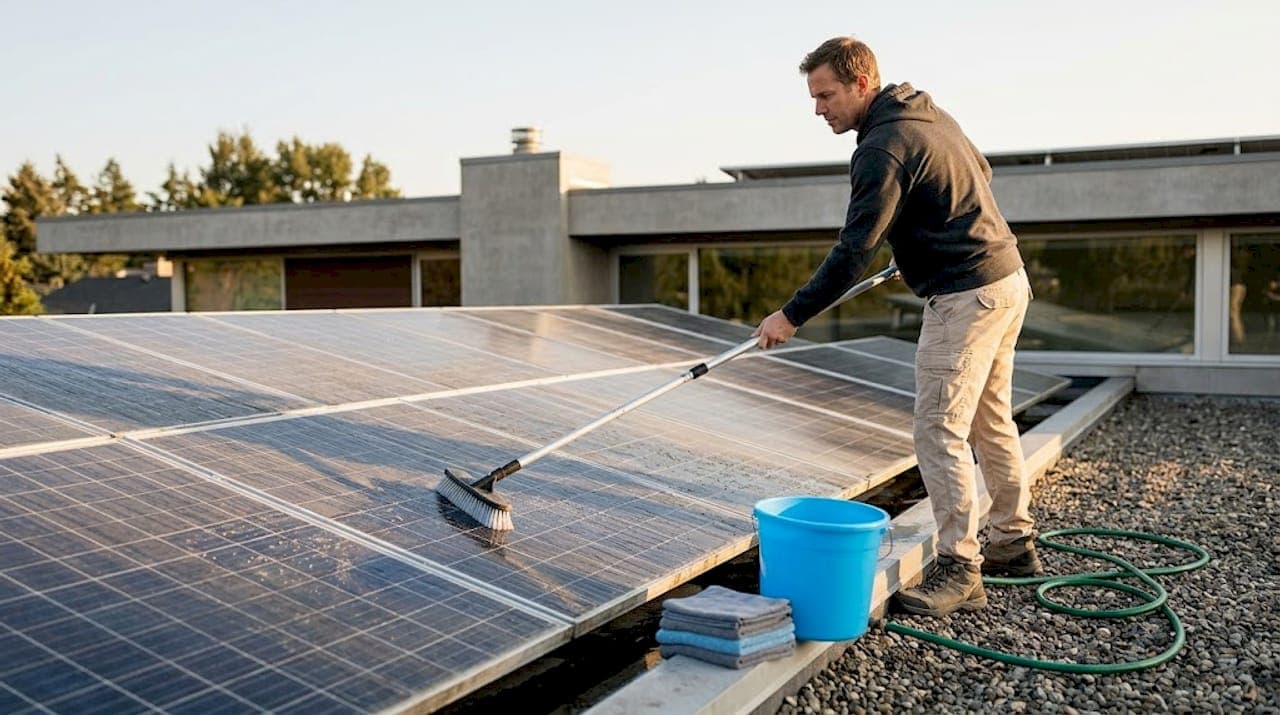
Most solar panel owners don't realize their system is quietly losing power every week. Dirty panels can cost you 5 to 25% of your output, and the gap widens fast in dusty or pollen-heavy environments. The fix isn't complicated, but it requires more than a garden hose and good intentions. Mastering the spotless solar panel rinse technique means understanding water quality, timing, and the right sequence of steps so you don't trade one problem for another. This guide walks you through everything you need to do it right.
Table of Contents
- Key takeaways
- Tools and prep for a spotless rinse
- Step-by-step spotless solar panel rinse technique
- Common mistakes and how to fix them
- Monitoring and maintaining spotless panels over time
- My honest take on what actually matters
- Let Solaralchemist handle the hard part
- FAQ
Key takeaways
| Point | Details |
|---|---|
| Water quality determines results | Deionized or softened water in the final rinse prevents mineral spots that reduce light transmission. |
| Timing protects your panels | Clean panels in the early morning or evening to avoid thermal shock from cold water on hot glass. |
| Pressure washers cause damage | Use a low-pressure garden hose and soft brush only. High-pressure tools void warranties and scratch glass. |
| Soap residue is a hidden problem | Incomplete rinsing leaves film that attracts dust faster and creates streaks blocking sunlight. |
| Consistency beats intensity | Regular light rinses outperform infrequent aggressive scrubbing for long-term panel performance. |
Tools and prep for a spotless rinse
Getting the right materials together before you start is what separates a clean panel from a streaky one. Here's what you need on hand:
- Soft-bristle brush or sponge (non-abrasive, designed for delicate surfaces)
- Telescoping pole to reach panels safely from the ground
- Garden hose with a gentle spray nozzle, not a pressure washer
- Bucket with warm water and a small amount of mild, pH-neutral dish soap
- Deionized, distilled, or softened water for the final rinse
- Microfiber cloth for any ground-level spot treatment
Water quality deserves more attention than most guides give it. Hard tap water leaves mineral deposits that bake onto glass when the panel heats up in the sun. Those deposits don't just look bad. They scatter and block incoming light, reducing your system's output over time. For the final rinse, you want water with a total dissolved solids (TDS) reading below 15 ppm. That's the standard professional crews use.
| Tool | Why it matters |
|---|---|
| Soft brush or sponge | Removes debris without scratching anti-reflective glass coating |
| Telescoping pole | Keeps you off the roof and reduces pressure on panel surface |
| Low-pressure hose | Clears loose dirt without forcing water into panel seams |
| Deionized water | Leaves zero mineral residue for a truly spotless finish |
| Mild soap | Breaks down organic buildup without leaving chemical film |
Timing matters just as much as tools. Panel surface temperatures can exceed 150°F at midday, so spraying cold water on a hot panel creates thermal shock that can micro-crack the glass. Clean your panels in the early morning before the sun heats them up, or in the evening after they've cooled down.
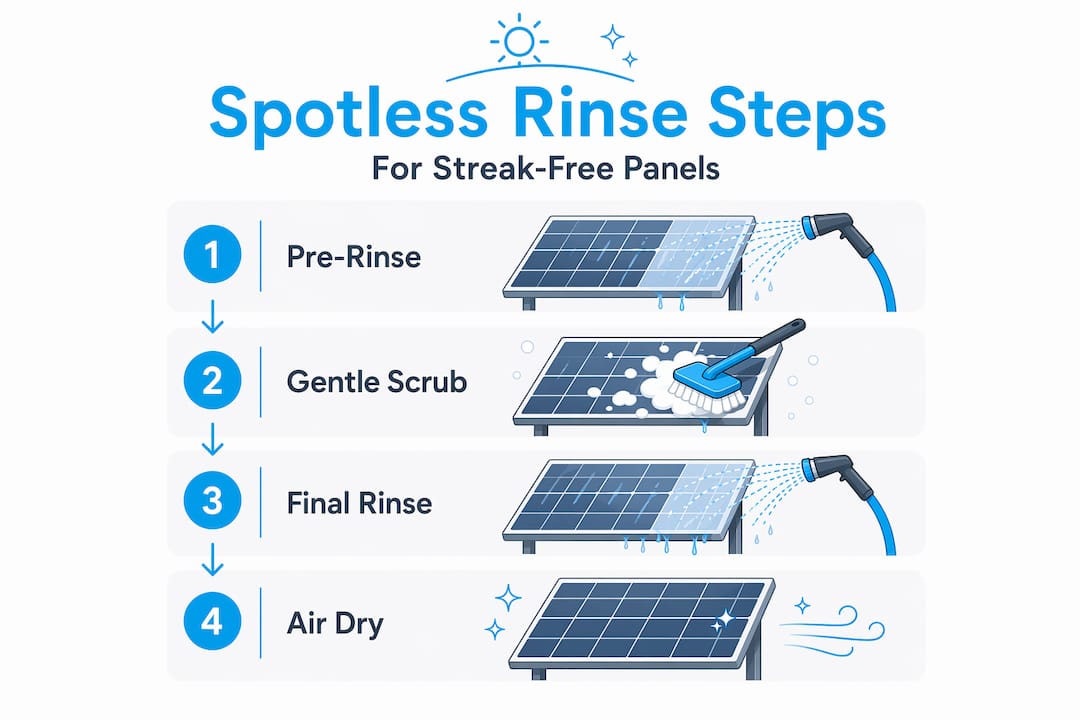
Pro Tip: Use a telescoping pole with a brush attachment to clean from the ground whenever possible. Ground-based cleaning with telescoping poles reduces the risk of inadvertent pressure damage and keeps you off a potentially slippery roof.
Step-by-step spotless solar panel rinse technique
This is the core process. Follow it in order and you'll get a clean, residue-free result every time.
-
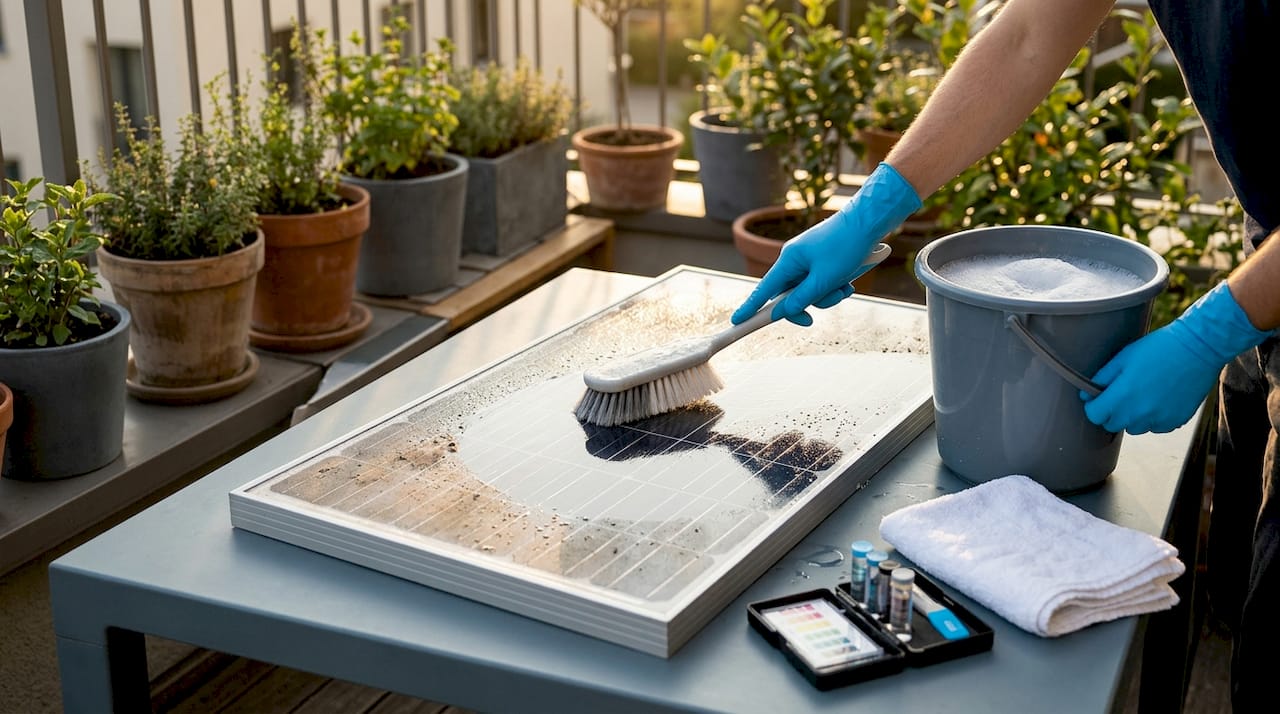
Pre-rinse the panel surface. Use your garden hose on a gentle setting to wet the entire panel and loosen surface debris like dust, pollen, and bird droppings. Don't scrub yet. This step softens everything so you're not grinding grit into the glass.
-
Apply mild soap solution. Mix a small amount of pH-neutral dish soap into a bucket of warm water. Dip your soft brush or sponge and work across the panel in gentle, overlapping strokes. Go top to bottom so dirty water flows down and away from cleaned areas.
-
Rinse off soap thoroughly. This step is where most DIYers cut corners. Soap residue left on panels attracts dust faster and creates streaks that block light. Use your hose to rinse from top to bottom until the water running off is completely clear and free of suds.
-
Treat stubborn stains if needed. For organic residue that won't budge, a diluted isopropyl alcohol solution works safely. Mix 1 part 70% IPA with 7 parts deionized water for a safe ~8.75% solution. Apply with a soft cloth, let it sit for 30 seconds, then rinse immediately. Never use higher concentrations. They degrade the anti-reflective coating permanently.
-
Final rinse with deionized water. This is the step that makes the spotless solar panel rinse technique actually spotless. Professionals use deionized water for the final rinse because tap water minerals bake into the glass surface when the panel heats up. Even a small amount of residue becomes a permanent haze over time. Run your deionized water from top to bottom across the full panel surface.
-
Allow to air dry. Don't wipe the panel dry with a cloth unless you're treating a specific spot at ground level. Air drying after a proper deionized rinse leaves no marks.
| Step | Key action | What to avoid |
|---|---|---|
| Pre-rinse | Wet surface, loosen debris | High pressure, dry scrubbing |
| Soap wash | Gentle top-to-bottom strokes | Abrasive pads, harsh chemicals |
| Soap rinse | Rinse until water runs clear | Stopping while suds remain |
| Stain treatment | Diluted IPA on stubborn spots | IPA above 10% concentration |
| Final rinse | Deionized water, full coverage | Tap water as final rinse |
| Dry | Air dry naturally | Rough towels or squeegees |
Pro Tip: For a step-by-step cleaning reference you can bookmark, industry guides recommend printing your process and keeping it with your cleaning kit so nothing gets skipped during the final rinse.
Common mistakes and how to fix them
Even careful DIYers run into problems. Knowing what goes wrong and why makes it easier to fix or avoid entirely.
- Using a pressure washer. This is the most damaging mistake you can make. High-pressure tools void warranties and can force water into junction boxes and seams where it causes electrical damage. A standard garden hose on a gentle setting is all you need.
- Cleaning panels at midday. Hot glass plus cold water equals thermal shock. Even if you don't see immediate cracking, repeated thermal stress adds up over years of cleaning.
- Skipping the deionized final rinse. Tap water looks clean, but its dissolved minerals don't. Those minerals deposit on the glass and, once baked in by heat, become permanent light-blocking haze. This is the hidden failure mode in most DIY rinsing.
- Using abrasive scrubbers. Aggressive scrubbing degrades the anti-reflective coating on solar glass, which gradually reduces the efficiency gains you're cleaning for in the first place.
- Not rinsing soap completely. Leaving even a thin soap film creates streaks and attracts particulates faster than a clean surface would.
If you're seeing persistent streaks, white haze, or mineral rings after cleaning, the problem is almost always the final rinse water. Switch to deionized or distilled water and repeat the final rinse step. If the haze doesn't lift after two thorough rinses, the deposits may have baked in and require professional treatment.
When to call a professional is a real question worth answering directly. If your panels are on a steep roof, if you're seeing output drops that a rinse hasn't fixed, or if you're unsure about your warranty protection guidelines, bringing in a trained technician is the right call. The cost of a professional clean is almost always less than the cost of a damaged panel or voided warranty.
Monitoring and maintaining spotless panels over time
Cleaning once and forgetting about it doesn't work. The goal is to build a simple routine that keeps your panels performing at their best without over-cleaning or under-cleaning.
How often you need to rinse depends heavily on your environment. Here's a practical framework:
- Arid or dusty climates: Clean every 4 to 6 weeks. Panels in dusty environments can lose 15 to 25% of output without regular attention.
- Moderate climates with regular rainfall: Every 2 to 3 months, or after heavy pollen season.
- Low-angle roofs (under 15°): Panels below 15° tilt don't self-clean with rain effectively and need more frequent active rinsing.
- High-tilt roofs in rainy climates: Rain does most of the work, but a deionized rinse twice a year still prevents mineral buildup.
Visual inspection is your first tool. Look for visible dust films, bird droppings, pollen patches, or water spots. Then check your monitoring app or inverter output. A drop of more than 5% compared to similar weather conditions from the previous month is a reliable signal that cleaning is overdue. For a more detailed checklist, Solaralchemist's guide on when to clean your panels covers eight specific signs worth knowing.
Seasonal timing adds another layer of value. Cleaning before peak summer sun maximizes your highest-output months. Cleaning after spring pollen season removes the thick coating that accumulates on glass surfaces. A light rinse in fall before winter sets in also helps prevent debris from freezing onto the surface.
My honest take on what actually matters
I've watched a lot of solar panel owners put real effort into scrubbing their panels and still end up with streaks, spots, and diminishing returns. The scrubbing isn't the problem. The final rinse is.
What I've learned from working with panels across different environments is that water chemistry does more work than most people expect. You can scrub a panel perfectly and then undo all of it with a tap water rinse that leaves a mineral film baking into the glass all afternoon. The spotless effect depends on water quality far more than it depends on how hard you scrub.
The other thing I see consistently: people skip the timing advice because it feels like a minor detail. It isn't. Cleaning a hot panel in direct sun doesn't just risk thermal shock. It causes your rinse water to evaporate before it can carry minerals off the surface, which defeats the whole purpose of rinsing. Morning or evening cleaning isn't a preference. It's part of the technique.
My practical advice for DIYers is this: invest in a small deionized water system or pick up distilled water for your final rinse, use a telescoping pole to stay off the roof, and clean on a cool morning. Those three adjustments will get you better results than any expensive cleaning product on the market. And if you're ever unsure whether your cleaning method is warranty-safe, check your manufacturer's cleaning guidelines before you start.
— Marquis
Let Solaralchemist handle the hard part
Knowing the right technique is half the battle. Executing it safely on a two-story roof with the right equipment is another matter entirely.
Solaralchemist uses professional-grade deionized water systems and specialized soft-wash equipment to deliver a genuinely spotless clean on every visit. Every job follows the same warranty-safe process that protects your panels and your investment. If you want to see what a professional clean actually looks like, browse our before and after results from real Madison-area systems. When you're ready to schedule or just want to know whether your panels are due for a rinse, our Madison solar cleaning team is ready to help. No pressure, no obligation. Just cleaner panels and better output.
FAQ
How often should I rinse my solar panels?
Most panels benefit from cleaning every 2 to 3 months in moderate climates, and every 4 to 6 weeks in dusty or arid environments. Panels with a tilt below 15° need more frequent rinsing since rain won't clear debris effectively.
What water should I use for the final rinse?
Use deionized, distilled, or softened water with a TDS below 15 ppm. Tap water leaves mineral deposits that bake into the glass surface and reduce light transmission over time.
Can I use a pressure washer on solar panels?
No. Pressure washers can void your manufacturer warranty, crack panel glass, and force water into electrical components. A standard garden hose on a gentle setting is the correct tool.
What causes white spots or streaks after cleaning?
White spots and streaks are almost always caused by mineral deposits from tap water used in the final rinse. Repeating the final rinse step with deionized water usually resolves the issue.
Is it safe to clean solar panels myself?
Yes, with the right precautions. Use a telescoping pole to clean from the ground, avoid cleaning during midday heat, and follow your manufacturer's guidelines to stay within warranty terms.
Recommended
- Solar Panel Cleaning Before & After Results | Our Work | Solar Alchemist
- When to Clean Solar Panels | 8 Signs You Need a Cleaning | Solar Alchemist
- Solar Panel Cleaning Madison WI | Professional Solar Maintenance | Solar Alchemist
- Solar Panel Warranty Protection | Manufacturer Cleaning Guidelines | Solar Alchemist