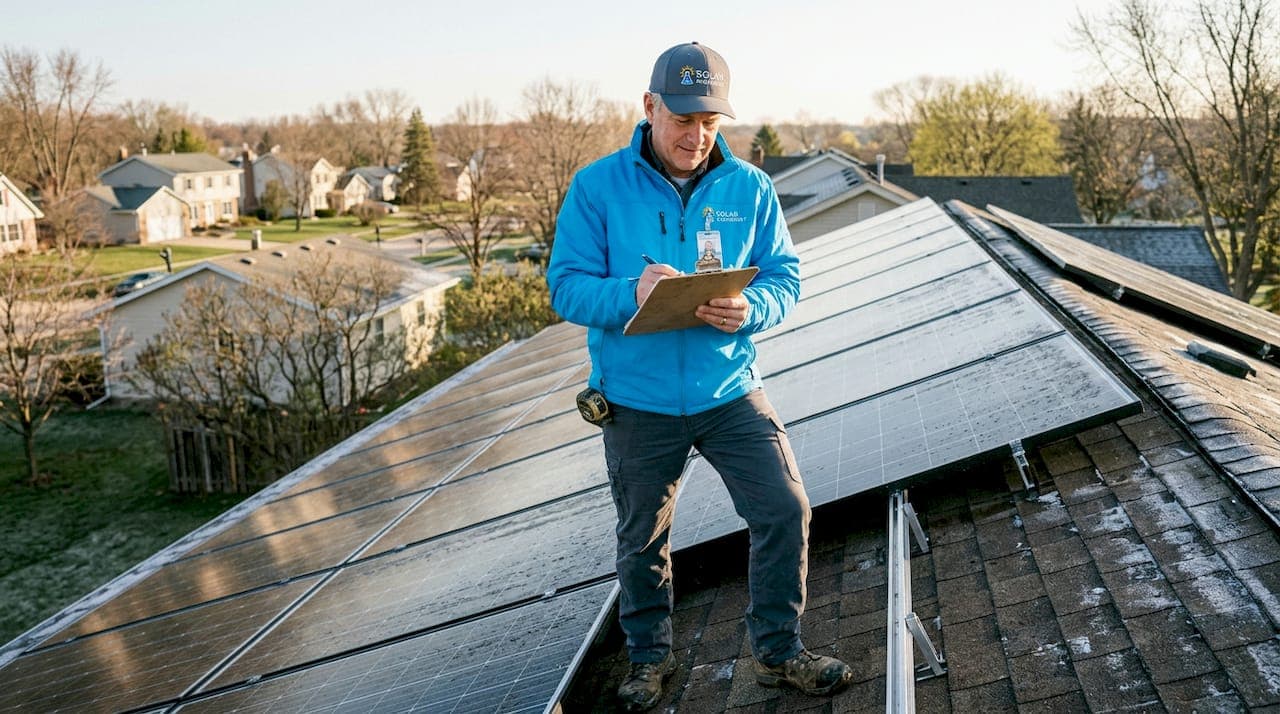
Every Wisconsin winter puts your solar array through stress that most homeowners don't fully account for. A spring solar panel inspection in Wisconsin is not just a visual once-over. It's a structured assessment that catches physical damage, electrical degradation, and mounting issues created by months of freeze-thaw cycles, heavy snow loads, and spring hail. Miss it, and you're potentially running a system that looks fine from the ground but is quietly losing thousands of dollars in production.
Table of Contents
- Key takeaways
- 1. Why spring solar panel inspection in Wisconsin is non-negotiable
- 2. What you can safely inspect before calling a professional
- 3. The full spring inspection checklist for Wisconsin conditions
- 4. DIY checks vs. professional inspection: knowing the line
- 5. What to do after the inspection is complete
- What I've learned after years of spring inspections in Wisconsin
- Get your system professionally inspected this spring
- FAQ
Key takeaways
| Point | Details |
|---|---|
| Spring is the critical window | Wisconsin winters cause snow, ice, and storm damage that only becomes fully visible once temperatures rise. |
| Monitoring data matters | Review your inverter alerts and output logs before climbing on the roof. Anomalies tell you where to look. |
| DIY has clear limits | Homeowners can handle visual checks, but electrical components require a licensed contractor under Wisconsin regulations. |
| Document everything | Photographs and written logs protect your warranty, support insurance claims, and guide future maintenance. |
| Professional cleaning follows inspection | Post-inspection cleaning with deionized water removes winter residue that drags down spring production numbers. |
1. Why spring solar panel inspection in Wisconsin is non-negotiable
The assumption that solar panels are fully self-sufficient is the most expensive misconception in residential solar ownership. Wisconsin's four-season climate demands seasonal attention that states with mild winters simply don't require.
Snow, ice dams, and wet freeze-thaw cycles all apply mechanical stress to your panels, racking, and roof penetrations. By April, that stress has accumulated for four to five months. The spring inspection window is your first real opportunity to assess what winter left behind, before peak production months arrive in May and June.
This is formally called a photovoltaic (PV) system assessment in the industry. Whether you call it a spring solar system check or a PV health check, the goal is the same: catch problems early, before they compound.
2. What you can safely inspect before calling a professional
Before anyone sets foot on your roof, there's meaningful groundwork a homeowner can do. Starting here saves time and gives a professional inspector better direction.
Review your monitoring platform first. Routine monitoring flags inverter faults and output drops in intervals as short as five to fifteen minutes. If your system shows alerts or sustained output below expected levels by ten to fifteen percent, that's your first inspection finding before you've touched a ladder.
Items you can safely assess from the ground or from inside your home:
- Output data: Compare current daily production against the same weeks last year.
- Inverter status lights: Any fault or warning codes should be photographed and logged.
- Visible debris: Tree branches, leaf accumulation, or leftover snow residue visible from the ground.
- Vegetation: Trim any branches that have grown into shading range over the winter. Stay on the ground.
On the roof, proceed only if you are trained and equipped for fall protection. Most homeowners should stop at ground-level observation. The visual checks on panels themselves, wiring runs, and mounting hardware are safer left to professionals.
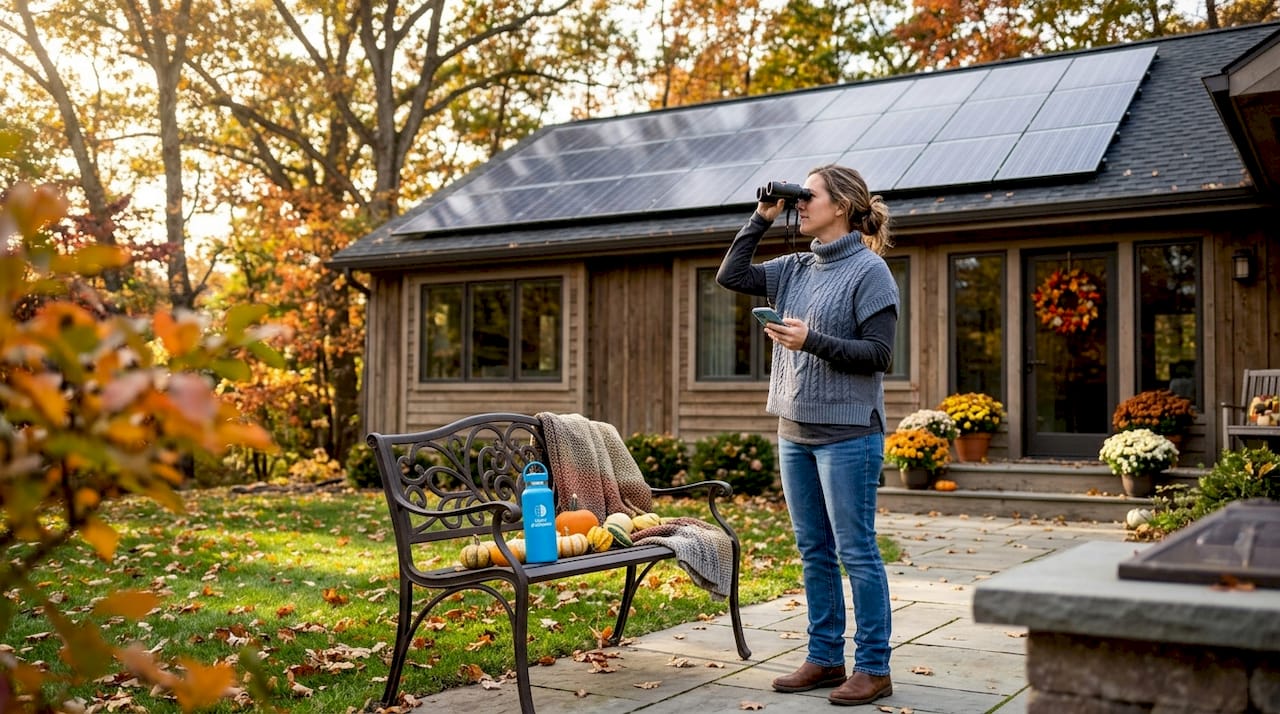
Pro Tip: Use binoculars from your yard to scan panel surfaces for discoloration, dark spots, or cracks before scheduling a professional visit. You'll have specific observations to share, which makes the inspection faster and more targeted.
3. The full spring inspection checklist for Wisconsin conditions
This is where a Wisconsin solar panel health check gets specific. Each item below reflects the damage patterns most common to our regional climate.
-
Panel surface condition. Look for cracks, chips, delamination, and discoloration. Visual inspections should specifically note hot spots, which appear as darker patches on individual cells, and any yellowing of the encapsulant.
-
Snow residue and soiling. Even after visible snow clears, mineral deposits and organic debris remain. Snow adhesion issues are more common with wet snow, and residue left behind reduces light transmission for the entire season.
-
Hail damage assessment. This is the most commonly overlooked check in Wisconsin. Hail damage can degrade panel output significantly even when panels are still producing power. Internal microcracks are invisible to the naked eye but show up in production data. Document dates of any hail events and photograph panels immediately after.
-
Mounting hardware and racking. Check for corrosion, loose bolts, and shifted rail positions. Freeze-thaw cycles expand and contract metal fasteners repeatedly, which loosens connections over time. Any visible rust or displacement needs professional attention.
-
Roof penetrations and flashing. Where mounting feet connect to your roof deck, check the sealant and flashing for cracking or lifting. Water intrusion at these points causes structural damage that may not show up as a leak until years later.
-
Conduit and wiring runs. Inspect visible conduit for physical damage, UV degradation, or areas where animals have chewed through insulation. Any exposed wiring is an immediate safety concern.
-
Inverter status and ventilation. Your inverter should be clean, properly ventilated, and free of error codes. Dirt accumulation on inverter vents reduces cooling efficiency and shortens component life.
-
Rapid shutdown compliance. Under NEC Article 690, Wisconsin installations must comply with rapid shutdown requirements. Verify that rapid shutdown devices are labeled, accessible, and functioning correctly.
-
Grounding and bonding connections. Grounding hardware should show no corrosion, and all bonding connections should be tight. This is a check a licensed electrician performs during a professional inspection.
-
Roof structure beneath the array. Spring is the time to assess whether snow load or ice damming caused any sagging or soft spots in the roof deck under your panels. If you are planning a roof replacement, coordinate this carefully since removal and reinstallation runs approximately $325 per panel and must be sequenced correctly to protect your system.
4. DIY checks vs. professional inspection: knowing the line
Understanding where your responsibility ends and a licensed contractor's begins is one of the most practical things you can learn as a solar owner in Wisconsin.
| Task | DIY appropriate | Requires a professional |
|---|---|---|
| Review monitoring data and inverter alerts | Yes | No |
| Ground-level visual scan with binoculars | Yes | No |
| Vegetation trimming away from panels | Yes (ground level) | No |
| Panel surface inspection on roof | With fall protection only | Recommended |
| Mounting hardware tightening | No | Yes |
| Electrical connection work | No | Yes, always |
| Module replacement | No | Yes |
| Inverter replacement or repair | No | Yes |
| Hail damage documentation for insurance | Yes (photography) | Yes (formal assessment) |
| NEC compliance verification | No | Yes |
Licensed electricians and certified contractors are required for any work involving energized components, module swaps, or electrical modifications under Wisconsin DSPS regulations. This is not a suggestion. It is a legal requirement.
The financial case for professional inspection is also straightforward. Catching a failing diode or a corroded ground connection during a spring inspection costs a fraction of what you pay when those faults cause inverter failure or panel damage months later.
Pro Tip: If your system experienced a severe hail or wind event this spring, file a preliminary insurance notice even before a formal inspection is complete. Many storm damage claims have strict documentation timelines, and early notice protects your eligibility.
5. What to do after the inspection is complete
Finding issues is only useful if you act on them systematically. Post-inspection follow-up is where most homeowners lose the value of a good inspection.
Here's how to make your findings actionable:
- Create a written log. Date, photographs, and a description of every finding. Include the name of any technician who performed work. This log supports warranty claims, insurance documentation, and annual maintenance planning across the life of your system.
- Schedule professional cleaning immediately. Spring cleaning removes winter mineral deposits and organic soiling that your inspection identified. Use a service that employs deionized water systems, since tap water leaves mineral residue that compounds the problem.
- Set monitoring thresholds. After inspection, recalibrate your expectations for daily output based on system condition. Many monitoring apps allow you to set custom alerts when production drops below a defined percentage.
- Plan roof work carefully. If your inspection revealed roofing concerns, coordinate any replacement work with a solar contractor. The proper sequencing of panel removal, storage, and reinstallation protects both systems.
- Put next spring on the calendar now. The best maintenance schedules are set in advance, not in reaction to problems. Schedule your next spring PV assessment before the end of the current one.
Homeowners who follow a documented annual cycle consistently report fewer emergency service calls and longer inverter life. That's not coincidence. It's the result of catching small problems before they grow.
What I've learned after years of spring inspections in Wisconsin
I've been working on Wisconsin solar arrays through every kind of spring weather this state can produce. And the pattern I see most consistently is this: the homeowners who skip the spring assessment aren't trying to cut corners. They genuinely believe their system is fine because it's still producing power.
What I've learned is that production alone is a deeply unreliable indicator of system health. Subtle damage from spring storms degrades long-term output in ways that don't show up as obvious drops for months. By the time a homeowner notices something wrong, they've often lost a full summer of peak production.
The other thing I keep seeing is homeowners underestimating what Wisconsin winters actually do to mounting hardware. I've found corroded bonding connections on four-year-old systems. I've found flashing seals that had been slowly failing since the previous freeze. None of it was catastrophic yet. All of it would have been, given another year.
My honest take: the spring inspection is not optional maintenance. It is the most financially important thing you do for your solar investment all year. The cost of one professional inspection is recovered immediately if it prevents a single panel replacement or an inverter failure that warranty exclusions won't cover.
— Marquis
Get your system professionally inspected this spring
When the ground dries out and temperatures stabilize, that's the window. Solaralchemist serves homeowners and property managers across Wisconsin with professional spring inspections and deionized water panel cleaning designed to recover production losses from winter.

Our team uses professional-grade equipment to identify the issues that visual checks miss, from mounting hardware fatigue to soiling patterns that signal early cell degradation. Whether your system is in Madison, Sun Prairie, or anywhere in between, Solaralchemist brings the same standard of technical maintenance to every array we service.
Check when your panels need cleaning for clear guidance on timing, or book directly for Madison-area service and Sun Prairie locations. Spring slots fill quickly, so scheduling early protects your peak-production months.
FAQ
How often should Wisconsin solar panels be inspected?
Most Wisconsin systems benefit from a professional inspection once a year, ideally each spring after winter conditions have cleared. Systems in areas with heavy tree coverage or frequent storms may warrant an additional fall check.
Can hail damage solar panels without breaking them visually?
Yes. Hail can cause microcracks inside cells that panels still produce through, but long-term output degrades significantly. A production data review alongside a physical inspection is the only reliable way to catch this.
What does a spring solar panel inspection cost in Wisconsin?
Costs vary by system size and contractor, but a professional PV assessment typically runs $150 to $400 for a residential array. That cost is often offset by identifying warranty-eligible repairs or insurance-claimable storm damage.
Do I need a licensed electrician for my spring inspection?
For any tasks involving wiring, grounding, module replacement, or inverter work, yes. Wisconsin DSPS regulations require licensed professionals for all energized electrical work on solar systems.
When is the right time to schedule a spring inspection in Wisconsin?
Schedule as soon as consistent temperatures above freezing are forecast, typically late March through May. Earlier inspection means more time to address findings before peak summer production begins.