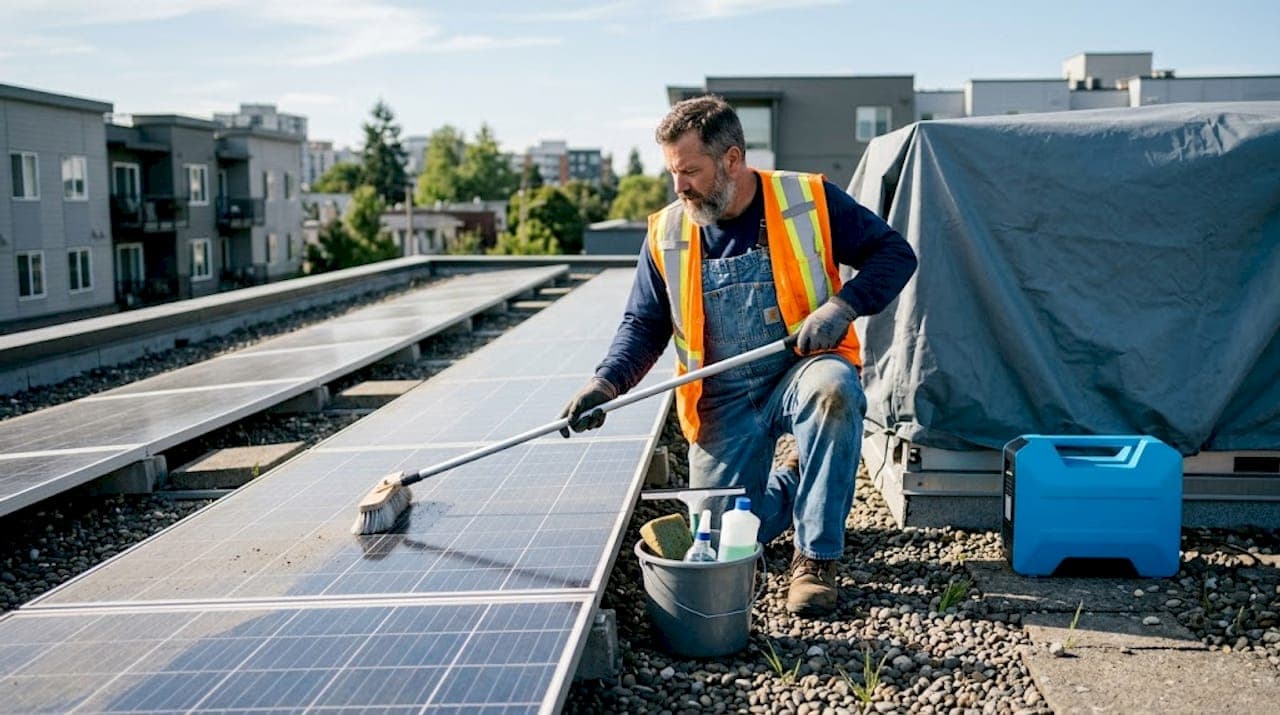
Most solar panel owners assume their system is basically self-sufficient once it's installed. Rain washes the panels, the inverter hums along, and the utility bill drops. That belief is understandable, but it's also one of the most expensive assumptions you can make. Understanding why solar panels need maintenance, and acting on it, is what separates systems that quietly lose 20% of their output over a decade from systems that perform at or near their original specs 25 years in. This guide breaks down the real reasons maintenance matters and what a practical routine actually looks like.
Table of Contents
- Key takeaways
- Why solar panels need maintenance
- How soiling and debris cut your output
- Monitoring, inspections, and electrical health
- A practical maintenance schedule for homeowners
- Common myths that lead to skipped maintenance
- My honest take after years in this field
- Get professional solar care in Madison, WI
- FAQ
Key takeaways
| Point | Details |
|---|---|
| Soiling causes serious output loss | Dust and debris can cut power output by 35 to 45% in some environments without regular cleaning. |
| Preventive beats reactive | Addressing small issues before they compound saves significantly more money than emergency repairs. |
| Monitoring catches invisible problems | Most performance drops don't look like anything. Only output data reveals them early. |
| Cleaning is a form of prevention | Regular panel cleaning protects optical coatings, prevents hot spots, and preserves long-term efficiency. |
| Professional inspections matter | Electrical faults, wire degradation, and pest damage require trained eyes every few years. |
Why solar panels need maintenance
Solar panels have no moving parts. That's a genuine advantage. But "no moving parts" doesn't mean "no maintenance." The panels sit outside 365 days a year, exposed to UV radiation, rain, wind, temperature swings, pollen, dust, bird droppings, and the occasional hailstorm. Every one of those factors chips away at performance over time.
Typical panel degradation runs about 0.5% per year under normal conditions. That's manageable. What accelerates it beyond warranty thresholds is unaddressed soiling, undetected electrical faults, and deferred inspections. The combination of those three factors is what turns a 25-year system into a 15-year headache.
Here's what actually threatens your system when maintenance is skipped:
- Soiling and debris accumulation. Dust, pollen, bird droppings, and leaf litter block sunlight from reaching the photovoltaic cells. Even a thin film of grime reduces absorption.
- Shading from vegetation. Trees and shrubs grow. What wasn't shading your panels three years ago might be cutting output significantly today.
- Electrical faults. Ground faults, arc faults, and degraded wiring don't announce themselves. They build silently until they trip the inverter or, worse, create a fire hazard.
- Pest damage. Squirrels, birds, and rodents nest under panels and chew through wiring. The DOE's preventive O&M framework specifically includes animal nest removal as a core maintenance task.
- Mechanical wear. Mounting hardware, seals, and cable ties degrade with UV exposure and temperature cycling.
Pro Tip: Check your inverter's production data right now. If you haven't looked at it in six months, you may already be losing output you haven't noticed yet.
The importance of solar panel care comes down to this: small problems compound quietly. A clogged cell here, a loose wire there, and over two or three years you've lost meaningful output without a single visible sign of damage.
How soiling and debris cut your output
The most visible maintenance task is also the most underestimated. Cleaning panels isn't just about appearances. It's a direct performance intervention.
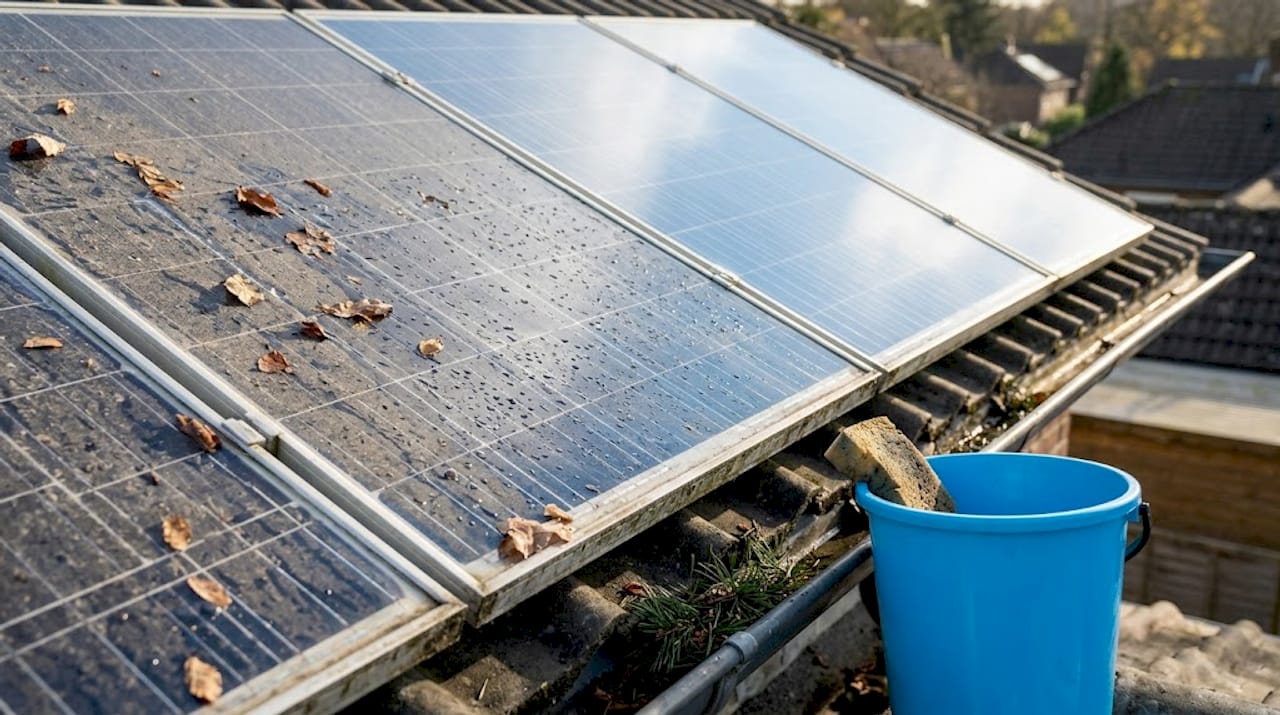
Research makes the scale of this problem clear. A 2026 scientific study found that dust accumulation causes a 35 to 45% weekly power loss in high-soiling environments like mining areas. Even in suburban settings, pollen season and dry spells without rain can stack up losses that compound month over month.
Here's where it gets more nuanced. Both over-cleaning and under-cleaning hurt your system.
| Cleaning approach | Effect on performance | Effect on panel lifespan |
|---|---|---|
| Too infrequent | Significant output loss from soiling | Potential hot spots and cell stress |
| Optimal frequency | Maximum energy yield maintained | Protective coatings preserved |
| Too frequent | Minor gains that don't offset cost | Mechanical stress from repeated contact |
The right cleaning schedule depends on your specific location, the tilt of your panels, and local environmental conditions. A rooftop array in Madison, Wisconsin faces very different soiling dynamics than one in Phoenix, Arizona. Panels with a steeper tilt shed rain debris better than flat-mounted commercial arrays, but neither is self-cleaning in any meaningful sense.
Rain helps, but it's not a substitute for cleaning. Rain washes off loose surface dust, but it leaves behind mineral deposits, pollen residue, and bird droppings that bond to the glass over time. That's exactly why why solar panel cleaning is preventive maintenance. It prevents the kind of buildup that requires more aggressive and potentially damaging cleaning later.
Pro Tip: After a dry stretch of three or more weeks, do a quick visual scan of your panels from the ground. If you can see a film or spotting from that distance, it's time to schedule a cleaning.
Site-specific cleaning strategies that use actual performance data to determine timing consistently outperform fixed-interval schedules. If your monitoring app shows a production dip that correlates with a dry, dusty period, that's your signal. Don't wait for the calendar.
Monitoring, inspections, and electrical health
This is the part of solar maintenance most homeowners skip entirely, and it's the part that causes the most expensive problems.
The majority of performance issues aren't visible. You won't see a ground fault. You won't see a degraded wire connection. You won't see a micro-crack in a cell that's creating a hot spot. What you will see, if you're paying attention, is a slow drift downward in your monthly production numbers.
Monthly output monitoring is the single most effective tool for catching problems early. Most modern inverters have companion apps that show daily and monthly production. Comparing your output against the same month last year, accounting for weather differences, tells you quickly whether something is wrong.
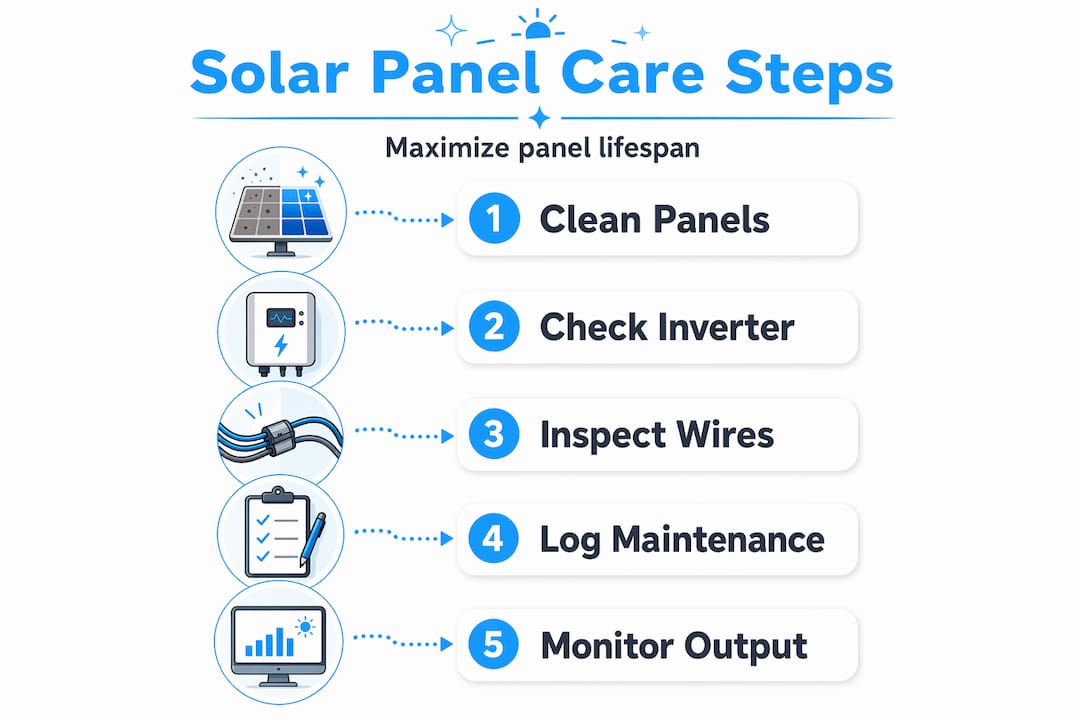
Here's a practical inspection and monitoring routine to follow:
- Monthly. Review your inverter's production data. Compare it to the same period from the prior year. Flag any drops greater than 10% that don't correlate with known weather events.
- After any major storm. Conduct a visual inspection from the ground and check your post-storm panel condition for visible damage. Check the inverter for fault codes.
- Annually. Do a thorough visual inspection of mounting hardware, visible wiring, and panel surfaces. Trim any vegetation that has grown toward the array.
- Every 3 to 5 years. Schedule a professional electrical inspection. This covers ground fault testing, wire condition assessment, and connection integrity checks.
The DOE is direct about one specific mistake: nuisance tripping requires inspection, not just a reset. If your inverter trips and you simply power-cycle it, you may be masking a persistent electrical fault that will cause repeated outages or create a safety hazard. An inspection after any unexplained trip is not optional.
Two maintenance tasks that get overlooked but matter more than most people realize: replacing deteriorated plastic cable ties and removing animal nests. Wire management details like these seem minor, but degraded ties let wiring sag and chafe against mounting hardware, and pest debris creates both fire risk and moisture traps. These are standard items in any professional inspection.
Pro Tip: Set a calendar reminder on the first of each month to check your inverter app. It takes two minutes and will tell you more about your system's health than any visual inspection.
A practical maintenance schedule for homeowners
Knowing why solar panels need maintenance is one thing. Having a schedule you'll actually follow is another. Here's what a realistic annual routine looks like for a typical residential system:
- 1 to 2 times per year: Professional or careful DIY cleaning of panel surfaces. Increase to 3 to 4 times per year if you live in a dry, dusty region or near agricultural land.
- Monthly: Review inverter production data and compare to prior-year baseline. Note any unexplained drops.
- Seasonally: Check for vegetation growth that could shade panels. Trim as needed.
- After major weather events: Visual ground-level inspection for physical damage. Check inverter for fault codes.
- Every 3 to 5 years: Professional inspection covering electrical connections, mounting hardware, wire condition, and pest damage. A professional check every few years catches the kind of slow degradation that monthly monitoring alone can miss.
When cleaning panels yourself, use a soft brush or squeegee with deionized or distilled water. Avoid abrasive materials, harsh detergents, and pressure washers. High-pressure water can force moisture under panel seals and void manufacturer warranties. Always clean in the early morning or evening when panels are cool. Thermal shock from cold water on hot glass can stress the surface.
Keep records of every cleaning, inspection, and any fault codes your inverter logs. This documentation matters for warranty protection claims and for tracking long-term performance trends. Many manufacturers require proof of proper maintenance before honoring warranty claims.
Common myths that lead to skipped maintenance
A few persistent misconceptions cause solar owners to defer maintenance until something breaks.
- "Rain keeps my panels clean." Rain removes loose surface dust but leaves behind mineral deposits, pollen, and organic residue. In areas with hard water, rain can actually accelerate mineral buildup on panel glass.
- "If they look clean, they're fine." A panel can look spotless from the ground and still have a soiling film that's cutting output by 10 to 15%. Visual inspection from a distance is not a substitute for actual monitoring data.
- "I just reset the inverter when it trips." The DOE is explicit: improper inverter resets without inspection can hide persistent faults that lead to repeated outages and safety risks.
- "Maintenance voids my warranty." The opposite is typically true. Most manufacturers require documented maintenance to keep warranties valid. Skipping it is what creates warranty gaps.
My honest take after years in this field
I've seen the full spectrum of solar system conditions. Panels that were installed a decade ago and look and perform almost like new. And panels that are only five years old but have lost a third of their output because nobody ever looked at them after installation.
What I've learned is that the "set it and forget it" mindset is the single biggest threat to a solar investment. Not weather. Not equipment failure. The assumption that these systems take care of themselves.
The owners who get the most out of their panels treat maintenance the way they treat a car oil change. Not glamorous, not complicated, but non-negotiable. They check their production numbers monthly. They schedule a cleaning before and after pollen season. They call a professional when the inverter throws a code they don't recognize.
What I find most interesting is how often monitoring data reveals problems that have been silently compounding for months. A homeowner will call saying their electric bill went up, and when I pull their inverter history, the drop started six months ago after a storm they never inspected for. The fix is usually straightforward. The lost production is not recoverable.
My advice: don't wait for a visible problem. The whole point of preventive maintenance is that you act before the problem becomes obvious. A two-minute monthly check of your app and a cleaning twice a year is genuinely all most residential systems need. That's not a burden. That's just protecting an investment that's supposed to last 25 years.
— Marquis
Get professional solar care in Madison, WI
If you're in the Madison area and want to take the guesswork out of solar maintenance, Solaralchemist is built for exactly this. Using professional-grade deionized water systems and specialized equipment, the team delivers thorough, safe cleaning that protects your panel coatings and keeps your system producing at its peak. Not sure if your panels are due for a cleaning? Check out 8 signs you need a cleaning to see where your system stands. For homeowners who want to see what a professional service actually delivers, the before and after results speak for themselves. Reach out to Solaralchemist to schedule your service and protect your renewable energy investment year-round.
FAQ
Why do solar panels need maintenance if they have no moving parts?
Solar panels face constant exposure to weather, soiling, and UV radiation. Without regular cleaning and inspections, dust buildup, electrical faults, and pest damage silently reduce output and shorten system lifespan.
How often should solar panels be cleaned?
Most residential systems benefit from cleaning 1 to 2 times per year. Homes in dry, dusty, or high-pollen environments may need 3 to 4 cleanings annually to maintain optimal output.
What is solar panel preventive maintenance?
Preventive maintenance covers routine tasks like debris removal, wire management, animal nest removal, and electrical inspections. The goal is to catch and address small issues before they compound into costly failures.
Can skipping maintenance void my solar warranty?
Yes, it can. Most manufacturers require documented maintenance as a condition of warranty coverage. Keeping records of cleanings and inspections protects your ability to make a warranty claim.
What happens if I just reset my inverter when it trips?
Resetting without inspection can mask underlying electrical faults. The DOE recommends a full electrical inspection after any unexplained inverter trip to rule out ground faults or wiring issues that could cause repeated outages or safety hazards.
Recommended
- When to Clean Solar Panels | 8 Signs You Need a Cleaning | Solar Alchemist
- Solar Panel Warranty Protection | Manufacturer Cleaning Guidelines | Solar Alchemist
- Solar Panel Cleaning Madison WI | Professional Solar Maintenance | Solar Alchemist
- Solar Panel Cleaning Before & After Results | Our Work | Solar Alchemist