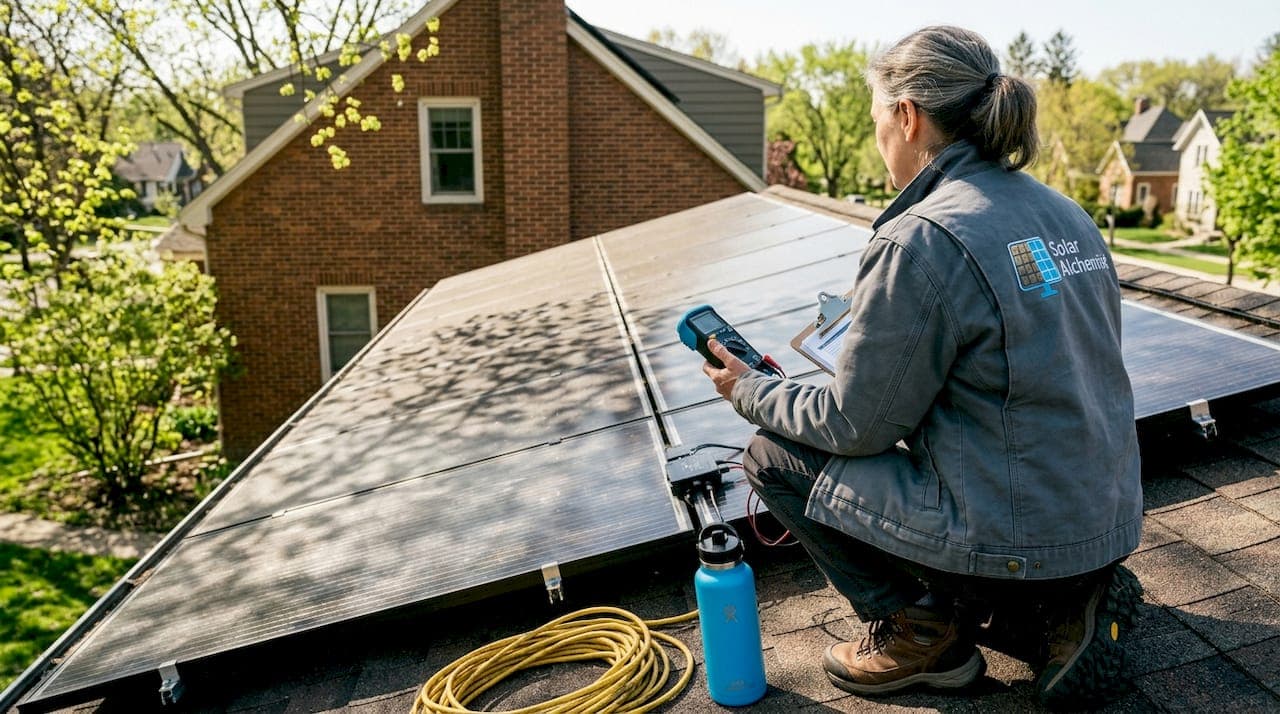
Solar panels look indestructible on your roof, and that durability fools a lot of people into thinking they can be ignored after installation. But why Wisconsin solar owners need annual maintenance goes far deeper than keeping glass clean. Wisconsin's freeze-thaw cycles, seasonal pollen, and specific code requirements create conditions that quietly erode system performance and put warranties at risk. Skip annual upkeep, and you may not notice the damage until your inverter fails, your warranty is void, or your energy bill creeps back up to where it started.
Table of Contents
- Key takeaways
- Why Wisconsin solar owners need annual maintenance
- Protecting your warranties and avoiding costly repairs
- Performance degradation you may not see coming
- Wisconsin's unique maintenance challenges
- Scheduling maintenance and choosing the right provider
- My honest take after years of servicing Wisconsin systems
- Protect your system with Solaralchemist
- FAQ
Key takeaways
| Point | Details |
|---|---|
| Wisconsin climate demands attention | Freeze-thaw cycles, snow, and pollen create stressors that standard maintenance schedules must address. |
| Warranties require documentation | Skipping inspections can void panel and inverter warranties worth thousands in replacement costs. |
| Silent performance loss adds up | Dust, soiling, and micro-cracks can reduce output by up to 25% before you notice anything wrong. |
| Code compliance is non-negotiable | Wisconsin follows NEC Articles 690 and 705, requiring verified wiring, grounding, and rapid shutdown checks. |
| Professional service protects your ROI | Documented annual inspections catch early faults and protect the financial return on your solar investment. |
Why Wisconsin solar owners need annual maintenance
If your installer told you solar panels are "low maintenance," that is mostly true. But low maintenance and no maintenance are two very different things. Annual professional inspections should include wiring, mounting hardware, inverter diagnostics, and shading assessments to keep your system running within its intended conditions.
A standard annual maintenance visit covers more than a quick visual check. Here is what a thorough inspection typically includes:
- Inverter diagnostics: Checking for fault codes, ventilation quality, unusual sounds, and firmware updates, since inverter lifespan runs 10 to 15 years and problems build quietly
- Wiring and connections: Inspecting DC and AC wiring for signs of wear, rodent damage, or loose connections that create fire and efficiency risks
- Mounting hardware: Tightening brackets and rails that Wisconsin's freeze-thaw cycles can loosen over successive winters
- Shading assessment: Identifying new obstructions like tree growth that may have developed since the original install
- Panel surface inspection: Looking for micro-cracks, delamination, and soiling that reduce cell output
- Cleaning evaluation: Determining whether rain has been sufficient or whether professional cleaning is needed to address pollen, dust, or bird droppings
Rain handles light dust reasonably well during Wisconsin summers, but it does nothing for sticky pollen in spring or the residue that accumulates near rooflines. Seasonal buildup is real, and it compounds.
Pro Tip: Ask your maintenance provider for a written checklist after every visit. That document is your first line of defense if you ever need to make a warranty claim with your panel or inverter manufacturer.
Protecting your warranties and avoiding costly repairs
The financial case for annual solar system upkeep is straightforward once you look at the numbers. Skipping documented inspections risks voiding your panel warranty, which typically runs around 25 years, and your inverter warranty, which generally covers 10 to 12 years. A single inverter replacement costs between $1,000 and $2,500. That figure alone exceeds years of routine inspection costs.
Warranty language from most major manufacturers requires that systems be maintained under normal operating conditions. "Normal" means regular inspections and documented service. If you file a claim after five years of zero maintenance records, the manufacturer has grounds to deny it. That is not a technicality buried in fine print. It is a standard clause that homeowners learn about the hard way.
Here is how the math plays out over time:
- Annual inspection cost: Typically $150 to $300 depending on system size and provider
- Professional cleaning cost: Usually $100 to $250 per visit, often bundled with inspections
- Cost of a voided inverter warranty: $1,000 to $2,500 out of pocket
- Cost of a failed panel string after years of undetected issues: Potentially $500 to $3,000 depending on the extent of damage
- Cost of maintaining documentation: Zero, beyond the time it takes to file records
Keeping thorough inspection documentation, including timestamped photos and service checklists, supports warranty claims and helps track system health year over year. Think of it as building a medical history for your system. When something goes wrong and you need to prove the system was properly cared for, that paper trail is what saves you money.
Early detection matters more than most owners realize. Wiring degradation and inverter communication errors do not announce themselves with flashing lights. They show up as small efficiency losses that compound quietly for months before becoming urgent failures.
Performance degradation you may not see coming
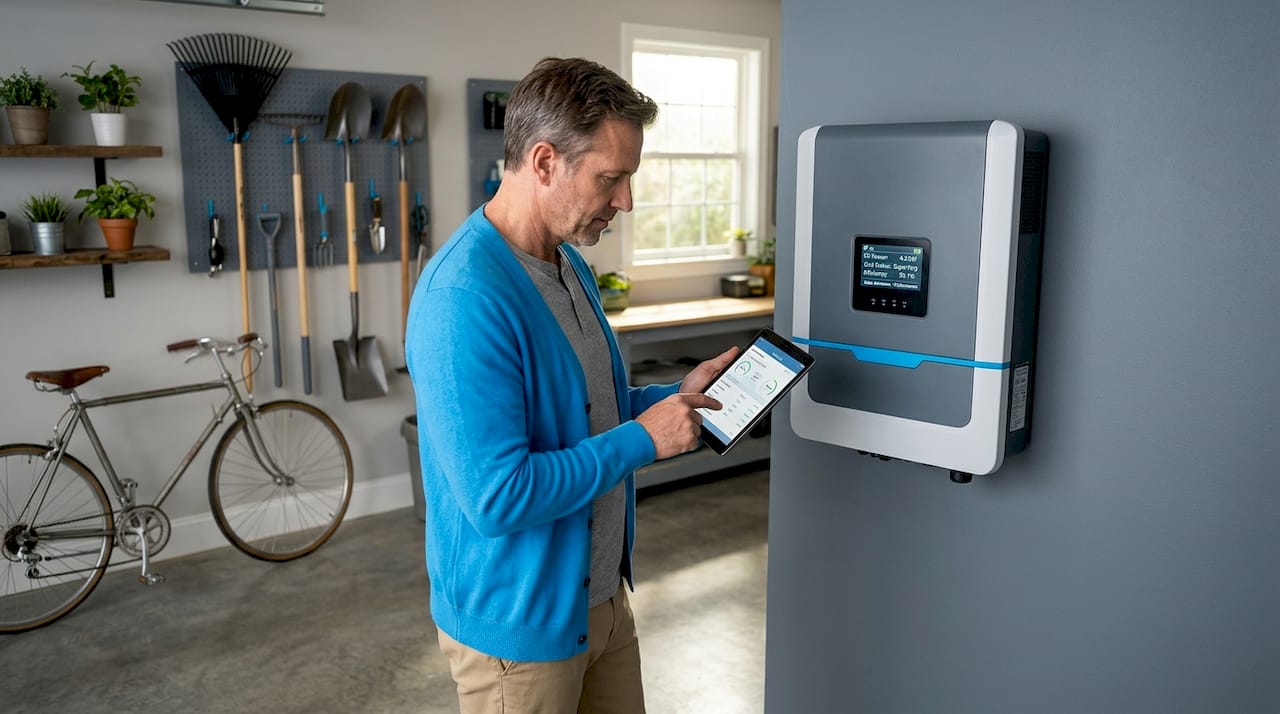
One of the core reasons to maintain solar energy systems is that the most damaging problems are invisible until they get serious. Incremental performance losses from dust, bird droppings, and inverter communication errors can silently cut into your output and ROI without triggering any obvious alarm. Monitoring can detect a 10% voltage dip in a panel string before you ever notice it in your electricity bill.
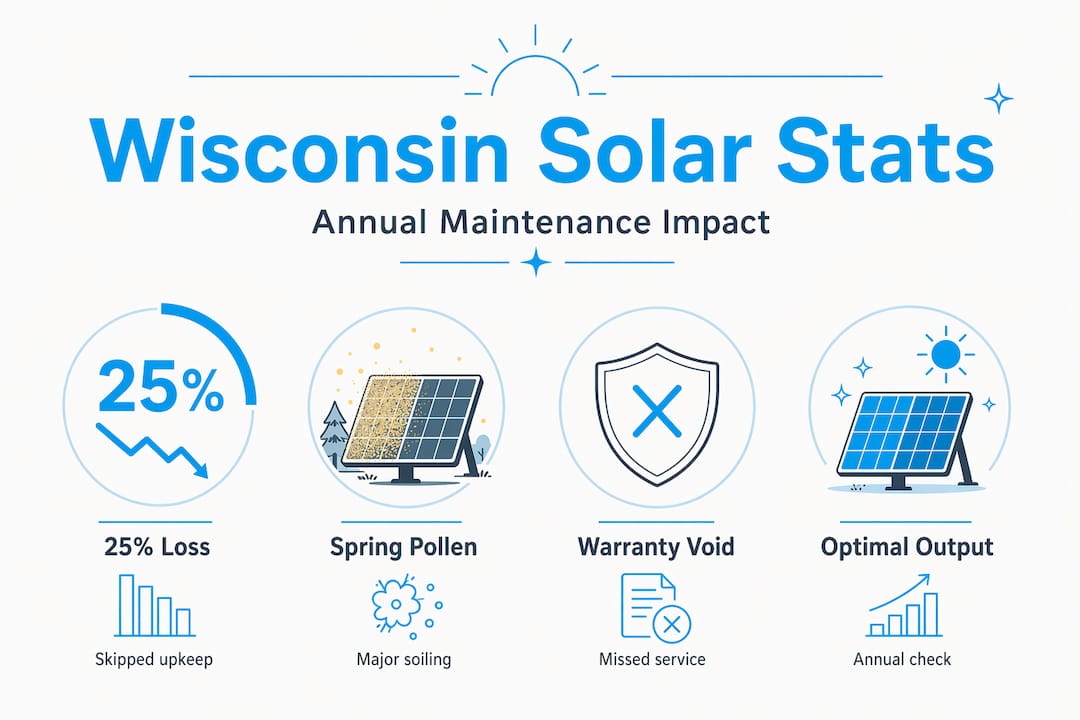
Poorly maintained panels can lose up to 25% efficiency annually. At that level, the energy cost savings that justified your installation in the first place are quietly disappearing.
Understanding the difference between inverter types changes how you approach fault detection:
| Inverter type | Fault detection | Maintenance implication |
|---|---|---|
| String inverter | One error reading for the whole array | A single underperforming panel affects all panels in the string |
| Microinverter | Module-level performance data | Faults isolated to individual panels for faster diagnosis |
| Power optimizer | Panel-level voltage optimization | Combines string inverter simplicity with module-level monitoring |
Systems with microinverters or power optimizers gain a significant advantage because they catch faults at the individual panel level before they drag down the whole array.
The fastest diagnostic tool available to you right now costs nothing. Pull up your inverter app or monitoring portal and compare your current kWh generation to the same week last year on a similar sunny day. A noticeable drop with no obvious explanation means you have a problem worth investigating. Tracking kWh generation and inverter error history on clear days is the most reliable early-warning system available.
Pro Tip: Set a calendar reminder each month to log your generation numbers. A spreadsheet with monthly kWh output for each year makes it easy to spot the slow downward trend that means something needs attention.
Wisconsin's unique maintenance challenges
Maintaining solar panels in Wisconsin is not the same as maintaining them in Arizona. The climate here creates specific stressors that owners in sunnier, drier states simply do not face.
Seasonal environmental factors like snow, pollen, dust, and temperature cycling create conditions that test mounts, wiring, and panel integrity repeatedly across every year. Here is how each factor plays out practically:
- Snow accumulation: Panels are designed to shed snow on their own due to their angle and smooth glass surface. Attempting mechanical removal with rakes or brushes risks scratching the anti-reflective coating or cracking cells. The rule is simple. Let the snow melt and slide off naturally.
- Freeze-thaw cycles: Water works into small gaps around mounting hardware and wire conduits, then expands when it freezes. Over several winters, this loosens connections and accelerates corrosion in ways that only a physical inspection can catch.
- Spring pollen season: Wisconsin's pollen season is intense and leaves a thick, sticky film that rain cannot fully rinse away. Professional cleaning after peak pollen season is one of the most cost-effective maintenance investments available.
- UV and thermal stress: Repeated heating and cooling cycles cause micro-cracks in cells over time. These are nearly invisible to the eye but detectable during a professional thermal or visual inspection.
Beyond physical wear, Wisconsin solar owners must also meet specific code compliance requirements. Annual maintenance verifies compliance with NEC Articles 690 and 705 and IEEE 1547 standards, covering wiring, grounding, labeling, inverter settings, and rapid shutdown devices. These are not optional. They are the legal framework your utility interconnection depends on.
A comparison worth noting for Wisconsin owners:
| Maintenance factor | DIY approach | Professional approach |
|---|---|---|
| Snow removal | High damage risk | Not recommended by either |
| Pollen cleaning | Partial results, soap residue risk | Deionized water removes residue completely |
| Wiring and code checks | Not possible without licensing | Certified inspection with documented results |
| Warranty documentation | Informal, may not satisfy claims | Timestamped checklist accepted by manufacturers |
Scheduling maintenance and choosing the right provider
Knowing you need annual maintenance is one thing. Setting up a system that actually gets done is another. Most Wisconsin solar owners get the best results by scheduling inspections in late spring, after pollen season winds down and before peak summer production begins. That timing lets you catch winter damage, clear seasonal buildup, and enter your highest-output months with a fully optimized system.
When evaluating maintenance providers, look for these qualities:
- Experience specifically with residential solar in Wisconsin's climate
- Use of professional-grade equipment, including deionized water systems for cleaning that leave no mineral deposits on panels
- Documented service reports with photos after every visit
- Knowledge of Wisconsin's interconnection and code compliance requirements
- Clear pricing with no upsell pressure
Pro Tip: Avoid any company that offers to clean panels with standard tap water and a brush. Hard water minerals leave residue that reduces light transmission, and abrasive brushes scratch anti-reflective coatings. Both problems hurt output.
DIY cleaning carries real risks beyond equipment damage. Roof access without proper safety equipment is a liability, and untrained hands on electrical components near inverters or disconnect boxes add danger. Professional service is not a luxury for larger systems. It is the sensible choice for anyone who wants to protect a $15,000 to $30,000 investment with a documented service record.
My honest take after years of servicing Wisconsin systems
I have worked on hundreds of solar systems across Dane County and surrounding areas, and the pattern I see most often is the same. A homeowner installed a quality system, watched their electric bill drop, and then mentally filed solar under "handled." They do not check the monitoring portal. They do not schedule inspections. They assume that because nothing has visibly broken, everything is fine.
The uncomfortable truth I have learned is that solar panels are financial assets, not just equipment. You would not skip oil changes on a vehicle you depend on. You would not ignore a rental property for years without checking the plumbing. The logic is identical here. A solar array generating power on your roof represents tens of thousands of dollars in expected return over 25 years. Treating it as a "set and forget" appliance is the most expensive mistake I see homeowners make.
What changed my perspective early in my career was watching a client lose a $2,200 inverter warranty claim because they had zero service records. The inverter failed after nine years, one year before the warranty expired. The manufacturer denied the claim due to lack of documented maintenance. That client spent $1,800 out of pocket on a replacement that should have been free. One annual inspection per year for nine years would have cost far less.
Proactive maintenance is not a cost. It is the mechanism that keeps the return on your investment on track.
— Marquis
Protect your system with Solaralchemist
If you have been putting off scheduling a maintenance visit, this is the right moment to change that. Solaralchemist is Madison's dedicated solar panel cleaning and maintenance specialist, serving Wisconsin homeowners with professional-grade deionized water cleaning, full system inspections, and detailed service documentation that satisfies manufacturer warranty requirements.
Every visit from Solaralchemist includes a written service report with photos, so your warranty protection stays intact and your system history is always on record. You can see the real results of professional maintenance in our before and after gallery, where the difference in panel condition speaks for itself. When you are ready to schedule or want to know whether your panels are due for a cleaning, get started here and keep your system producing at the level you invested in.
FAQ
Why do Wisconsin solar panels need annual maintenance?
Wisconsin's freeze-thaw cycles, heavy pollen seasons, and specific code compliance requirements create conditions that damage mounts, wiring, and panel output over time. Annual inspections catch these issues before they become expensive failures.
Can skipping maintenance void my solar warranty?
Yes. Most panel and inverter manufacturers require documented service records as a condition of warranty coverage. A single inverter replacement costs $1,000 to $2,500, which far exceeds the cost of annual inspections.
How much output can I lose without regular maintenance?
Poorly maintained panels can lose up to 25% of their efficiency annually due to soiling, micro-cracks, and inverter issues, all without triggering obvious alerts.
When is the best time to schedule maintenance in Wisconsin?
Late spring is ideal. Scheduling after peak pollen season and before summer's highest production months lets you clear seasonal buildup and address any winter damage before it affects your peak output period.
Is professional cleaning necessary, or can I do it myself?
Professional cleaning using deionized water removes mineral deposits and pollen residue that tap water and brushes cannot. DIY attempts risk scratching anti-reflective coatings, and roof access without proper safety equipment adds unnecessary physical risk for most homeowners.
Recommended
- Solar Panel Cleaning Madison WI | Professional Solar Maintenance | Solar Alchemist
- Solar Panel Warranty Protection | Manufacturer Cleaning Guidelines | Solar Alchemist
- Solar Panel Cleaning Before & After Results | Our Work | Solar Alchemist
- About Solar Alchemist | Dane County Solar Panel Cleaning Expert