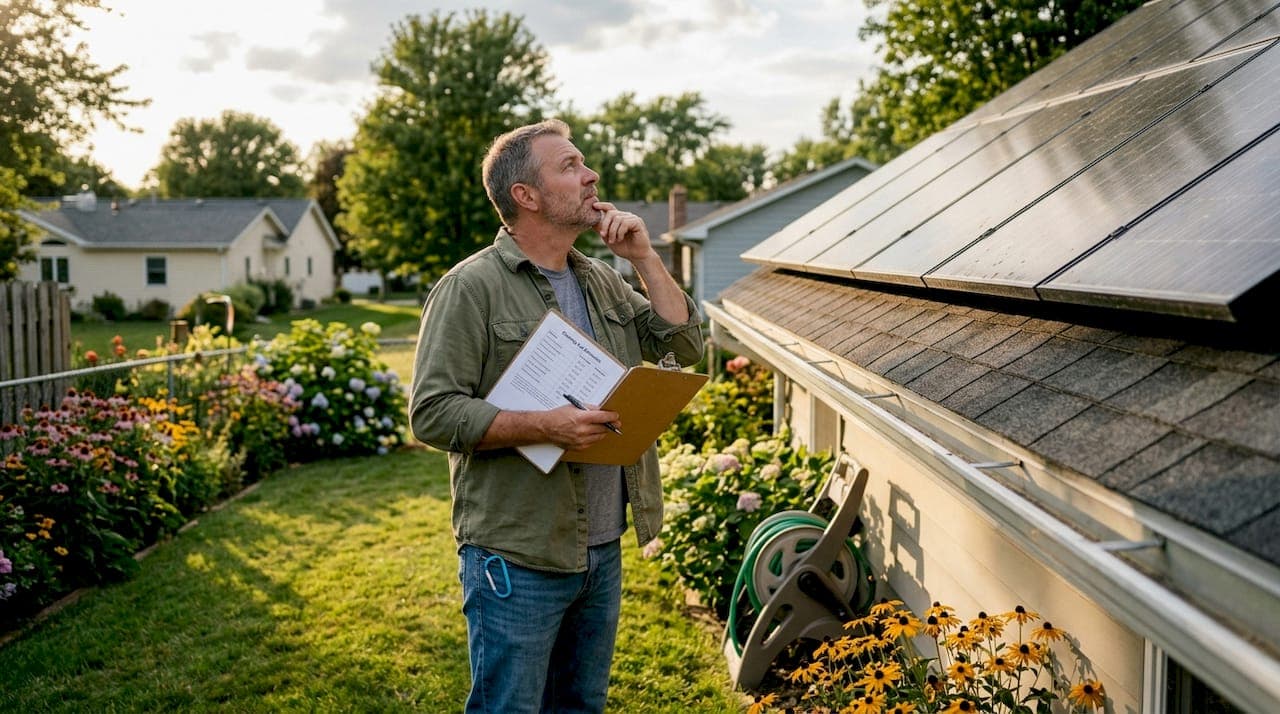
Solar panel cleaning in Southern Wisconsin costs between $150 and $390 for most residential systems, and skipping it costs you more. Local debris like spring pollen, cottonwood fluff, and bird droppings reduce annual energy output by 20–30%, making regular cleaning one of the highest-return maintenance decisions you can make. Commercial arrays run $500–$1,500 depending on system size and access. This guide covers what drives those prices, when to schedule service, which cleaning methods protect your investment, and what you gain from keeping your panels clean year-round.
What factors influence solar panel cleaning costs in Southern Wisconsin?
Solar panel cleaning prices vary based on several concrete factors. Understanding them helps you evaluate quotes accurately and avoid paying for services you do not need.
System size and panel count drive the base price more than anything else. Residential systems with 30 panels typically cost $300–$390 to clean, while smaller systems may hit a minimum service charge of $150 regardless of panel count. That minimum exists because labor, travel, and equipment setup costs are fixed per visit.
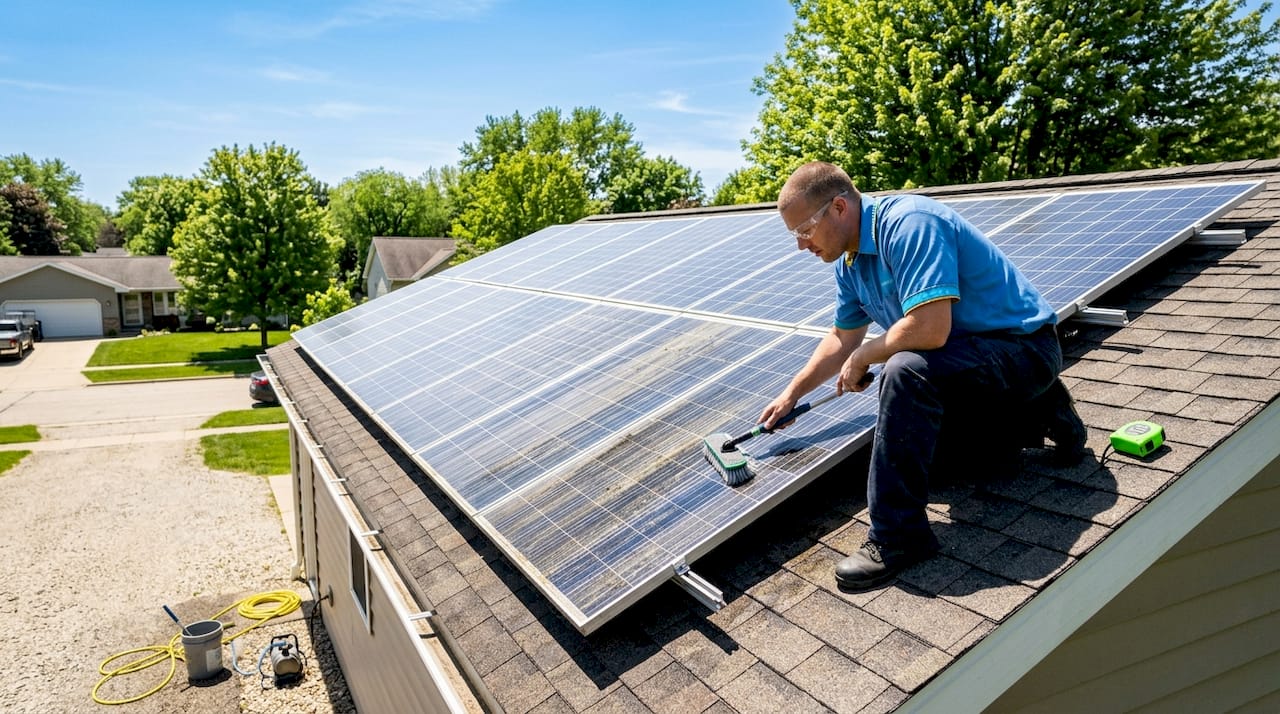
Roof accessibility and height add to the price when panels sit on steep pitches or require specialized ladder setups. Ground-mounted arrays are generally cheaper to clean than rooftop systems because technicians do not need fall protection equipment.
The most common cost factors for Southern Wisconsin homeowners include:
- Panel count: More panels mean more time and more water. Pricing per panel typically ranges from $10 to $15.
- Roof pitch and height: Steep or tall roofs require additional safety equipment and time.
- Debris type: Heavy cottonwood buildup or bird droppings require more passes than light dust.
- Add-on inspections: Visual checks for wiring damage, loose mounts, or failing micro-inverters add value but also add to the invoice.
- Service frequency: Some providers offer annual maintenance plans covering two cleanings plus electrical checks for $200–$400, which lowers the per-visit cost.
Commercial solar cleaning is priced differently. Large arrays with custom access requirements receive quotes based on scope, not a flat rate. If you manage a commercial property in the Madison area, expect a site assessment before any pricing is confirmed.
Pro Tip: Get at least two quotes and ask each provider whether their price includes a visual inspection. Inspection during cleaning is standard practice among reputable services and adds real value beyond dirt removal.
When should you clean solar panels in Southern Wisconsin?
Cleaning solar panels once or twice per year is the standard recommendation for most Wisconsin systems. Spring is the single most important window. Panels accumulate road salt residue, ice melt runoff, and compacted debris through winter, and then face a second wave of pollen and cottonwood in april and may. Cleaning before peak summer sun arrives means your system runs at full capacity when electricity demand is highest.
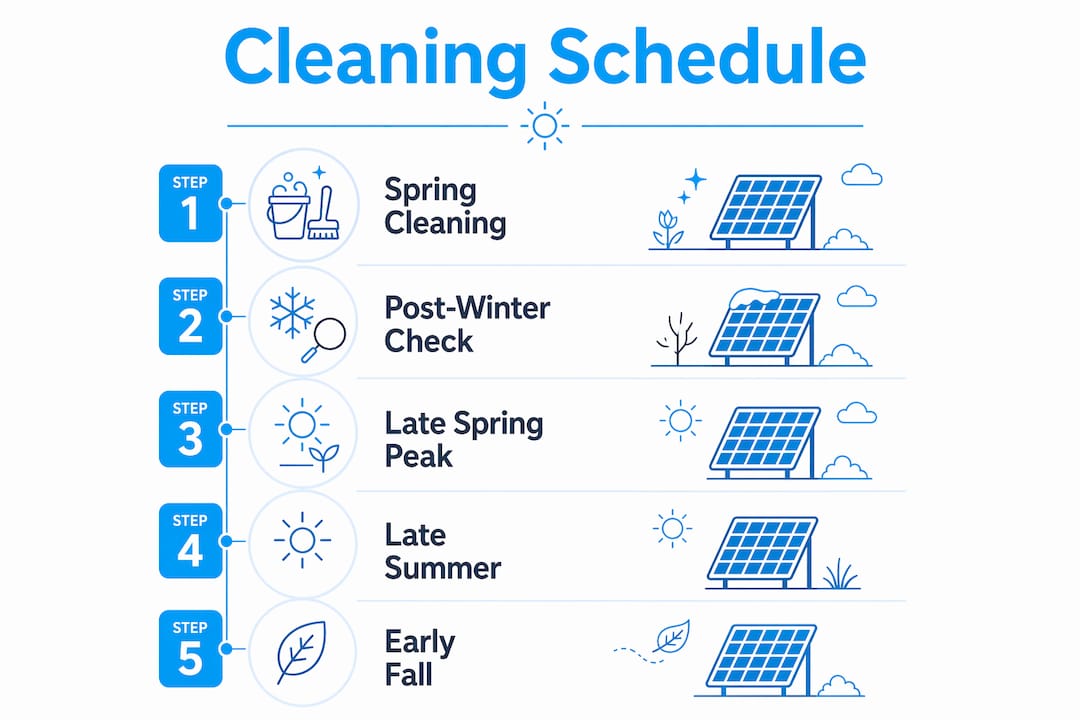
Spring cleaning also serves as a post-winter inspection. Technicians can spot ice-related micro-cracks, shifted mounting hardware, or water intrusion that occurred during freeze-thaw cycles. Catching those issues in april costs far less than diagnosing them after a summer of reduced output.
Pro Tip: Schedule your spring cleaning before cottonwood season peaks in late may. Cottonwood fluff mats against wet panel surfaces and is significantly harder to remove once it dries.
A second cleaning in late summer or early fall makes sense for systems near agricultural fields, tree lines, or high-traffic roads. Those environments generate more airborne debris than suburban rooftops. For most standard residential systems in Madison, Janesville, or Sun Prairie, one spring cleaning per year is sufficient.
Not every system needs the same frequency. Panels with steep tilt angles and regular rainfall shed debris naturally and may not require professional cleaning as often. Flat or low-angle installations hold debris and need more attention. Check your monitoring app for output trends. A gradual decline over weeks points to soiling. A sudden drop points to a system fault, not dirt.
What are safe and effective solar panel cleaning methods?
The cleaning method matters as much as the cleaning schedule. Using the wrong technique can void your manufacturer warranty and cause permanent damage to the panel surface.
Professionals use low-pressure rinse systems with deionized water and no soap. Deionized water leaves no mineral deposits or residue after it dries. Soap, including dish soap, leaves a sticky film that attracts dust faster than a bare panel surface. That film also risks voiding manufacturer warranties on many panel brands.
High-pressure washing strips anti-reflective coatings and forces water into junction boxes and wiring conduits. Once water intrudes into electrical components, the damage is often invisible until output drops months later. Professionals avoid high pressure entirely. They also avoid cold water on hot panels. Thermal shock from cold water on sun-heated panels causes micro-cracks in photovoltaic cells. Those cracks do not show up on a visual inspection. They show up as a slow, permanent decline in output over the following months.
Safe professional cleaning follows a clear sequence:
- Timing: Clean in early morning or on overcast days when panels are cool.
- Rinse first: A low-pressure rinse removes loose debris before any contact.
- Soft brush pass: A soft-bristle brush on an extension pole lifts stuck material without scratching the glass.
- Final rinse with deionized water: Removes all residue and leaves a spot-free surface.
- Visual inspection: Check for cracked glass, discolored cells, loose wiring, and mounting hardware.
DIY cleaning is possible for ground-mounted systems or single-story rooftops with safe access. Use a garden hose on a gentle setting, a soft brush, and no soap. Never use a pressure washer. Never climb a wet roof. For two-story homes or steep pitches, the fall risk alone justifies hiring a licensed technician. Deionized water systems are not standard household equipment, so DIY results will not match professional outcomes even when the technique is correct.
What benefits do homeowners and businesses gain from solar panel cleaning?
Regular cleaning delivers measurable returns that go well beyond a cleaner-looking roof. Here are the core benefits, ranked by impact:
- Restored energy output. Southern Wisconsin arrays lose 20–30% of annual production to local debris. A single professional cleaning restores that output. For a system generating $1,200 in annual savings, that is $240–$360 in recovered value per year.
- Early fault detection. Cleaning sessions include visual inspections that catch wiring damage, failing micro-inverters, and loose mounting hardware before they become expensive failures. A $300 cleaning that prevents a $1,500 inverter replacement pays for itself immediately.
- Warranty protection. Most panel manufacturers require cleaning with approved methods. Using soap, high pressure, or abrasive tools voids coverage. Professional cleaning with deionized water keeps your warranty intact.
- Longer system lifespan. Debris buildup causes localized heat stress called hot spots. Hot spots degrade cells faster than normal wear. Keeping panels clean reduces that stress and extends the productive life of your system.
- Accurate performance data. A sudden drop in energy production often signals a system fault rather than dirt. Cleaning removes the soiling variable, so your monitoring data accurately reflects system health. That clarity helps you and your installer diagnose real problems faster.
Businesses operating commercial arrays in Waunakee or across Southern Wisconsin gain an additional benefit: documentation. Professional cleaning services provide service records that support warranty claims and demonstrate due diligence for tax credit compliance.
Key takeaways
Professional solar panel cleaning in Southern Wisconsin restores 20–30% of lost annual output and costs $150–$390 for residential systems, making it one of the highest-return maintenance services available to local solar owners.
| Point | Details |
|---|---|
| Residential cleaning costs | Most Southern Wisconsin homeowners pay $150–$390 per visit depending on system size. |
| Energy output recovery | Local debris causes 20–30% annual output loss; cleaning restores that production. |
| Best cleaning window | Schedule service in spring before cottonwood season peaks for maximum summer output. |
| Safe cleaning method | Use low-pressure deionized water and soft brushes; avoid soap and pressure washers. |
| Inspection value | Professional cleanings catch wiring faults and hardware issues before they cause costly failures. |
What I have learned cleaning solar panels across Southern Wisconsin
The most common misconception I hear from homeowners is that cleaning is optional if their monitoring app looks "pretty good." Output data rarely tells the full story. A system losing 15% to pollen buildup still shows positive numbers. It just shows lower positive numbers than it should. Most owners have no baseline to compare against, so the loss goes unnoticed for months.
Pricing surprises people too. The $150 minimum charge feels high for a small system, but it reflects real costs: driving to your property, setting up equipment, and spending an hour on your roof. Providers who quote $50 for a full residential cleaning are cutting corners somewhere, usually on method or insurance.
The detail that sticks with me most is thermal shock. I have seen panels with micro-cracks that the homeowner had no idea existed. They were caused by a well-intentioned DIY cleaning with a cold garden hose on a hot afternoon in july. The output loss was gradual enough that no alarm triggered. A professional inspection during a routine cleaning caught the damage. That is the kind of thing you cannot undo, but you can absolutely prevent.
Balancing DIY and professional service comes down to access and method. If your panels are on a ground mount and you have a soft brush and a hose with a gentle nozzle, you can maintain them between professional visits. But for your annual deep clean, especially the spring prep before peak production season, hire someone who uses deionized water and carries liability insurance. The cost is justified every time.
— Marquis
Solaralchemist: professional solar cleaning for Southern Wisconsin
Solaralchemist serves homeowners and businesses across Southern Wisconsin with professional-grade cleaning that uses deionized water systems and manufacturer-approved methods. Every visit includes a visual inspection at no extra charge.
Whether your system is in Madison, Janesville, or a smaller community across the region, Solaralchemist brings the same equipment and expertise to every job. Pricing is transparent, and service is scheduled around your peak production windows. Check the signs you need a cleaning to see where your system stands, or visit the Madison service page to request a quote. Your panels work hard for you. Solaralchemist makes sure they keep doing it.
FAQ
How much does solar panel cleaning cost in Southern Wisconsin?
Residential cleaning typically costs $150–$390 depending on system size, with 30-panel homes usually paying $300–$390. Commercial arrays run $500–$1,500 based on scope and access.
How often should I clean my solar panels in Wisconsin?
Most Wisconsin systems benefit from one to two cleanings per year. Spring is the most important window because it removes winter buildup and prepares panels for peak summer production.
Can I clean my solar panels myself?
DIY cleaning is safe for ground-mounted or single-story systems using a soft brush, a gentle hose setting, and no soap. Avoid pressure washers, cold water on hot panels, and any roof with a steep pitch or wet surface.
Does cleaning solar panels actually improve energy output?
Southern Wisconsin arrays lose 20–30% of annual output to local debris including pollen, cottonwood, and bird droppings. Professional cleaning restores that lost production, often recovering hundreds of dollars in annual energy value.
What cleaning method is safe for solar panels?
Low-pressure rinsing with deionized water and a soft-bristle brush is the standard professional method. Soap leaves residue that attracts dust and can void manufacturer warranties, so reputable services avoid it entirely.