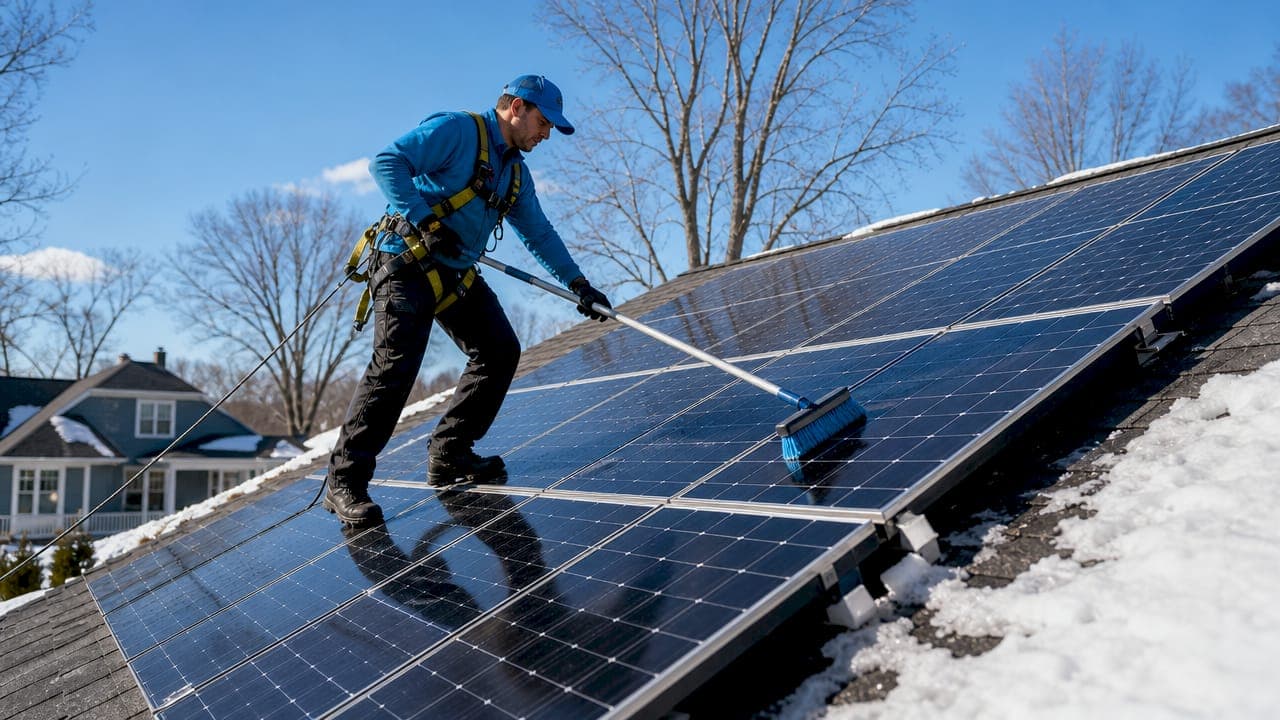
Solar panel cleaning after Wisconsin winter is the single most effective step you can take to recover lost energy output before peak summer production begins. Wisconsin winters deposit layers of grime, mineral residue, and debris that cut energy output by 15% to 30%, and your monitoring app almost certainly will not flag the problem. The industry term for this is soiling loss, and it compounds silently across every cloudy, frozen month from november through march. Solaralchemist, based in Madison, Wisconsin, works with homeowners and businesses across Dane County who discover their systems have been underperforming for months without a single alert.
Why solar cleaning matters after Wisconsin winter
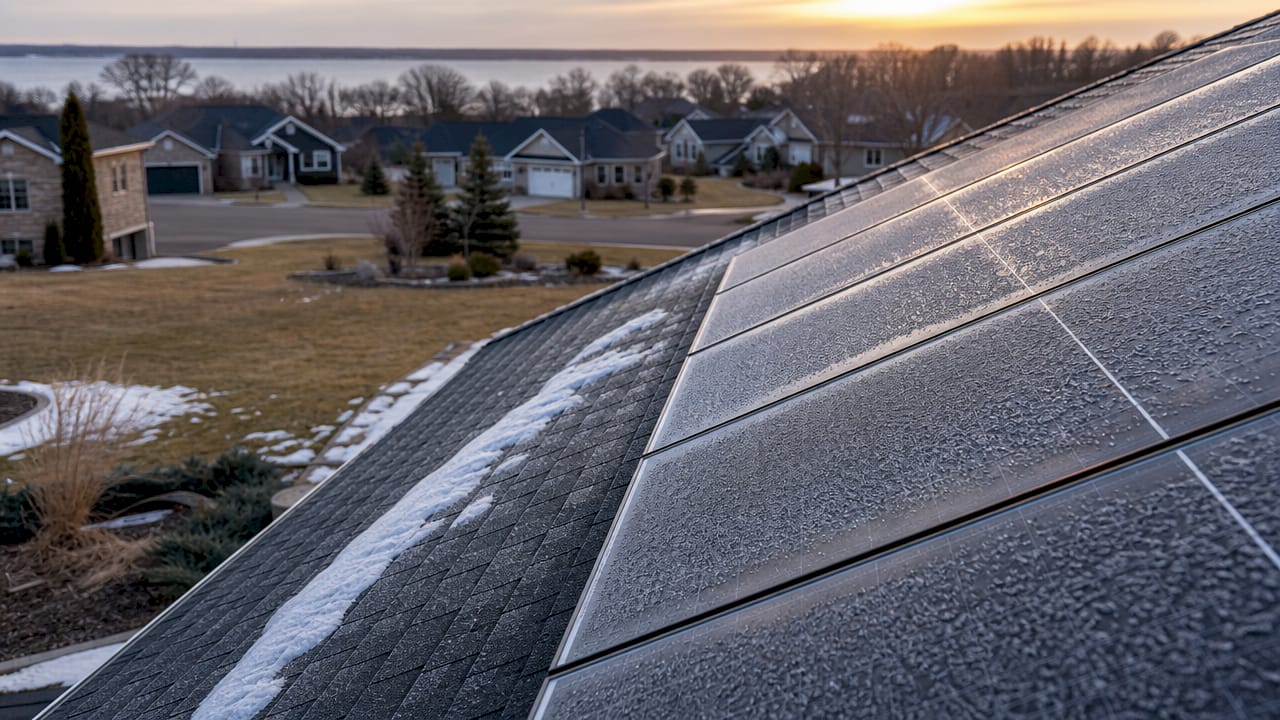
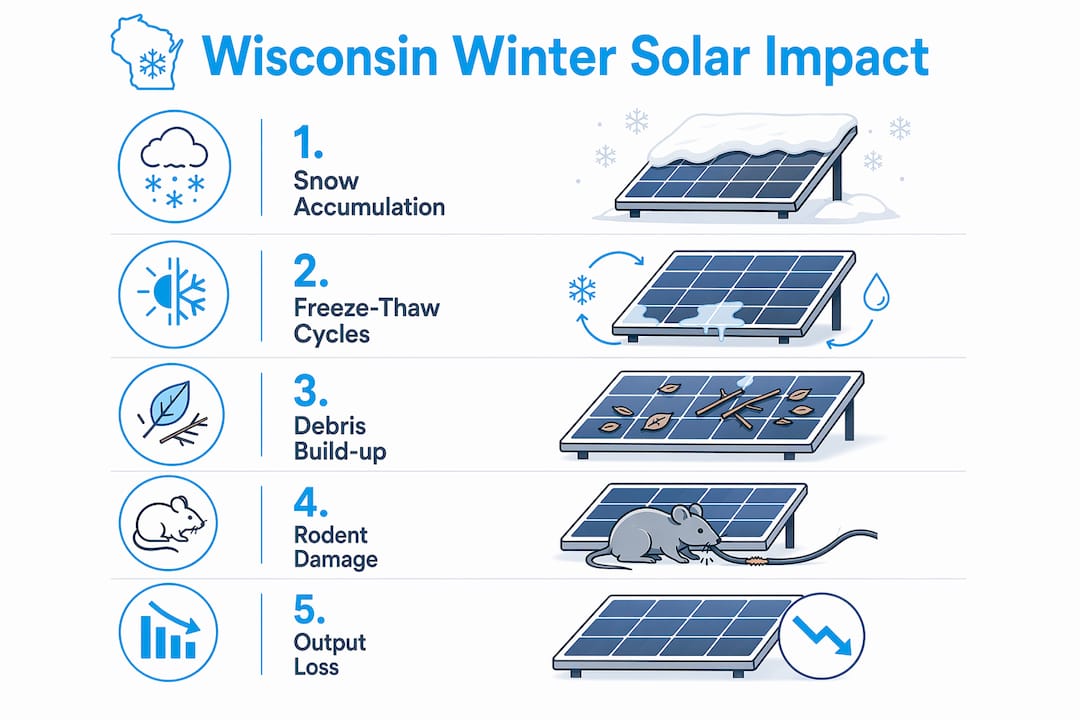
Wisconsin winters are harder on solar panels than most homeowners expect. Snow, frost, and repeated freeze-thaw cycles leave behind more than just water. As snow melts and refreezes, it carries dirt, road salt aerosols, and organic debris across the panel surface, then locks that layer in place when temperatures drop again. By the time spring arrives, panels are coated with a film that blocks light before it ever reaches the photovoltaic cells.
Monitoring apps report "all green" even when output has dropped 15–25% due to soiling. That means you can lose a quarter of your system's production for months without a single alert. Most homeowners only notice the problem when they compare spring electricity bills to the previous year.
The impact of snow on solar panels goes beyond the obvious. Rain and snowmelt do wash some debris away, but they also deposit mineral residue as they evaporate. Hard water from Wisconsin's glacially formed soil leaves calcium and magnesium deposits on glass surfaces. Those mineral spots scatter and absorb light, reducing cell efficiency even on bright spring days.
Pro Tip: If your system has a production monitoring portal like Enphase Enlighten or SolarEdge mySolarEdge, pull your daily output data from october through april and compare it month over month. A gradual downward slope that does not recover after a sunny week is a clear sign of soiling loss, not just seasonal variation.
The key takeaway here is simple. Snow and rain are not substitutes for professional cleaning. They move debris around. They do not remove it.
How does Wisconsin winter weather damage solar panel performance?
Winter in Wisconsin creates two distinct problems: surface soiling and mechanical stress. Most homeowners focus on the first and overlook the second entirely.
On the surface, the buildup includes:
- Road salt aerosols carried by wind from highways and treated roads, which bond to glass and resist simple rinsing
- Pollen and organic debris that accumulate under snow and become cemented to the surface during freeze-thaw cycles
- Mineral deposits left by hard water as snowmelt evaporates from panel glass
- Bird droppings and lichen that establish during warmer breaks in winter and harden by spring
Below the surface, freeze-thaw cycles cause physical shifts in racking systems, mounts, and wiring. Metal expands and contracts with each temperature swing. Over a full Wisconsin winter, that movement loosens bolts, stresses conduit connections, and can crack weatherproofing seals around junction boxes. None of this is visible until you physically inspect the system after snowmelt.
Rodents are another underappreciated winter risk. Mice and squirrels seek warmth under rooftop arrays during cold months. They chew through wiring insulation and nesting materials can block ventilation gaps. A spring inspection regularly turns up rodent damage that developed silently all winter.
What is the right cleaning frequency for Wisconsin solar panels?
Residential solar systems in temperate climates like Wisconsin need professional cleaning 1–2 times per year to maintain peak output. For most Wisconsin homeowners, one thorough spring cleaning covers the annual requirement. Systems near agricultural fields, construction zones, or heavily traveled roads may benefit from a second cleaning in late summer.
The recommended post-winter cleaning process follows a clear sequence:
- Schedule in early spring. Target late march through april, after the last hard freeze but before peak pollen season. Spring cleaning restores roughly 20% of production lost during winter buildup, capturing more high-output days before summer.
- Use deionized water and soft brushes. Deionized water leaves zero mineral residue on the glass surface. Soft, non-abrasive brushes remove debris without scratching the anti-reflective coating.
- Avoid pressure washers entirely. Pressure washers force water into electrical junction boxes and between laminate layers, causing delamination and electrical faults that void most panel warranties.
- Clean in the morning or on overcast days. Cleaning hot panels with cold water causes thermal shock, which can micro-crack cells. Morning cleaning on a mild day prevents this.
- Document the condition before and after. Photos of panel surfaces, mounts, and wiring give you a baseline for the next inspection and support any warranty claims.
Pro Tip: Never use dish soap, vinegar, or household glass cleaners on solar panels. These leave residue films or strip anti-reflective coatings. Deionized water alone, applied with a soft brush, is the professional standard used by Solaralchemist for every service visit.
The importance of solar panel cleaning is not just about removing visible dirt. It is about restoring the optical clarity of the glass so that maximum light reaches the cells underneath.
Why does post-winter inspection matter as much as cleaning?
Cleaning restores surface performance. Inspection protects the system's long-term health. The two work together, and combining them in a single spring visit is the most efficient approach.
Annual visual inspections typically take 2–3 hours for a residential system and catch mechanical or electrical faults before they worsen over summer. A trained technician checks for loose mounting hardware, degraded wiring insulation, corrosion at electrical connections, cracked glass, and signs of rodent activity. These are problems that a homeowner standing on the ground cannot see.
The spring inspection guide for Wisconsin covers several specific checkpoints that matter after a hard winter:
- Racking and mounting hardware: Bolts loosen over repeated freeze-thaw cycles. A torque check takes minutes and prevents panels from shifting during summer storms.
- Wiring and conduit: Insulation cracks from cold exposure. Exposed wiring is a fire and efficiency risk.
- Junction boxes and seals: Water intrusion from winter ice can corrode internal connections. Resealing prevents further damage.
- Panel glass: Micro-cracks from hail or ice impact reduce cell output and can worsen under summer UV exposure.
Skipping basic checks leads to costly repairs or full panel replacements that a simple inspection would have prevented. A cracked seal costs almost nothing to fix in spring. The same problem left until fall can mean a failed inverter or a shorted string of panels.
Is professional solar cleaning worth the cost in Wisconsin?
Professional solar panel cleaning costs between $150 and $500 per visit for a typical residential system. That range reflects system size, roof pitch, and access difficulty. For most Wisconsin homeowners, a standard single-story system falls in the lower half of that range.
The financial case for cleaning is straightforward. A system producing 15–25% below its rated output is leaving money on the table every single day. Restoring that output through a single spring cleaning typically pays for the service cost within the first few months of the production season.
| Scenario | Annual impact |
|---|---|
| No cleaning, 15% soiling loss | Significant reduction in annual kWh output and electricity savings |
| One spring cleaning | Output restored to near-rated capacity for peak summer months |
| Two cleanings per year | Consistent high output, especially for systems near roads or fields |
| Skipping inspection | Risk of undetected mechanical faults leading to costly repairs |
Proactive maintenance maintains consistent high output rather than reacting to losses after they accumulate. Waiting until your electricity bill spikes to schedule a cleaning means you have already lost weeks or months of peak production. The cost savings from regular cleaning compound over the life of a system worth thousands of dollars.
Regular cleaning and maintenance protect a solar investment worth thousands of dollars by preventing both efficiency losses and hardware failures. The math consistently favors cleaning. The only question is timing.
Pro Tip: Book your spring cleaning in february or early march. Wisconsin solar service providers fill their spring schedules fast. Waiting until may means your panels underperform through april, one of the highest-output months of the year.
Key takeaways
Solar panel cleaning after Wisconsin winter is not optional maintenance. It is the primary action that determines how much of your system's rated capacity you actually capture during the high-production months.
| Point | Details |
|---|---|
| Winter soiling causes real losses | Dirty panels lose 15–30% output, and monitoring apps rarely flag the problem. |
| Spring is the best cleaning window | Cleaning in late march or april restores output before peak summer production. |
| Deionized water is the correct method | Pressure washers void warranties and cause delamination; use soft brushes and deionized water. |
| Inspection must accompany cleaning | Freeze-thaw cycles loosen mounts and degrade wiring that only a hands-on check will find. |
| Professional cleaning pays for itself | A $150–$500 service visit recovers months of lost energy output and protects long-term ROI. |
Wisconsin winters demand a different maintenance mindset
Most solar owners treat cleaning as a cosmetic task. I see the results of that thinking every spring. A homeowner calls because their bill is higher than expected, and when I get on the roof, the panels look like frosted glass. The output loss has been building since november.
The freeze-thaw mechanical risk is the part that surprises people most. Wisconsin does not just get cold. It cycles. Temperatures swing above and below freezing dozens of times between october and april. Every cycle stresses the hardware. I have found loose mounting bolts on systems that were installed perfectly two years earlier. I have found chewed wiring that a homeowner had no idea existed. None of it showed up on the monitoring dashboard.
My honest advice is to treat solar maintenance exactly like HVAC maintenance. You do not wait for your furnace to stop working before you change the filter. You schedule it. You do it in fall before heating season and in spring before cooling season. Solar is the same. Schedule your cleaning and inspection for early spring, before pollen peaks and before the high-output months begin. Annual maintenance for Wisconsin solar owners is not a luxury. It is how you protect a significant investment and make sure it performs the way you planned when you signed the contract.
The homeowners who get the most from their systems are not the ones with the newest equipment. They are the ones who show up every spring with a scheduled service visit already on the calendar.
— Marquis
Solar panel cleaning services across Wisconsin
Wisconsin homeowners and businesses have a narrow window each spring to restore panel performance before the highest-output months of the year arrive.

Solaralchemist provides professional solar panel cleaning and inspection services across Madison, DeForest, Watertown, Whitewater, Delavan, Lake Mills, and surrounding communities. Every service visit uses professional-grade deionized water systems and includes a mechanical inspection so you get both surface cleaning and a full system health check in one appointment. Spring schedules fill quickly. Homeowners in DeForest and across Dane County can check when to schedule a cleaning and book before the april rush. Your system spent all winter accumulating losses. One visit recovers them.
FAQ
How much output do dirty solar panels lose in Wisconsin?
Dirty solar panels lose 15% to 30% of energy output over time, with suburban systems losing 15–25% from pollen and dust. Wisconsin winters compound this through mineral deposits and road salt residue that standard rain does not remove.
When is the best time to clean solar panels in Wisconsin?
Spring is the best time, specifically late march through april. Spring cleaning restores roughly 20% of production lost during winter buildup and positions your system for peak summer output.
Can I clean my solar panels myself after winter?
You can, but the risks are significant. Pressure washers void warranties and cause delamination. Walking on or near panels risks physical damage. Professional technicians use deionized water and soft brushes, and they inspect hardware at the same time, which a DIY clean cannot replicate.
How often should Wisconsin solar panels be professionally cleaned?
Most residential systems need professional cleaning 1–2 times per year. One thorough spring cleaning covers most Wisconsin homeowners. Systems near agricultural fields or busy roads benefit from a second visit in late summer.
Will my monitoring system tell me if my panels need cleaning?
No. Monitoring apps report normal status even when output has dropped 15–25% from soiling. Gradual efficiency loss from dirt is routinely mistaken for normal seasonal variation until the losses become severe.