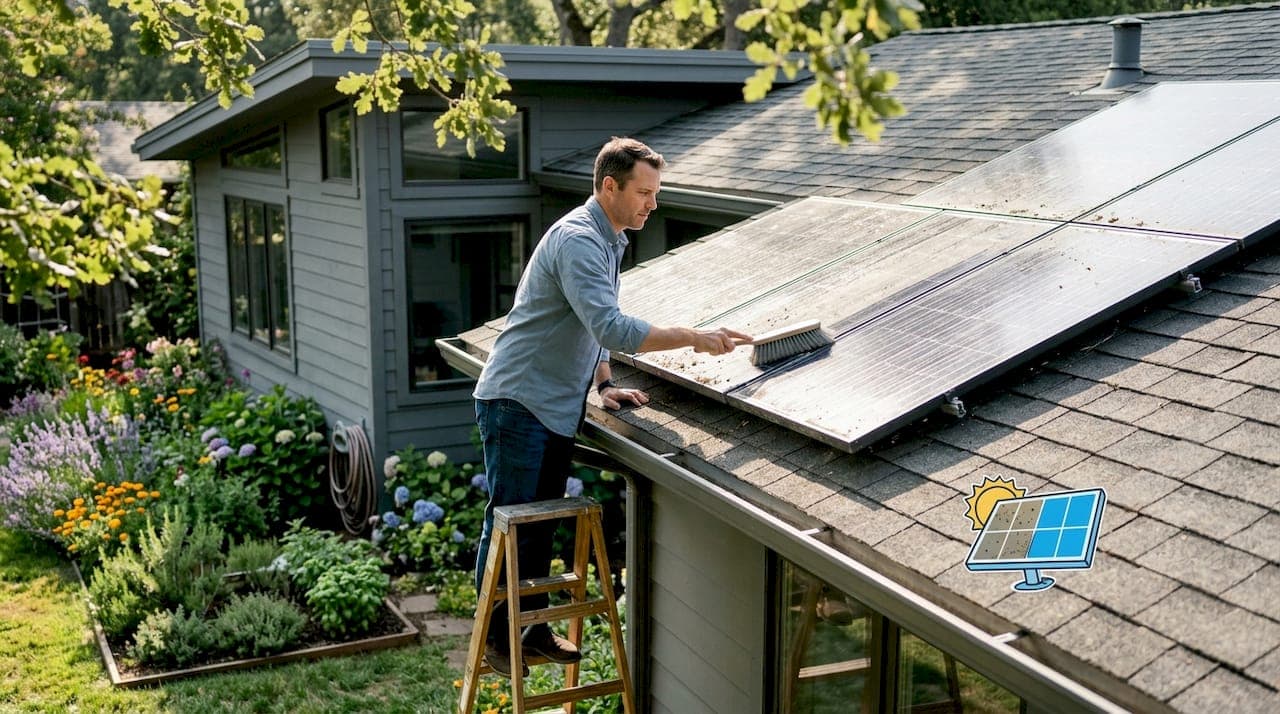
Most homeowners assume rainfall keeps their solar panels working at full capacity. It doesn't. Dirt, dust, bird droppings, and pollen build up steadily, and understanding how solar panel cleaning improves home value starts with recognizing what that grime actually costs you. Soiled panels don't just lose efficiency quietly. They bleed energy output, shrink your monthly savings, and signal to buyers that your system hasn't been cared for. The connection between clean panels and real property value is more direct than most people realize.
Table of Contents
- Key takeaways
- How solar panels increase home value
- The real impact of dirty solar panels on efficiency and value
- Cleaning frequency, methods, and what it costs
- Why maintenance records are your best sales tool
- Cleaning mistakes that quietly kill your system's value
- My honest take on what cleaning actually does for your home
- Protect your solar investment with Solaralchemist
- FAQ
Key takeaways
| Point | Details |
|---|---|
| Owned systems add real value | Owned solar panels add 4–10% to home resale value, but only when properly maintained. |
| Dirt reduces output significantly | Soiling can cut energy production by up to 30%, directly reducing the financial case for your system. |
| Cleaning pays for itself | Professional cleaning typically recovers 5–25% in lost energy output, with measurable ROI. |
| Records matter at resale | Documented cleaning history reassures buyers and supports warranty claims during a sale. |
| Technique prevents damage | Wrong cleaning methods cause permanent efficiency loss, making professional service worth the cost. |
How solar panels increase home value
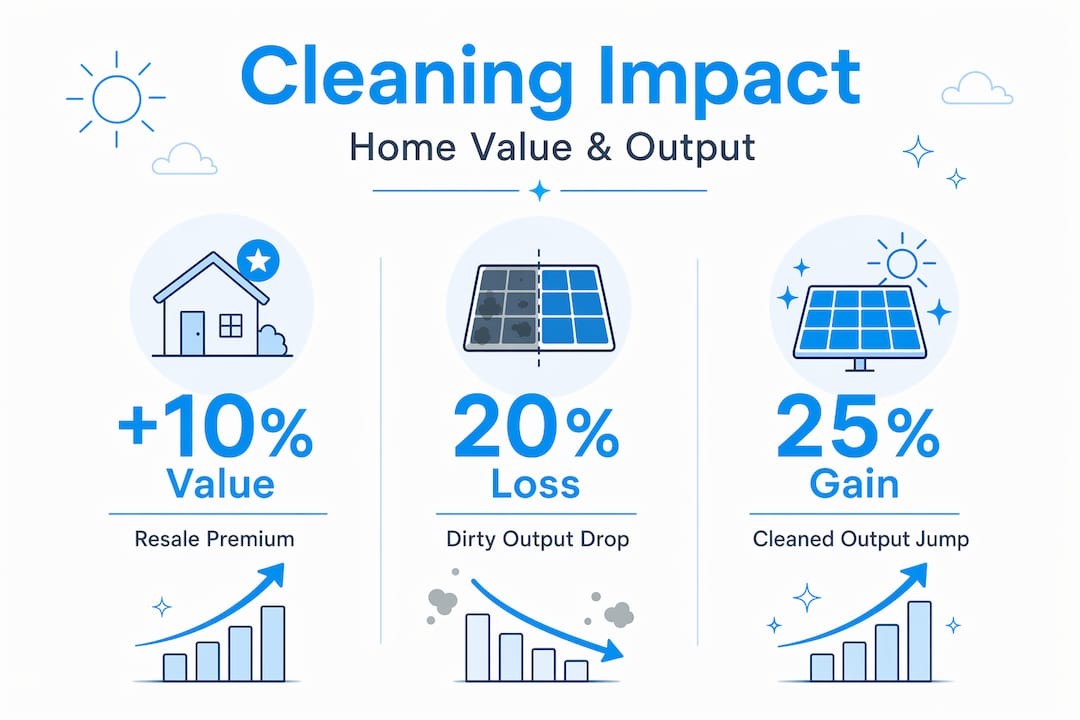
Not all solar systems are created equal in the eyes of a home appraiser or a prospective buyer. Ownership is the single biggest factor. Owned solar systems add 4–10% to resale value, translating to $15,000 to $79,000 depending on system size and local market. Leased systems or those under power purchase agreements are a different story entirely.
Leased panels often add no resale premium and can actually slow a sale because buyers must agree to take over the lease contract. If you own your system outright, you're sitting on a genuine asset. If it's leased, cleaning still matters for energy performance, but the resale math changes considerably.
Beyond ownership, system size and age shape the premium buyers are willing to pay. A larger, newer system in good condition commands more interest. A small or aging array with no maintenance records gets treated as a liability. Regional electricity costs also play a role. In high-cost markets like California, where energy bills run significantly higher than the national average, solar premiums reach up to $79,000. In the Northeast, coastal regions, and parts of the Midwest, buyers assign meaningful value to solar when they can see documented savings.
Here's what ties all of this together:
- Ownership status: Owned systems are worth far more than leased ones at resale.
- System age and condition: Buyers discount older systems without maintenance records.
- Local electricity rates: Higher rates amplify the perceived value of solar savings.
- Geographic market: California and coastal states show the strongest premiums nationally.
"The solar premium a home commands at resale is only as strong as the system's demonstrated performance and care history." Buyers want proof that the system works, not just a panel count on the listing sheet.
The real impact of dirty solar panels on efficiency and value
This is where the financial picture gets sharper. The impact of solar panel cleaning isn't a matter of aesthetics. Soiling reduces energy output by 5% to 30% depending on your environment. Coastal homeowners deal with salt spray. Those near agricultural zones face heavy dust and pollen. Neighborhoods surrounded by mature trees see persistent bird droppings and organic debris. Each of these scenarios compounds over time.
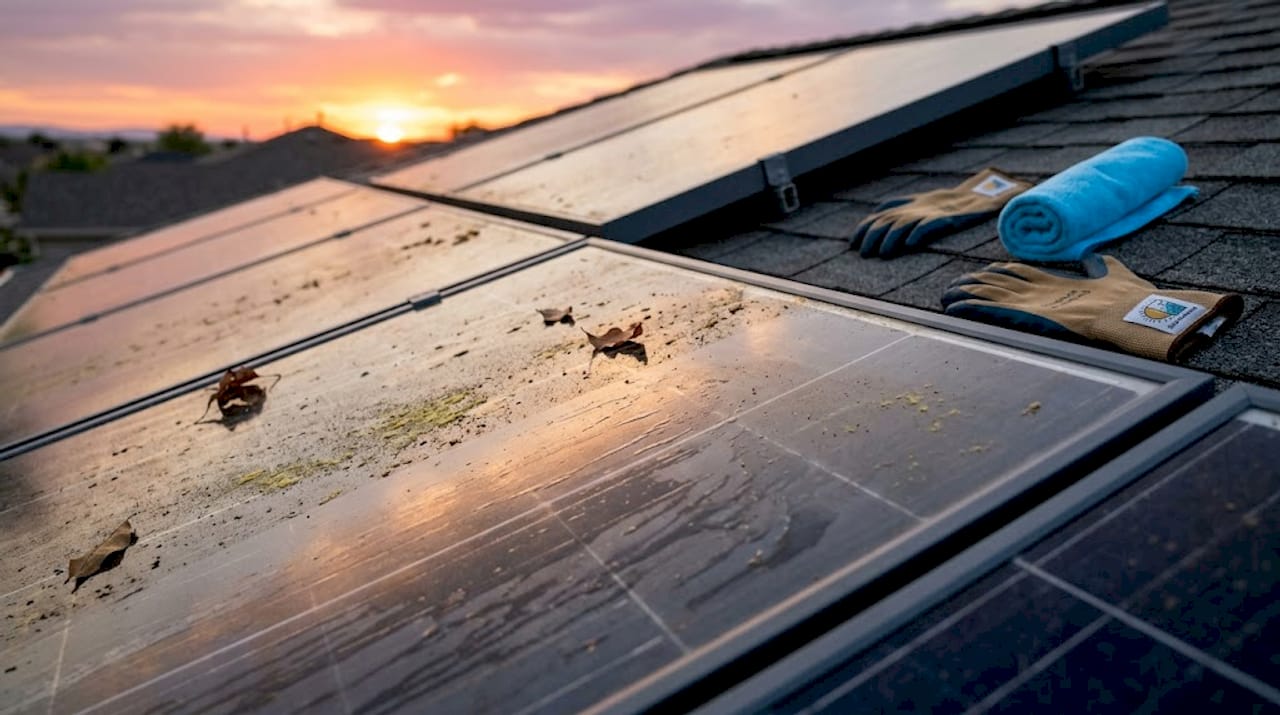
Think about what a 20% output loss actually means. If your system generates $2,000 in annual energy savings, you're losing $400 every year to a problem that professional cleaning can fix in an afternoon. Over five years, that's $2,000 gone before you've factored in what dirty panels communicate to potential buyers.
The numbers behind the recovery are equally clear. Professional cleaning typically recovers 5% to 25% of lost output, with costs ranging from $150 to $500 per visit depending on system size and access. In most residential scenarios, a single cleaning pays for itself within weeks through restored energy savings. That's not a marketing claim. That's basic arithmetic on your utility bill.
The deeper issue is what happens when cleaning gets ignored for years. Neglect leads to accelerated cell degradation, with high-risk environments showing 1–5% annual permanent output loss. That degradation doesn't reverse when you eventually clean the panels. It's baked into the system's long-term performance ceiling, and it shows up when an appraiser or buyer runs performance data before making an offer.
Pro Tip: Check your inverter dashboard before and after a professional cleaning. A measurable jump in output is your proof of ROI and a powerful data point to share with future buyers.
Treating cleaning as a financial strategy rather than optional upkeep changes how you think about the cost. You're not spending money to make panels look nice. You're protecting an asset that could add tens of thousands of dollars to your home's sale price.
Cleaning frequency, methods, and what it costs
Getting cleaning right means knowing when, how often, and what methods actually work without creating new problems. Professional cleaning every 6 to 12 months is the standard recommendation, but your local environment should drive the actual schedule. A homeowner in Madison, Wisconsin with minimal pollution and moderate pollen might clean once a year. Someone near a wildfire-prone area or a busy agricultural corridor might need it twice.
The best signal isn't a calendar. It's your monitoring data. Most modern inverter systems show daily and monthly output. If you notice a consistent dip that doesn't correlate with weather, soiling is likely the cause. That data point also tells you exactly when cleaning is worth the cost and when it isn't.
DIY vs. professional cleaning
| Factor | DIY cleaning | Professional cleaning |
|---|---|---|
| Cost per session | $0–$50 (equipment) | $150–$500 |
| Warranty risk | High if wrong methods used | Low with certified cleaners |
| Water quality | Usually tap water (problematic) | Deionized or purified water |
| Roof safety | Real fall risk | Trained with proper equipment |
| Output documentation | Rarely measured | Often included as service |
DIY cleaning is tempting, but the risks are real. Most homeowners reach for a garden hose and a brush without checking their manufacturer guidelines. Using hard tap water leaves mineral deposits on the glass surface that actually trap more dirt over time. And working on a pitched roof without proper training is one of the more preventable household injuries.
Pro Tip: If you do clean panels yourself, use a soft brush, purified or deionized water, and always check your manufacturer's cleaning guidelines first. Read about safe panel rinsing techniques before you start to avoid voiding your warranty.
The cost-benefit math on professional cleaning is straightforward for most homeowners. A $250 cleaning that recovers 15% output on a system that was saving $1,800 annually returns $270 in the first year alone. When you add the resale documentation value and the warranty protection, the case for professional service becomes hard to argue against.
Why maintenance records are your best sales tool
When you list a home with solar panels, buyers and their agents will ask about the system's performance history. A folder with dated cleaning invoices, output reports, and service notes answers that question before it becomes a concern. Documented maintenance records increase system resale value and make warranty transfers smoother during a sale.
Here's a practical approach to building that record:
- Log every cleaning with a date, provider, and method used. Keep digital and physical copies. This takes five minutes and pays dividends at closing.
- Export monthly output data from your inverter app. Most platforms like SolarEdge or Enphase allow PDF exports. Save these quarterly.
- Note any maintenance or repairs alongside cleaning records. A buyer seeing consistent upkeep history across multiple years treats the system as a verified asset, not an unknown risk.
- Document before-and-after output when you clean. This is your clearest proof that the system responds well to maintenance and hasn't degraded beyond recovery.
Buyers who see inverter performance data alongside cleaning history have the confidence to factor the solar system positively into their offer. Without that evidence, even a well-functioning system gets treated with skepticism. In a competitive market, that skepticism costs you negotiating leverage.
Pro Tip: Create a single digital folder labeled "Solar System Records" with subfolders for cleaning, output data, warranties, and permits. Share it as a PDF packet with your real estate agent before listing.
Cleaning mistakes that quietly kill your system's value
Some cleaning habits hurt more than no cleaning at all. These are the mistakes that show up on appraisals and in warranty disputes.
- High-pressure washing: Pressure washers force water into panel seals and junction boxes, causing moisture damage that voids most warranties. The panels might look cleaner, but the internal damage accumulates invisibly.
- Hard tap water: Mineral deposits from tap water create a film that attracts more grime and causes micro-scratches over repeated cleaning cycles. Deionized water is the professional standard for a reason.
- Abrasive tools: Steel wool, rough sponges, and anything with scrubbing compounds scratch the anti-reflective coating on panel glass. That coating is why panels capture light efficiently, and scratching it is permanent efficiency loss.
- Cleaning in direct midday sun: Thermal shock from cold water hitting hot glass can stress the panel surface and cause micro-cracking. Clean in early morning or late afternoon.
- Ignoring manufacturer guidelines: Every panel brand publishes cleaning specifications. Ignoring them is the fastest way to void coverage you paid for.
"More frequent cleaning isn't always better. Using appropriate, gentle methods and the right timing is what actually preserves long-term efficiency rather than undermining it."
The solar panel cleaning mistakes that cost homeowners the most are rarely the dramatic ones. They're the small, repeated errors that accumulate into permanent performance losses and warranty voids that surface at the worst possible time: during a home sale.
My honest take on what cleaning actually does for your home
I've worked with enough homeowners to know that cleaning is the most consistently underestimated part of solar ownership. People spend tens of thousands on a system, then treat maintenance like an optional subscription they'll get to someday.
What I've seen firsthand is that the difference between a well-maintained system and a neglected one shows up in two places: the utility bill and the closing table. Homeowners who kept consistent cleaning records and output data sold their systems as verified, performing assets. Those who couldn't produce documentation often watched buyers discount the solar value entirely or request a price reduction to cover "system unknowns."
The misconception I push back on most often is that annual cleaning is sufficient for everyone. It isn't. Your cleaning schedule should follow your monitoring data, not a generic timeline. I've seen systems in rural Wisconsin that needed cleaning twice a year due to pollen and agricultural dust, and systems in urban settings that stayed relatively clean for 14 months. Let the data tell you when to clean.
What actually works, based on my experience, is treating cleaning like any other scheduled home maintenance. You service your furnace annually. You get your roof inspected. Your solar system deserves the same respect, because the financial case for maintenance is just as strong. Clean panels produce more. More production means more documented savings. More documented savings means a stronger case to the next buyer.
— Marquis
Protect your solar investment with Solaralchemist
If you own a solar system in the Madison, Wisconsin area, the question isn't whether your panels need professional attention. It's how much output and home value you're currently leaving on the table.
Solaralchemist uses professional-grade deionized water systems and specialized equipment to clean panels safely, without voiding warranties or leaving mineral residue behind. Every service includes output documentation so you walk away with records that support both your energy savings and your resale position. Whether you need a one-time cleaning or a scheduled maintenance contract, Solaralchemist protects the investment you made in renewable energy. Check when to schedule your cleaning based on your system's specific signals, or explore local service options for Oregon, WI homeowners ready to maximize what their solar system is actually worth.
FAQ
How much can dirty solar panels reduce energy output?
Dirty panels can lose 5% to 30% of energy output depending on your environment, with coastal and agricultural areas seeing the steepest losses.
Does cleaning solar panels increase home value?
Yes. Clean, well-maintained panels with documented service records support the 4–10% resale premium that owned solar systems command, giving buyers confidence in the system's performance.
How often should homeowners clean their solar panels?
Professional cleaning every 6 to 12 months is the baseline recommendation, but your inverter's output data is the most reliable indicator of when cleaning is actually needed.
Do leased solar panels add value to a home?
No. Leased solar systems typically add no resale premium and can complicate a sale because buyers must assume the lease agreement, which many are reluctant to do.
What cleaning mistakes can damage solar panels?
Using high-pressure water, hard tap water, or abrasive tools can cause permanent efficiency loss and void manufacturer warranties. Always follow manufacturer guidelines or hire a certified professional.