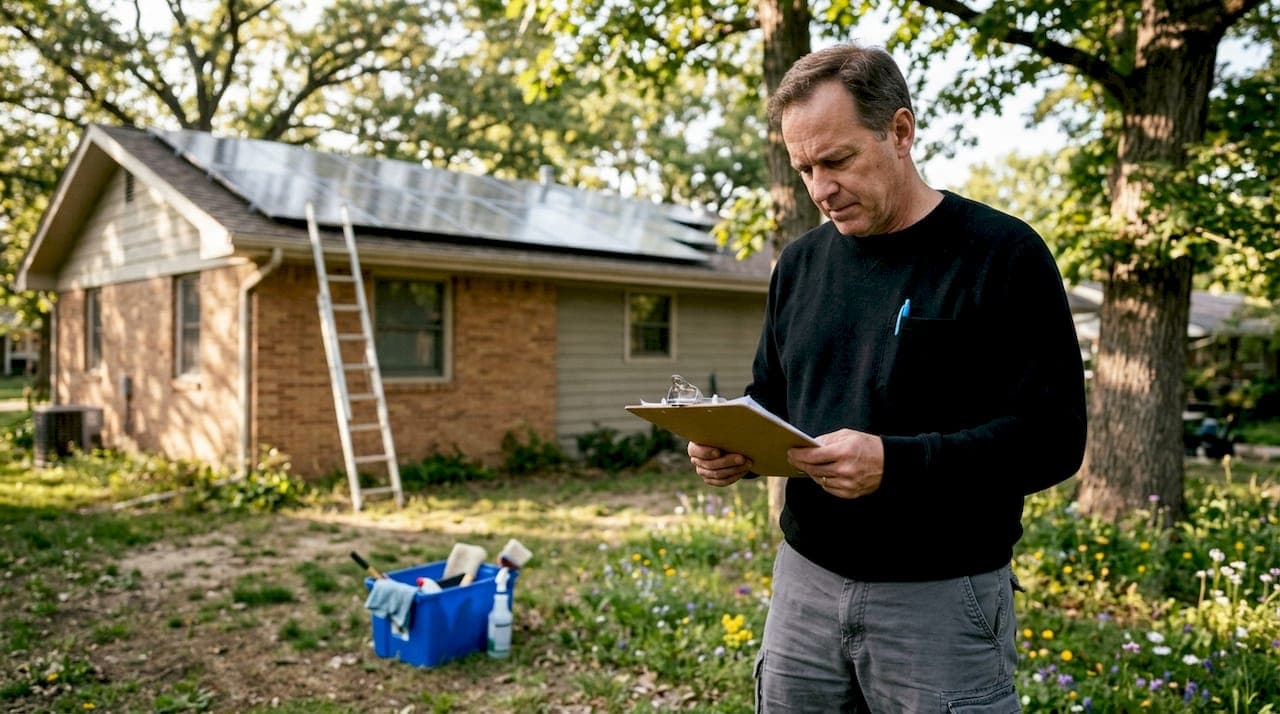
A structured Madison area solar maintenance schedule is the single most effective way to protect your solar investment and keep your panels producing at full capacity year-round. Madison's climate delivers heavy spring pollen loads, summer storms, and fall leaf debris that compound into measurable energy losses without a consistent upkeep routine. The industry standard for residential solar upkeep combines monthly digital monitoring, one to two professional cleanings per year, and an annual professional inspection. Solaralchemist, based right here in Madison, builds every service plan around these benchmarks, tailored to Wisconsin's specific seasonal patterns.
1. What are the essential components of a Madison solar maintenance schedule?
The optimal solar maintenance schedule involves monthly monitoring, one to two professional cleanings yearly, and an annual professional inspection. That structure covers the full range of failure modes, from surface soiling to electrical degradation, without over-servicing your system.
Monthly monitoring is the lowest-effort, highest-return task on your list. Log into your inverter app once a month and compare current output to the same period last year. A consistent dip of more than a few percentage points is a signal worth acting on.

Professional cleaning should happen once or twice a year, timed around spring pollen season and fall debris accumulation. Madison's oak and birch pollen counts rank among the highest in Wisconsin, and that film on your panels is not just cosmetic. It blocks sunlight and cuts output.
Annual professional inspection covers the components you cannot evaluate from the ground: mounting hardware, wiring connections, inverter health, and junction box integrity. A trained technician spots micro-cracks, loose racking bolts, and early corrosion before they become expensive repairs.
Electrical testing every 3–5 years goes deeper than a visual inspection. It measures insulation resistance, checks ground fault protection, and confirms that your system still meets the performance specs it was installed to deliver.
Pro Tip: Schedule your spring cleaning and annual inspection together. Bundling both services in one visit saves you a trip fee and gets your system fully assessed right before peak summer production.
2. How often should solar panels be cleaned in Madison's climate?
Cleaning frequency in Madison should be driven by data, not just the calendar. That said, twice per year is the practical baseline for most residential systems here, with spring and fall as the target windows.
Spring cleaning addresses the pollen surge that coats panels between april and june. Fall cleaning removes leaf tannins, bird droppings, and summer dust before winter sets in. Skipping either window can leave a soiling layer that compounds through the next season.
Deionized water cleaning prevents mineral buildup and warranty issues. Soap leaves residues that attract dirt faster and can degrade panel glass coatings over time. Professional-grade deionized water systems, like those Solaralchemist uses, rinse clean without leaving any film.
The efficiency recovery from a proper cleaning is real. A 30-panel residential system that has accumulated a full season of pollen and debris can lose 20–30% of its output capacity. That is not a rounding error. That is a meaningful cut to your monthly energy savings.
- Spring (april to may): Remove pollen film before peak summer production months
- Fall (october to november): Clear leaf debris and summer buildup before low-angle winter sun
- After major storms: Check for debris accumulation and physical damage
- When monitoring shows a drop: A soiling loss of 3–5% from baseline justifies an unscheduled cleaning
For Madison panel cleaning costs, professional service runs around $8–$13 per panel with a $150 minimum service fee. A 30-panel system typically costs $300–$390 per cleaning visit.
Pro Tip: Do not clean panels during the hottest part of the day. Cold water on hot glass can cause thermal shock. Early morning or late afternoon is the right window.
3. What does a DIY solar maintenance checklist for Madison solar owners look like?
A quarterly DIY check takes 2–4 hours and protects a meaningful share of your annual energy yield. You do not need professional tools for most of these tasks. You need a clear checklist and a safe way to view your roof.
A 10-point quarterly inspection covers the basics that any homeowner can assess from the ground or a safe ladder position:
- Panel surface: Look for visible dirt, pollen film, bird droppings, or leaf stains
- Shading check: Note any new tree growth or structures casting shadows on panels
- Debris on racking: Clear leaves, twigs, or nesting material from around panel edges
- Inverter status light: Green means go; red or flashing amber means call a technician
- Inverter error logs: Review the app for any fault codes logged since your last check
- Mounting hardware (visible): Look for any panels that appear shifted or tilted unevenly
- Roof surface around panels: Check for lifted shingles, cracked flashing, or water staining
- Wiring conduit: Confirm no visible damage, cracking, or animal chew marks on exposed conduit
- Monitoring data review: Compare this quarter's output to the same quarter last year
- Vegetation clearance: Trim any branches that have grown within a few feet of the array
DIY checks complement your annual professional inspection. They do not replace it. Think of quarterly checks as early warning scans. A professional inspection is the full diagnostic.
4. How to use performance monitoring to optimize your solar maintenance schedule
Digital monitoring is the most underused tool in residential solar upkeep. Most homeowners install a system, glance at the app occasionally, and assume everything is fine. That assumption costs real money.
A sudden 10% unexplained decline in daily solar output commonly signals equipment issues before any physical damage is visible. Catching that drop in week one versus month six is the difference between a simple fix and a failed component.
Set a monthly calendar reminder to review your monitoring app. Look for three specific patterns:
- Gradual output decline over weeks: Usually soiling. Schedule a cleaning.
- Sudden single-day drop: Often a tripped breaker, inverter fault, or wiring issue. Call a technician.
- One string underperforming vs. others: Points to a specific panel, micro-inverter, or connection problem in that circuit.
Cleaning should be data-driven. A soiling loss of 3–5% from your baseline justifies cleaning regardless of where you are on the calendar. This approach prevents unnecessary service calls and targets real efficiency losses.
Pro Tip: Screenshot your monitoring dashboard on the first of each month and save it to a folder. After 12 months, you have a clean year-over-year comparison that makes anomalies obvious.
Treating your solar array as a high-performance asset rather than a passive home feature changes how you interact with it. Engines get oil changes on a schedule. Solar arrays deserve the same active management mindset.
5. What special considerations apply during roof work or system aging?
Roof renovations and aging hardware are the two most common sources of avoidable solar system damage. Both require planning well ahead of the work.
Roof work and panel removal
During reroofing, solar panels require expert removal and reinstallation to maintain warranty and roof integrity. Roofing contractors are not solar technicians. Letting a roofing crew handle panel removal risks voiding your equipment warranty and damaging the racking system.
- Hire a certified solar technician for panel removal before roofing work begins
- Document the system configuration with photos before disassembly
- Coordinate insurer documentation to prevent disputes between roofing and solar contractors
- Inspect all penetrations and flashing during reinstallation, not after
- Run a full monitoring check for 30 days after reinstallation to confirm no output loss
Planning for inverter replacement
Budget for inverter replacement at years 12–15 for string inverters and years 20–25 for micro-inverters. Inverters are the most likely component to fail before your panels reach end of life. Planning for that cost avoids a surprise $1,500–$3,000 expense.
A system installed in 2012 is approaching that window right now. If your inverter is original equipment and you have not had it evaluated recently, add that to your next annual inspection agenda.
Key Takeaways
A disciplined Madison area solar maintenance schedule built on monthly monitoring, twice-yearly professional cleaning, and an annual inspection is the most cost-effective way to protect your system's output and lifespan.
| Point | Details |
|---|---|
| Monthly monitoring | Review your inverter app every month to catch output drops before they become costly problems. |
| Twice-yearly cleaning | Clean in spring and fall using deionized water to recover up to 30% lost efficiency from pollen and debris. |
| Annual professional inspection | A trained technician checks mounting, wiring, and inverter health that you cannot assess from the ground. |
| Data-driven cleaning decisions | A 3–5% soiling loss from baseline justifies an unscheduled cleaning, regardless of the calendar. |
| Plan for inverter replacement | Budget for string inverter replacement at years 12–15 to avoid unexpected repair costs. |
Why Madison solar owners need a tighter schedule than most
I have worked with enough Madison solar owners to say this clearly: the standard national advice on cleaning frequency undersells what Wisconsin pollen actually does to a system. Generic guides say "clean once a year." That works fine in Phoenix. It does not work here.
Madison sits in a high-pollen corridor. From late april through june, oak, birch, and grass pollen coat panels in a film that is nearly invisible but measurable in output data. I have seen systems lose 20% of their spring production simply because the owner followed a once-a-year cleaning schedule and timed it wrong.
The owners who get the most out of their systems are not the ones who spend the most on maintenance. They are the ones who check their monitoring data consistently and act on what it tells them. A $300 cleaning in may, triggered by a 5% output drop in the app, pays for itself in recovered production before summer ends.
The DIY quarterly check is also underrated. You do not need to hire anyone to walk around your house, look up at your panels, and check that your inverter light is green. That 30-minute habit catches shading from new tree growth, debris accumulation, and inverter faults before they compound.
My honest recommendation: treat your solar array the way you treat your car. You would not skip oil changes because the engine seems fine. Do not skip monitoring reviews because your bill looks roughly normal. The data tells a more accurate story than your utility statement.
— Marquis
Solaralchemist's approach to Madison solar upkeep
Solaralchemist specializes in professional solar panel cleaning and maintenance for Madison-area homeowners, using professional-grade deionized water systems that clean without voiding warranties or leaving residue. Every service is built around Madison's actual seasonal conditions, not a generic national template.
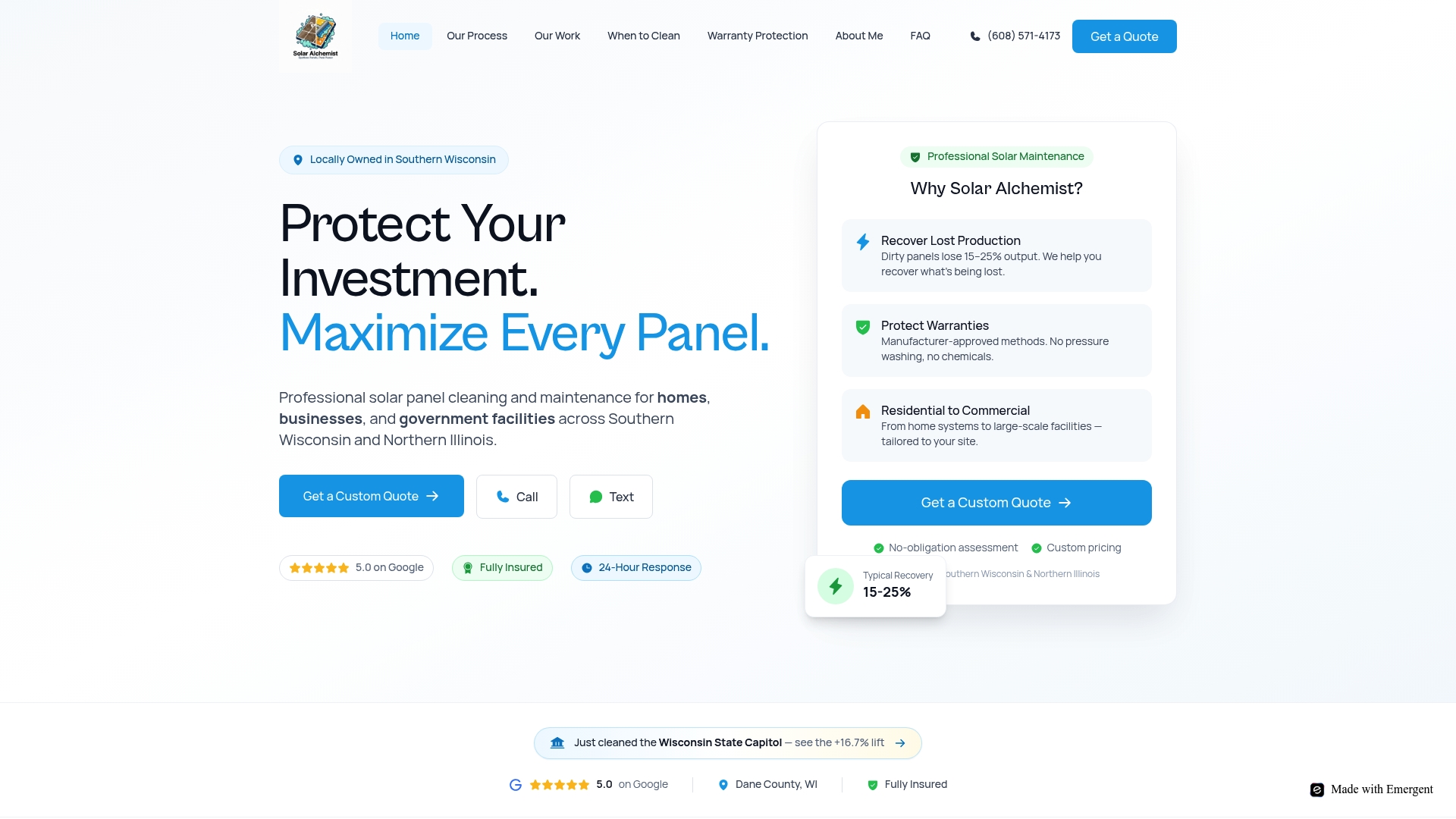
Whether you need a one-time spring cleaning, a recurring annual plan, or help reading your monitoring data, Solaralchemist offers transparent pricing and scheduling built for Wisconsin systems. Check the Madison cleaning service page for current per-panel rates and minimum fees. If you are not sure when your system last needs attention, the signs you need a cleaning guide walks you through exactly what to look for. Solaralchemist also serves homeowners across southern Wisconsin, including Watertown and surrounding communities.
FAQ
How often should I clean my solar panels in Madison?
Twice per year is the standard for Madison, with cleanings in spring and fall. If your monitoring app shows a 3–5% output drop from baseline, schedule a cleaning regardless of the calendar.
What does a professional solar inspection cover?
A professional inspection covers mounting hardware, wiring connections, inverter health, junction box integrity, and panel condition. Electrical testing every 3–5 years adds deeper diagnostics including insulation resistance checks.
Can I clean my own solar panels?
You can rinse panels with deionized water from a safe position, but professional cleaning equipment delivers better results and avoids warranty issues from soap residue or mineral deposits. DIY quarterly visual checks are a strong complement to professional cleaning.
When should I replace my solar inverter?
Plan for string inverter replacement at years 12–15 and micro-inverter replacement at years 20–25. Proactive budgeting avoids a large unexpected expense when the unit fails.
Does roof work affect my solar warranty?
Yes. Panels must be removed and reinstalled by a certified solar technician during reroofing to maintain equipment warranties. Letting a roofing contractor handle panel removal risks voiding coverage and damaging the racking system.