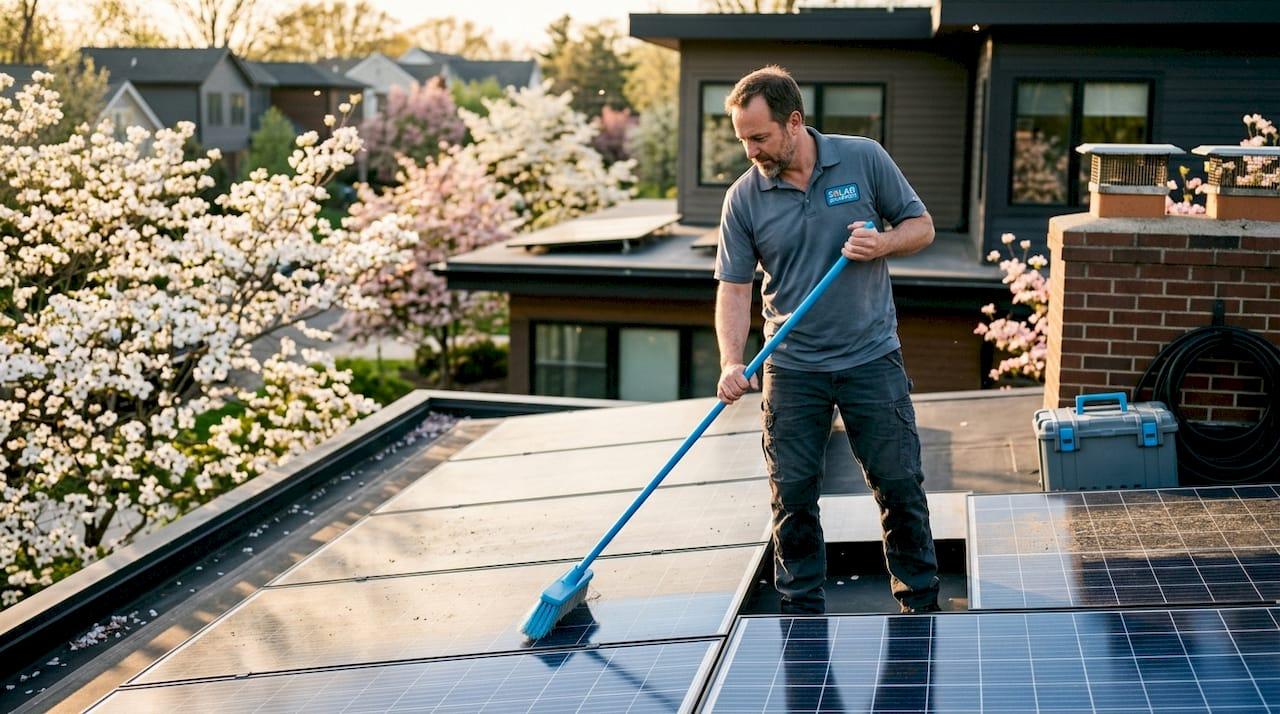
Understanding how seasonal solar maintenance schedules work is the difference between a system that quietly degrades over a decade and one that performs at or near its rated output for 25 years. Most homeowners assume their panels need constant scrubbing, but the truth is more nuanced and more manageable. A well-structured solar system upkeep schedule follows the calendar, responds to weather patterns, and focuses effort where it actually moves the needle on energy production and equipment longevity.
Table of Contents
- Key takeaways
- How seasonal solar maintenance schedules work in practice
- Spring maintenance: clean up and inspect after winter
- Summer maintenance: monitor and manage heat stress
- Fall maintenance: prepare before winter arrives
- Winter maintenance: protect and monitor, not scrub
- Year-round best practices worth committing to
- My honest take after years of seasonal service visits
- Let Solaralchemist handle your seasonal maintenance
- FAQ
Key takeaways
| Point | Details |
|---|---|
| Rain does most of the work | Tilted panels self-clean in most climates; dust typically reduces efficiency less than 5%. |
| Spring is your highest-impact window | Late April and May cleaning and inspection sets up your system for peak summer performance. |
| Monitor digitally, inspect visually | Monitoring apps catch issues before they're visible; ground-level binocular checks handle the rest. |
| Winter demands patience, not aggression | Avoid scraping snow and ice; panels warm and self-clear with sunlight exposure. |
| Professional service every few years | Schedule a certified electrical inspection every 3 to 5 years alongside your annual cleaning visits. |
How seasonal solar maintenance schedules work in practice
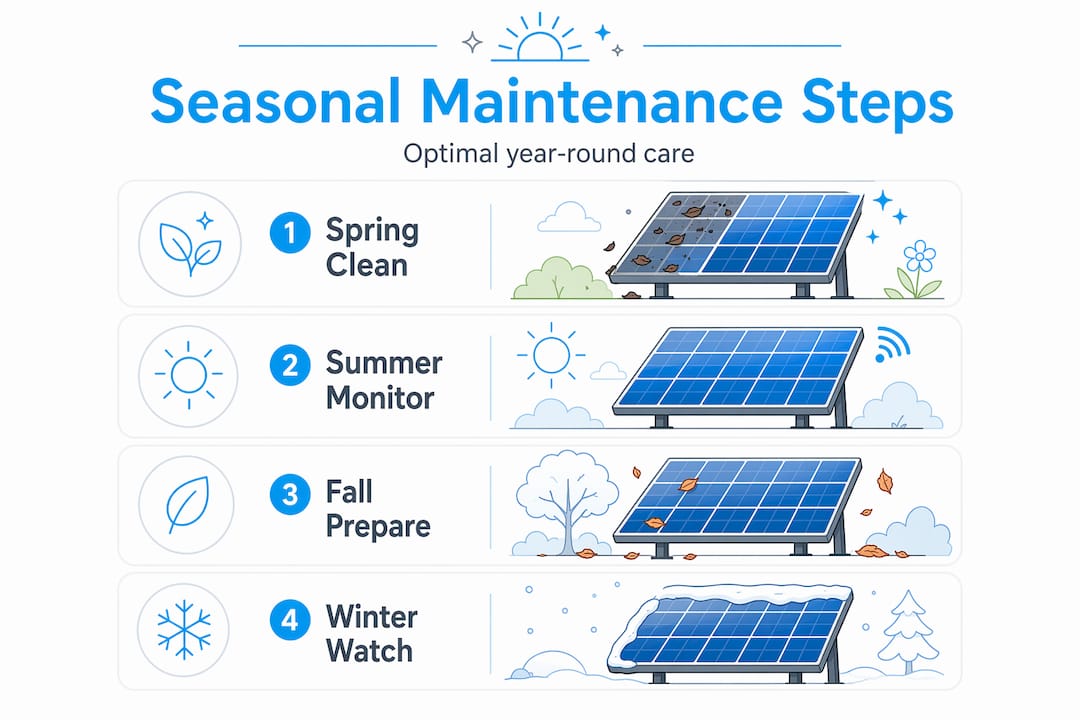
The foundation of the whole concept is simple: your panels face different threats in different seasons, so your maintenance response should match those threats. A one-size-fits-all approach either over-maintains in some months, wasting time and risking damage, or under-maintains in others, leaving production losses on the table.
What surprises most new solar owners is that panels don't need frequent manual cleaning. Rain handles the bulk of surface soiling on any panel tilted at more than 15 degrees. That said, organic debris, pollen, bird droppings, and winter grime are a different story. They accumulate in patterns that correlate directly with the seasons, which is exactly why a seasonal framework makes sense.
The goal of a seasonal maintenance schedule is not to keep panels spotless 365 days a year. The goal is to intervene at the moments when nature falls short and when the stakes for your energy production are highest.
Spring maintenance: clean up and inspect after winter
Spring is the most important maintenance window of the year. By the time April arrives in Wisconsin and across the upper Midwest, panels have been collecting pollen, dust, residual grime from snowmelt, and anything else that settled during months of low sun and minimal rain. Late spring, April through May, is the critical window to clear that accumulation before summer heat stress compounds any underlying issues.
Here is what a thorough spring maintenance session should include:
- Surface cleaning: Remove pollen, dust, bird droppings, and winter grime using deionized water and a soft brush or squeegee. Avoid tap water, which leaves mineral deposits that reduce light transmission over time.
- Visual inspection: Look for micro-cracks, discoloration, delamination, or any physical damage caused by ice expansion or debris impact over winter.
- Mount and hardware check: Verify that racking hardware is tight, that no fasteners have loosened through freeze-thaw cycles, and that panel frames show no signs of corrosion.
- Electrical component review: Check that junction boxes, wiring conduit, and inverter connections show no moisture intrusion or pest damage.
- Monitoring baseline reset: Pull your system's production data for the previous spring and compare it to current output after cleaning to establish your seasonal baseline.
Pro Tip: Schedule your spring cleaning in late April or May rather than early March. You want temperatures to be stable enough for safe roof access and for cleaning water to dry quickly without streaking.
The importance of solar maintenance in spring goes beyond aesthetics. May inspections detect hidden electrical issues that only show up under heat stress, catching problems before they become costly summer shutdowns. A panel with a hairline crack or a failing connection might work fine in 60-degree weather. Give it a 95-degree July afternoon and you have a different story.
Summer maintenance: monitor and manage heat stress
Summer is not the time for aggressive intervention. It is the time for watching closely and responding quickly. Your panels are generating the most electricity of the year, and the last thing you want to do is disrupt that by unnecessary cleaning or maintenance that could damage components or void warranty coverage.
The primary summer maintenance tasks are monitoring and quick-response checks:
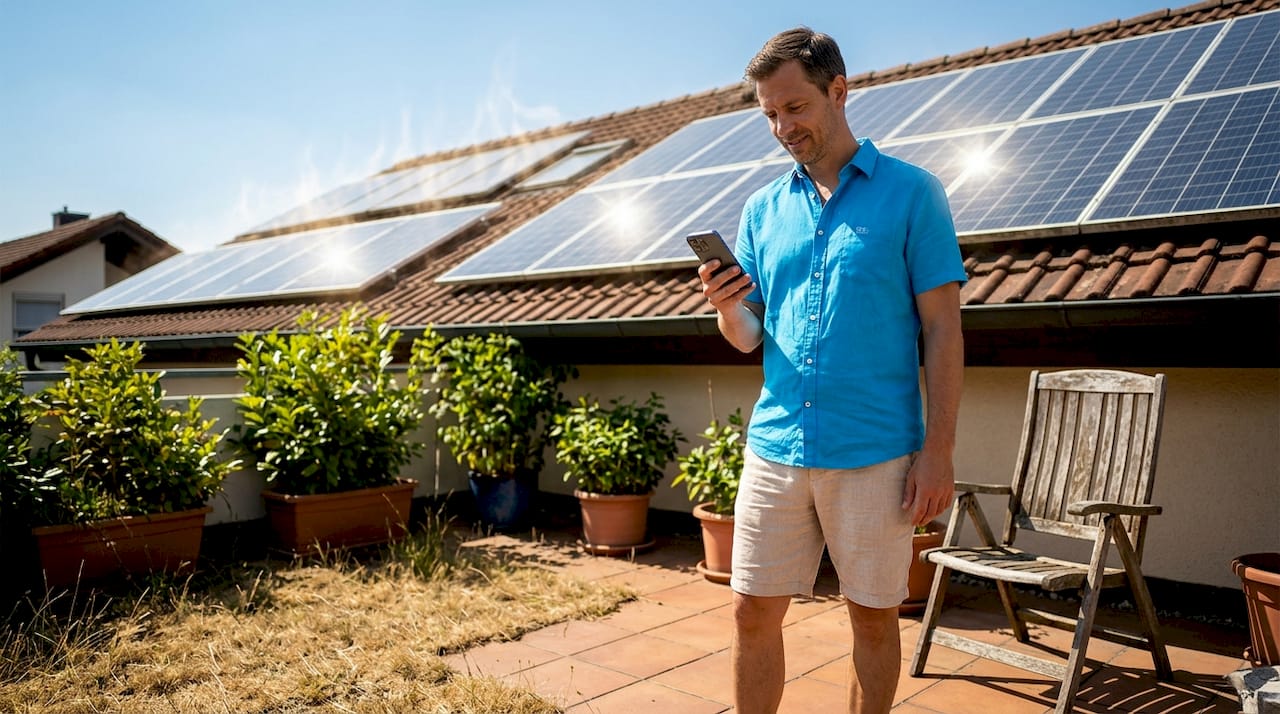
- Run monthly digital output checks through your inverter's monitoring app or a third-party platform and compare actual production against expected output for your location.
- Watch for gradual output drops that exceed normal temperature-related variance. A 10 to 15 percent drop on a clear, hot day may indicate a shading issue, a failing inverter fan, or a developing hot spot on a panel.
- Check that inverter vents are clear of dust, debris, and insect nests. Inverters generate heat and need airflow to operate within spec.
- Look for any new shading created by tree growth since spring and schedule trimming if branches are now crossing your array's sun path.
Pro Tip: Professional electrical inspections during summer leverage peak production conditions for more accurate voltage and current diagnostics. If you are scheduling your 3 to 5 year electrical check, summer is actually the most informative time to do it.
One thing to avoid completely in summer: cleaning panels when they are hot. Thermal shock from cold water on hot panels causes micro-cracks in the glass that are often invisible to the naked eye but measurably reduce efficiency over time. If a cleaning is needed mid-summer, do it before 8 a.m. on an overcast morning, never at midday.
Fall maintenance: prepare before winter arrives
Fall is the second most important maintenance season. Think of it as setting your panels up to survive winter with as little damage and output loss as possible. The tasks are straightforward but the timing matters. You want to complete fall maintenance before the first hard freeze.
Here is a numbered sequence that works well for fall preparation:
- Clear organic debris. Leaves, pine needles, and seed pods pack against panel edges and in racking channels, trapping moisture and creating conditions for corrosion and mold growth.
- Perform a visual inspection. Look for any cracks, loose connections, or hardware wear that appeared since spring. Catching these in October is far better than discovering them after months under snow.
- Check drainage pathways. Water that pools on or around panels in freeze conditions creates far more damage than dry debris. Make sure drainage channels in your racking are clear.
- Adjust panel angle if your system allows. Some ground-mount systems and adjustable roof mounts can be tilted steeper in winter to shed snow more efficiently and capture lower-angle sunlight.
- Plan vegetation trimming. Deciduous trees that were shading panels in summer may drop their leaves in fall, but conifers can be a year-round problem. Fall is a good time to assess and schedule any trimming before spring growth resumes.
Fall is also the right time to review your solar maintenance checklist and make sure every component of your yearly solar panel inspection is documented. That paper trail is valuable if you ever need to make a warranty claim.
Winter maintenance: protect and monitor, not scrub
Winter asks less of you physically and more of you mentally. The temptation to get up on the roof and clear snow after a big storm is real, but aggressive snow removal is discouraged by virtually every manufacturer. Panels are designed with a slight tilt specifically so snow slides off as the surface warms from sunlight. Scraping with a hard tool scratches the anti-reflective coating and can crack glass, doing more damage than the snow ever would.
If manual removal is absolutely necessary, such as after a heavy wet snow event that is not self-clearing:
- Use a soft-bristled roof rake with a foam head and work from the bottom edge of the panel upward.
- Never use metal tools, sharp edges, or hard plastic scrapers on panel surfaces.
- Keep your weight off the roof whenever possible. Icy conditions and steep pitches are a genuine safety risk.
- Address only what is blocking the majority of the panel. You do not need to get every flake off.
Pro Tip: Winter safety and glass integrity are better served by patience than by action. If temperatures will be above freezing within 48 hours, let the sun do its job.
Remote monitoring earns its value most in winter. Monitoring apps reveal production drops before any visible sign of a problem appears, which is critical when you cannot easily access the roof for a physical check. A sudden drop in output that does not correlate with cloud cover or snowfall is worth a call to your installer or a maintenance provider.
Year-round best practices worth committing to
Beyond the seasonal specifics, there are a few practices that apply across all four seasons and make a measurable difference over the lifespan of your system.
| Practice | Frequency | Notes |
|---|---|---|
| Digital output monitoring | Monthly | Compare against expected output for season and weather |
| Visual inspection | Twice per year | Use binoculars from the ground; avoid unnecessary roof access |
| Professional cleaning | 1 to 2 times per year | More often in dusty or high-pollen environments |
| Electrical inspection | Every 3 to 5 years | String inverters replaced at 12 to 15 years; microinverters last 25 years |
| Vegetation management | As needed | Prioritize before spring and fall seasons |
A word on panel degradation: 0.75 percent annual degradation is normal for quality panels. If your monitoring data shows a production drop significantly steeper than that, especially after a season change, that is a signal worth investigating rather than attributing to weather alone.
Common cleaning errors are also worth avoiding. The most frequent mistakes homeowners make include using tap water with high mineral content, cleaning at midday, using abrasive brushes, and pressure washing panels at angles that force water into junction boxes. Each of these causes damage that accumulates invisibly for months before showing up as a production problem.
My honest take after years of seasonal service visits
I have been on rooftops across southern Wisconsin through every season, and the pattern I see most consistently is this: homeowners who skip spring maintenance and try to make up for it in summer end up paying more and getting less. Not just in service costs, but in actual kilowatt-hours lost.
The second thing I have learned is that visual impressions are unreliable. Panels that look reasonably clean to the naked eye are often carrying enough soiling, especially pollen and fine grit, to suppress output by 10 to 15 percent. Conversely, a little surface dust after a dry spell rarely matters as much as people think. That gap between what you see and what your monitoring data shows is where most of the important maintenance decisions live.
What I tell every homeowner: trust the data first, act on the calendar second, and let the weather handle what it can. A two-visit-per-year schedule aligned with spring and fall, combined with monthly monitoring checks and a professional electrical inspection every few years, is what actually protects a 25-year investment. The owners who get the full lifespan from their systems are not the ones cleaning every month. They are the ones who show up at the right moments with the right tools.
— Marquis
Let Solaralchemist handle your seasonal maintenance

If you are in the Madison, Wisconsin area and want your spring or fall maintenance handled correctly, Solaralchemist uses professional-grade deionized water systems and specialized soft-cleaning equipment designed specifically for solar panel surfaces. No tap water mineral deposits, no abrasive tools, no pressure washing shortcuts. Our seasonal cleaning visits are timed to your system's peak production needs, and every visit includes a ground-level visual inspection to flag anything worth a closer look. Whether you are in Sun Prairie, Madison, or the surrounding communities, protecting your renewable energy investment starts with knowing when to schedule your cleaning and having a team that shows up prepared to do it right.
FAQ
How often should solar panels be professionally cleaned?
Most residential systems need professional cleaning 1 to 2 times per year, with spring being the highest-priority visit and fall as the second. Dusty or coastal environments may warrant more frequent service.
When is the best time to service solar panels?
Late spring, specifically April through May, is the optimal time to service solar panels because it clears winter buildup before summer heat stress peaks. Fall is the second best window for preparing panels for winter conditions.
Can I clean my solar panels myself?
You can perform ground-level visual inspections safely using binoculars, but physical cleaning carries risks including thermal shock, improper water quality, and roof safety hazards. Professional cleaning with deionized water produces better results without damaging anti-reflective coatings.
Do solar panels need maintenance in winter?
Winter maintenance is mostly passive. Allow panels to self-clear via sunlight rather than scraping, use remote monitoring to track output, and reserve physical intervention for rare situations where heavy wet snow is not clearing on its own.
What is normal solar panel degradation over time?
A degradation rate of approximately 0.75 percent per year is considered normal for quality panels. Steeper drops, especially following seasonal transitions, may indicate soiling, damage, or an inverter issue worth investigating.