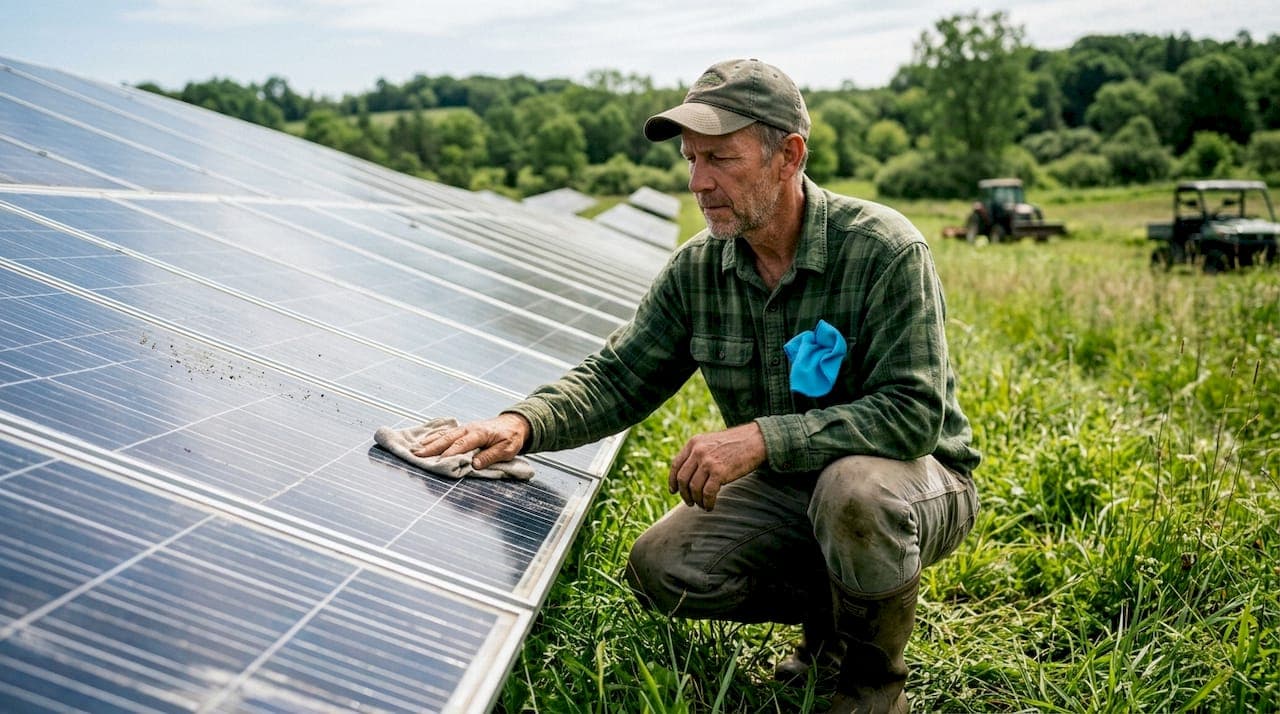
Solar panel maintenance for farms is defined as the scheduled combination of physical cleaning, visual inspection, and professional annual checkups required to sustain energy output and protect system lifespan. Wisconsin farmers face a specific set of challenges: dusty gravel roads, heavy pollen seasons, bird traffic, and harsh winters all accelerate panel degradation. Dirty farm solar panels can lose between 5% and 25% of their energy output, with the exact loss driven more by local environmental conditions than by a fixed calendar schedule. This Wisconsin farm solar panel maintenance guide covers every layer of that routine, from tools and cleaning technique to monitoring, professional service, and troubleshooting.
What does a Wisconsin farm solar panel maintenance guide cover?
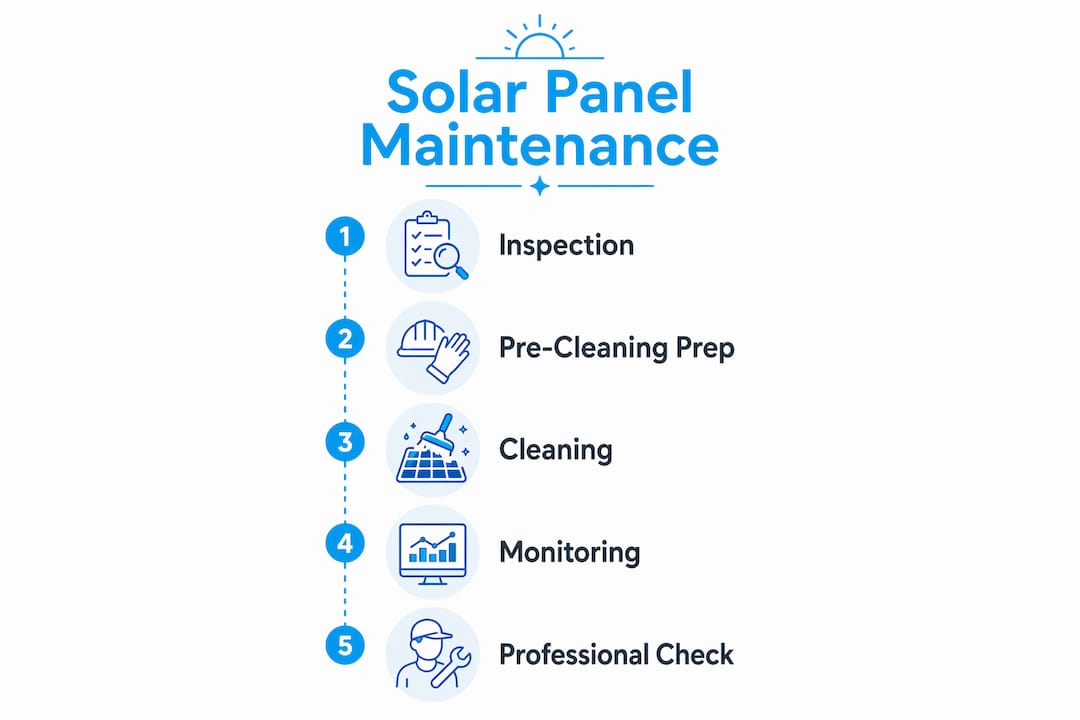
Effective farm solar panel care requires three parallel tracks: physical cleaning, digital monitoring, and periodic professional inspection. Skipping any one track creates blind spots. A panel that looks clean from the ground can still carry a failing cell or a loose electrical connection that quietly drains output.
Wisconsin's climate adds specific pressure. Spring brings pollen from surrounding fields. Summer brings dust from unpaved farm roads and bird droppings from fence-perching starlings and swallows. Winter brings snow loads and freeze-thaw cycles that stress mounting hardware. Each season demands a slightly different response, which is why a generic maintenance schedule rarely works for a working farm.
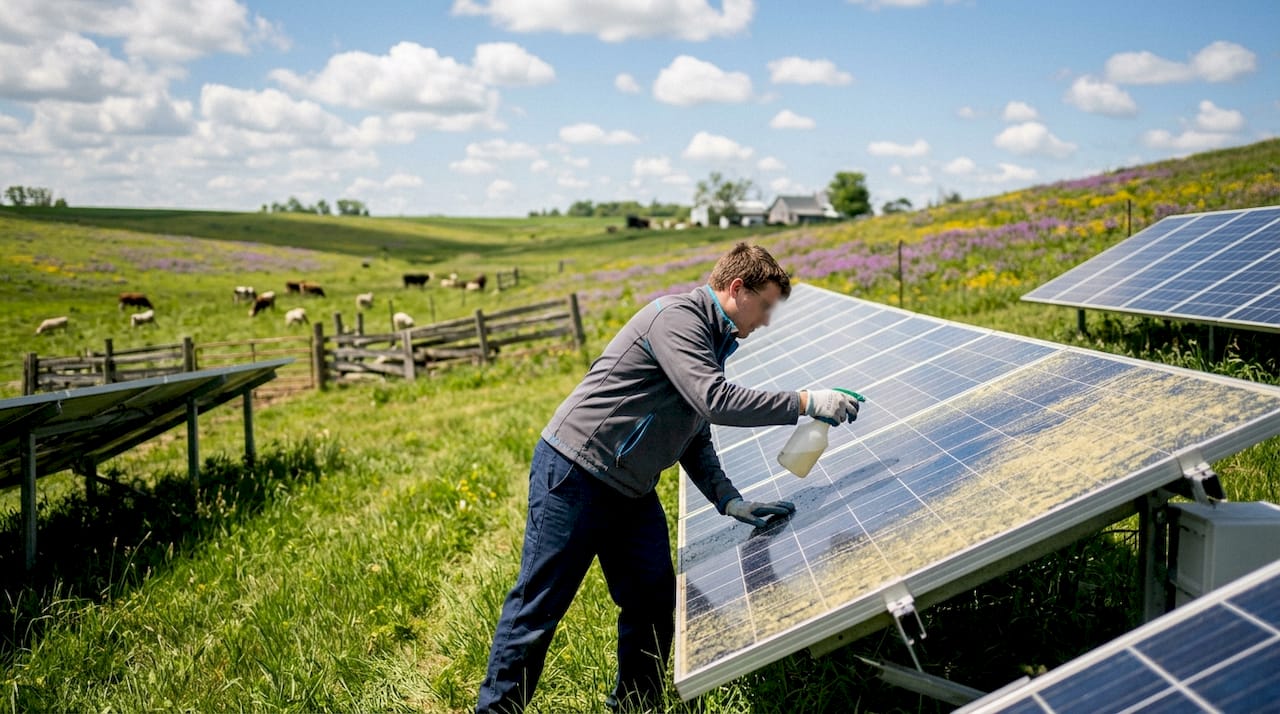
Treating solar maintenance as a scheduled operating cost, similar to equipment servicing, prevents 15–25% output loss within five years. That framing matters. Farmers who budget for maintenance avoid the larger cost of reactive repairs and lost production.
What tools and preparations do you need before cleaning?
Safe and effective farm solar panel care starts with the right equipment. Using the wrong tools is the fastest way to void a warranty or crack a panel.
Cleaning tools:
- Soft-bristle brush or microfiber wash brush with a telescoping pole
- Garden hose with a gentle spray nozzle
- Deionized or purified water (avoids mineral deposits and streaking)
- Bucket for pre-soaking the brush
Safety equipment:
- Non-slip work gloves
- Stable, rated ladder with standoff arms for roof-mounted arrays
- Fall protection harness for any roof pitch above 4:12
- Non-conductive footwear
Monitoring and diagnostic tools:
- Smartphone app connected to your inverter's monitoring portal
- Clamp-style voltage meter for spot-checking string output
- Thermal imaging camera (or access to a technician who carries one)
Pre-maintenance checklist:
- Check the weather forecast. Clean panels in the early morning or late afternoon when surface temperatures are lower.
- Shut down the inverter per manufacturer instructions before any hands-on work.
- Walk the array perimeter and note any visible damage, debris, or shading changes before you start.
Pro Tip: Never clean panels in direct midday sun. The surface can exceed 140°F, and cold water hitting a hot panel risks thermal shock micro-cracks that degrade performance and void your warranty.
How often should you clean Wisconsin farm solar panels?
Cleaning frequency on a working farm depends on what surrounds your array, not on a fixed monthly rule. A panel array next to a gravel feedlot road needs cleaning more often than one mounted above a grass field with minimal vehicle traffic.
A practical starting framework for most Wisconsin farms:
- Post-winter wash (april or may): Remove pollen, road salt residue, and any debris that accumulated during freeze-thaw cycles. This is the single most impactful cleaning of the year.
- Midsummer check (july): Inspect for bird droppings, dust buildup from summer field work, and any shading from fast-growing vegetation.
- Pre-winter inspection (october): Clear debris from panel edges and mounting rails before the first hard frost locks it in place.
Safe cleaning technique
Wet the panel surface first with plain water to loosen debris. Then use a soft brush in straight, overlapping strokes from top to bottom. Rinse thoroughly with low-pressure water. Deionized water and soft brushes are the only materials proven safe for anti-reflective coatings and glass integrity. High-pressure washers and household detergents damage those coatings and void most manufacturer warranties.
Snow removal: when to act and when to wait
Snow cover causes only 1–5% annual energy loss because panels angled at 20 degrees or more shed snow naturally within one to three days. That statistic means manual snow removal is rarely worth the safety risk on a typical Wisconsin farm array. The exception is a prolonged heavy accumulation on a flat or low-angle ground-mount system where the snow will not self-shed before a critical billing period.
"The safest snow removal tool is a soft foam roof rake with a non-abrasive head. Never use metal scrapers, shovels, or anything rigid. One scratch across the glass surface creates a stress point that worsens with every freeze-thaw cycle."
Pro Tip: For detailed Wisconsin-specific snow management, the winter snow removal guide from Solaralchemist covers safe technique and timing in depth.
Bird droppings require prompt attention because their acidity etches glass faster than dust. Spot-clean with a damp microfiber cloth rather than waiting for the next scheduled wash.
How do you inspect and monitor farm solar panels for early faults?
Visual inspection and digital monitoring work together. Neither one alone catches every problem.
Monthly monitoring checklist
- Log into your inverter monitoring app and compare current output to the same period last month and last year.
- Flag any string showing a 10% voltage dip compared to adjacent strings. That gap signals a fault before any physical symptom appears.
- Note any new shading from tree growth, equipment storage, or building additions.
Quarterly visual inspection checklist
- Panel surfaces: Look for cracks, delamination, discoloration, or heavy soiling.
- Wiring and conduit: Check for exposed wire, rodent chew marks, or conduit that has pulled away from junction boxes.
- Mounting hardware: Look for loose bolts, rust, or racking that has shifted after frost heave.
- Inverter and combiner box: Listen for unusual sounds and check for error codes or warning lights.
The case for thermal imaging
Thermal imaging reveals hot spots inside solar cells that are completely invisible to the naked eye. A cell running 30–40°F hotter than its neighbors is failing internally and can become a fire hazard. Most farm owners access thermal imaging through their annual professional inspection rather than owning the camera outright.
| Inspection type | Frequency | Primary goal |
|---|---|---|
| Digital monitoring review | Monthly | Catch output drops early |
| Physical visual inspection | Quarterly | Identify surface and hardware issues |
| Thermal imaging scan | Annually (professional) | Detect internal cell faults |
| Full professional inspection | Annually | Verify electrical, structural, and warranty compliance |
When should Wisconsin farmers hire a professional solar inspector?
Certified solar technicians should perform a professional inspection at least once per year. That visit covers electrical connections, grounding systems, and mounting integrity, all of which require licensed expertise and proper test equipment to assess correctly.
DIY maintenance handles surface cleaning and basic visual checks well. It does not catch microfractures inside cells, degraded solder joints, or grounding faults that develop slowly over time. These are the failures that compound quietly and show up as a 20% output drop three years later.
What a professional farm solar inspection typically includes:
- Electrical continuity and insulation resistance testing
- Grounding and bonding verification
- Inverter performance and firmware review
- Thermal imaging scan of the full array
- Mounting and racking torque check
- Written report for warranty documentation
Annual inspections also protect your warranty. Most panel manufacturers require documented professional service to honor long-term performance guarantees. Skipping that record can void coverage on a system worth tens of thousands of dollars.
Solaralchemist serves Wisconsin farms across Dane County and surrounding regions, providing professional panel inspections and cleaning services built around the specific demands of agricultural operations.
What are the most common maintenance mistakes on Wisconsin farm solar panels?
Most farm solar system failures develop gradually from overlooked minor issues, not from single catastrophic events. Rodent damage, loose racking, and slow soiling buildup compound over months before they show up as measurable output loss.
Mistakes to avoid:
- Using a pressure washer: High-pressure water strips anti-reflective coatings and forces moisture into junction boxes.
- Cleaning at midday: Thermal shock from cold water on a hot panel creates micro-cracks that worsen with every temperature swing.
- Ignoring vegetation: Trees and shrubs grow faster than most farmers expect. A branch that shades two panels for six hours a day can cut string output by 30% or more.
- Skipping rodent protection: Mice and squirrels chew wiring under ground-mount and barn-roof arrays. Installing critter guards and running wiring through conduit during installation reduces repair costs significantly.
- No maintenance records: Without dated service logs, you cannot prove warranty compliance if a panel fails.
Pro Tip: Walk your array perimeter after every major storm. Wind-driven debris and hail leave damage that is easiest to document and address within 48 hours, before moisture infiltrates any cracks.
Post-winter cleaning deserves special attention on Wisconsin farms. Salt spray from roads, compacted debris in mounting rails, and pollen that bonds to wet panel surfaces during spring rains all reduce output in ways that a quick visual check misses. The post-winter cleaning case is particularly strong for farms near heavily traveled county roads.
Key Takeaways
Consistent, scheduled maintenance is the single most effective way to protect a Wisconsin farm solar investment and prevent the 15–25% output loss that neglect causes within five years.
| Point | Details |
|---|---|
| Clean based on conditions | Farm dust, pollen, and bird activity drive cleaning frequency more than a fixed calendar schedule. |
| Avoid thermal shock | Never clean hot panels with cold water; always work in early morning or late afternoon. |
| Monitor output monthly | A 10% voltage dip in one string signals a fault before any visible damage appears. |
| Schedule annual professional inspection | Certified technicians check electrical, structural, and thermal integrity that DIY methods cannot reach. |
| Document every service visit | Dated maintenance records protect your warranty and support insurance claims after storm damage. |
What I've learned from Wisconsin farm solar arrays
My honest observation after working with farm arrays across southern Wisconsin is that most output losses are not dramatic. They are quiet. A panel loses 3% to soiling. Another loses 5% to a shading branch that grew six inches over winter. A third string runs 8% below spec because a mounting bolt worked loose and shifted the panel angle. None of those problems trigger an alarm. They just accumulate.
The farmers who protect their systems best treat the monitoring app like a fuel gauge. They check it regularly, not just when something feels wrong. When a string drops 10%, they investigate before it becomes a 20% problem. That habit alone is worth more than any single cleaning visit.
I also see a consistent pattern with DIY-only maintenance. Farmers who clean their own panels do a good job on the glass surface. What they miss is everything underneath: wiring condition, grounding integrity, and the slow degradation of solder joints inside the cells. That is not a criticism of DIY effort. It is a structural limitation of what you can see and test without professional equipment.
The most cost-effective approach combines both. Clean your panels yourself between seasons. Schedule one professional visit per year before the peak summer production period. That combination catches surface issues early and internal issues before they become expensive.
— Marquis
Solaralchemist's professional farm maintenance services
Wisconsin farm solar arrays work hard across every season, and the maintenance they need goes beyond a garden hose and a ladder.

Solaralchemist provides professional-grade cleaning and inspection services built specifically for Wisconsin agricultural operations. The team uses deionized water systems and specialized equipment that protect anti-reflective coatings, preserve manufacturer warranties, and restore panels to full production capacity. Whether your array sits on a barn roof in Dane County or a ground-mount near Whitewater, Solaralchemist brings the right tools and regional knowledge to the job. Check the 8 signs your panels need cleaning to find out if your system is overdue, or contact Solaralchemist directly to schedule a farm service visit.
FAQ
How often should Wisconsin farm solar panels be cleaned?
Most Wisconsin farm arrays benefit from cleaning two to three times per year: after winter, at midsummer, and before the first frost. Farms near dusty roads or with heavy bird activity may need more frequent attention.
Does snow need to be removed from farm solar panels?
Snow causes only 1–5% annual energy loss because angled panels shed it naturally within one to three days. Manual removal is rarely necessary and carries real safety risks on roof-mounted systems.
What causes the most energy loss on farm solar panels?
Soiling from farm dust, bird droppings, and pollen is the leading cause, with dirty panels losing between 5% and 25% of output depending on local conditions. Shading from vegetation growth and undetected internal cell faults are the next most common causes.
Can I clean my farm solar panels myself?
DIY cleaning with a soft brush, low-pressure water, and deionized water is safe and effective for surface soiling. Professional service is still required annually to check electrical connections, grounding, and internal cell health that DIY methods cannot assess.
What does a professional farm solar inspection include?
A certified technician checks electrical continuity, grounding, inverter performance, mounting hardware, and runs a thermal imaging scan to detect hot spots invisible to the naked eye. The written report also supports warranty compliance documentation.