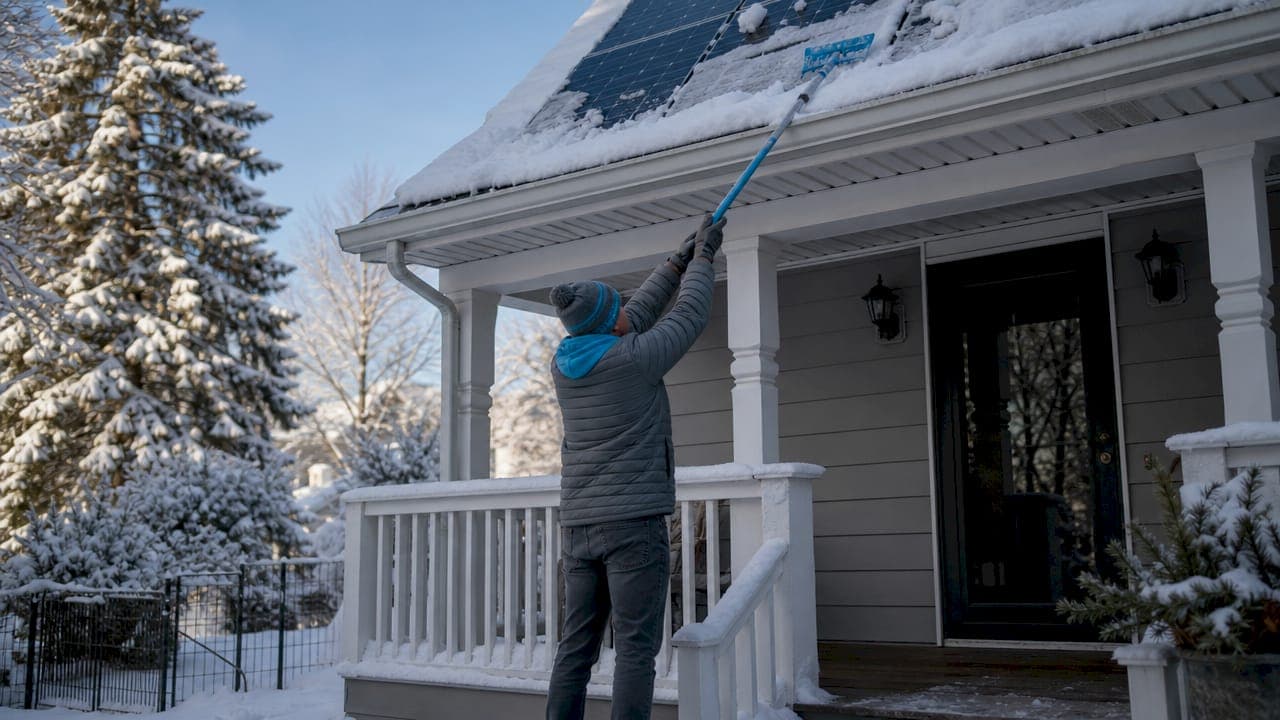
Snow on your solar panels is rarely the crisis most Wisconsin homeowners fear. Wisconsin winter solar panel snow removal is a topic where the conventional wisdom, "clear it fast," often costs more in effort and risk than the energy you actually recover. Annual snow-related production loss for a typical Wisconsin system runs just 1–5% per year, and most panels self-clear within days. The real skill is knowing when to act, how to act safely, and what to watch for all winter long.
How does snow impact solar panel energy production in Wisconsin?
Snow cover blocks sunlight and causes temporary output drops, but the long-term impact on your system is smaller than most homeowners expect. For a standard 8 kW residential system, annual snow-related loss typically translates to only about $60–$90 in recoverable energy per year. That number puts the urgency of aggressive snow removal in perspective.
Wisconsin winters actually give your panels a quiet advantage. Solar cells operate more efficiently in cold temperatures, partially offsetting the losses from shading or snow cover. Cold air is denser and cleaner, which helps panels convert sunlight more effectively than they do on a hot August afternoon.
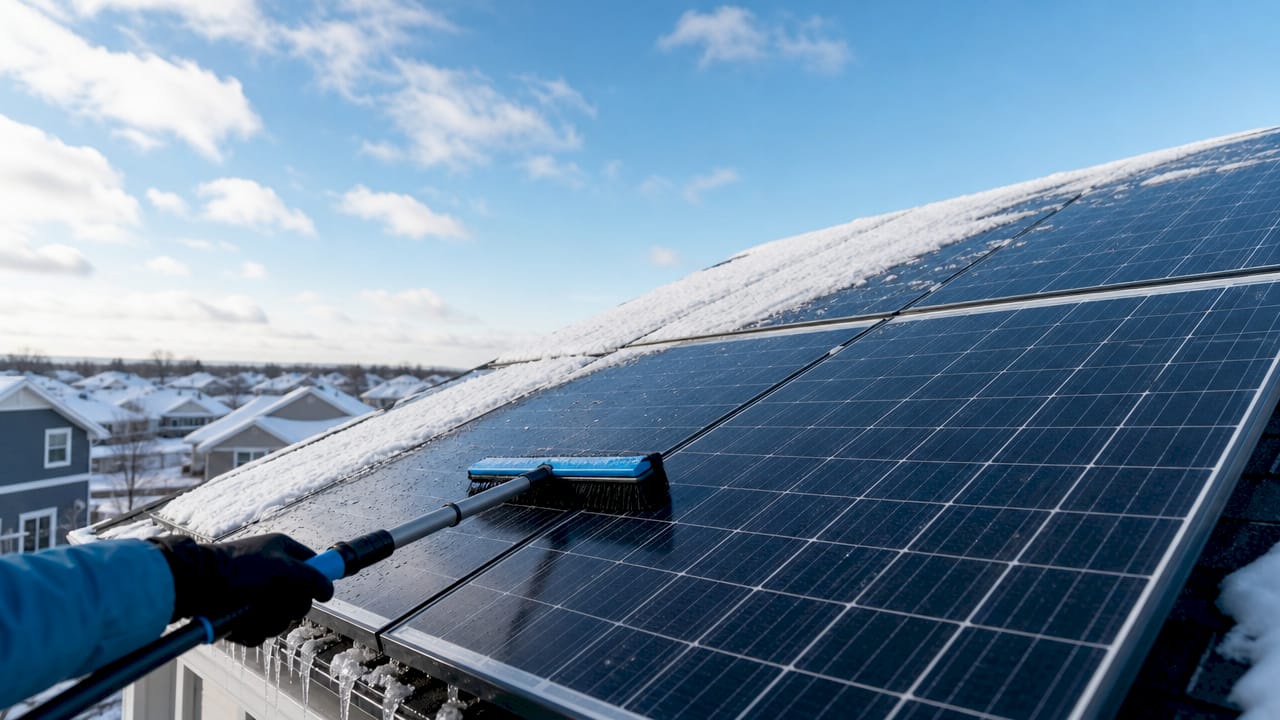
Panel design also works in your favor. The dark tempered glass on most residential panels absorbs solar radiation even under thin snow cover. That absorbed heat, combined with the natural tilt of a rooftop installation, causes snow to slide off faster than it would from a flat surface. Standard rooftop panels self-shed snow within 1–5 days of sunshine, even at temperatures as low as -10°F.
Here is what actually drives snow loss on Wisconsin systems:
- Panel tilt angle. Panels installed at 30°–45° shed snow faster than shallower angles.
- Shading and orientation. South-facing arrays with no nearby tree cover clear the fastest.
- Snow depth and density. Wet, heavy snow sticks longer than light, powdery accumulation.
- Sunlight after the storm. A clear day following a snowfall is the most effective "removal tool" available.
| Factor | Effect on snow shedding |
|---|---|
| Panel tilt 30°–45° | Faster natural slide-off |
| Cold, sunny weather | Accelerates self-clearing |
| Wet, heavy snow | Slower to shed, more weight |
| Flat or low-tilt installation | Snow lingers longer |
When should homeowners consider removing snow from their panels?
Most snow events do not require manual intervention. Proper tilt angle and racking design make winter snow accumulation less concerning than it looks from the ground. The right question is not "should I clear it?" but "does the data show I need to?"
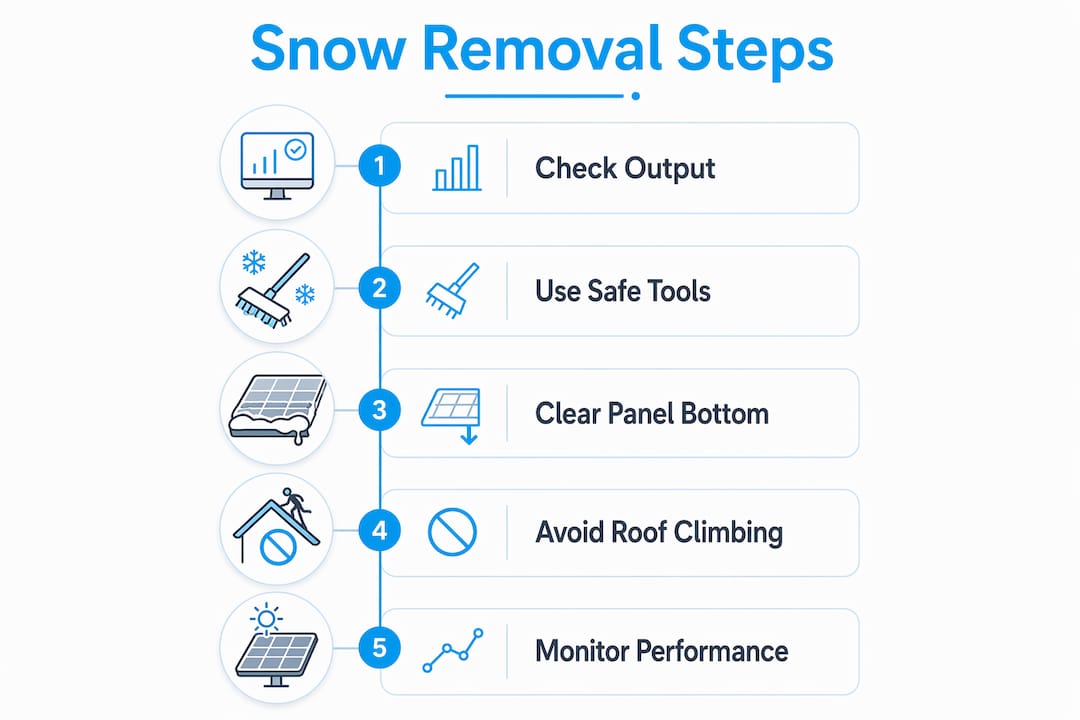
Your solar monitoring app is the best decision-making tool you have. Monitoring system output during winter lets you detect when snow or other issues are genuinely cutting production. If your app shows zero output on a sunny day after a storm, that is a signal worth acting on. A partial dip during overcast conditions is not.
Manual clearing makes sense under these specific conditions:
- Snow depth exceeds several inches and has not shifted after 2–3 sunny days.
- Your monitoring app confirms a significant, sustained production drop on clear days.
- Panels are shaded by nearby structures and receive limited direct sun to self-clear.
- A prolonged cloudy period is forecast, meaning natural shedding will not happen soon.
The risks and costs of manual removal often outweigh the benefit for minor accumulation. Climbing onto a snow-covered or icy roof is one of the most dangerous things a homeowner can do in winter. The financial recovery from clearing a light dusting rarely justifies that risk.
Pro Tip: Before you grab a snow rake, check your inverter data or monitoring app first. If production is already recovering on its own, leave the panels alone and let physics do the work.
What are the safest tools and methods for removing snow from solar panels?
Safe snow removal from solar panels starts with one non-negotiable rule: never climb onto a snowy or icy roof. All clearing must happen from ground level. This is not a suggestion based on caution. It is the standard recommendation from solar installation professionals and roofing safety experts alike.
The right tools protect both you and your panels. Soft-head snow rakes with telescoping handles are the only recommended option for residential solar snow removal. These rakes use foam or rubber edges that glide across panel glass without scratching the surface or compromising your manufacturer warranty. Metal tools, ice scrapers, and standard roof rakes with sharp edges can cause microcracks in the glass that reduce output and void your warranty.
Follow these steps for safe, effective ground-level clearing:
- Check your monitoring app first. Confirm the production drop is real and significant before starting.
- Select the right rake. Use a foam or rubber-edged snow rake with a handle long enough to reach your panels from the ground.
- Start at the bottom edge. Pull snow downward and off the panel in the direction of the natural slide path. Never push snow upward across the glass.
- Use light, even strokes. Heavy pressure can crack glass or damage the frame. Let the tool's weight do the work.
- Clear a small patch first. Even a small exposed section of dark glass begins absorbing heat and accelerates natural shedding for the rest of the panel.
- Stay clear of the fall zone. Snow sliding off panels can come down fast. Stand to the side, not directly below the array.
"Improper snow removal can cause microcracks or damage mounting hardware, reducing system longevity." Professionals consistently flag this as the most overlooked risk of DIY winter clearing.
Pro Tip: Clearing just the bottom third of each panel is often enough. That exposed glass absorbs heat, and the rest of the snow slides off on its own within hours on a sunny day.
Protect your panel warranty coverage by avoiding any tool not specifically designed for solar glass. Your warranty likely specifies approved cleaning and maintenance methods, and using the wrong equipment can void it entirely.
How do you monitor winter performance and prepare panels for spring?
Winter monitoring is the most underrated part of solar ownership in Wisconsin. Your system's inverter and monitoring app give you real-time production data that tells you far more than a visual check from the driveway. Persistent zero output on a sunny day indicates either snow blockage or a fault that needs attention. Catching that early prevents days of lost production.
Ground-level visual checks are also worth doing after major storms. Look for visible damage to panels, unusual debris on the array, or ice buildup along the frame edges. You do not need to get on the roof to spot most problems. Binoculars work well for a closer look at panel surfaces and mounting hardware from a safe distance.
Post-winter inspection priorities include:
- Microcracks in panel glass. These are often invisible to the naked eye but show up as production inconsistencies in your monitoring data.
- Loose mounting hardware. Wisconsin racking systems are designed to handle snow loads of 30–60 pounds per square foot, but repeated freeze-thaw cycles can loosen bolts over time.
- Wiring and electrical connections. Post-winter electrical inspection is the most critical maintenance step. Snow and wind loads can loosen connections, creating both safety hazards and efficiency losses.
- Debris accumulation. Leaves, pine needles, and dirt that collected under snow become a shading problem once the snow clears.
| Inspection item | Why it matters |
|---|---|
| Electrical connections | Loose wiring causes faults and fire risk |
| Mounting hardware | Freeze-thaw cycles loosen bolts |
| Panel glass surface | Microcracks reduce output silently |
| Frame and seals | Moisture intrusion damages cells |
A thorough annual maintenance checklist run in early spring catches winter damage before it compounds through the high-production months of may, june, and july. That timing matters because spring and summer are when your system earns back the energy it lost all winter.
What Wisconsin winters actually taught me about solar snow removal
Most homeowners I talk to overestimate how much snow costs them and underestimate how much a bad removal attempt can cost them. I have seen panels with hairline cracks from a well-intentioned homeowner using a metal-edged rake. Those cracks do not show up on the glass surface. They show up as a 10–15% permanent output reduction that no amount of cleaning fixes.
The data consistently backs a patience-first approach. Snow accumulation is a temporary natural event that does not affect your system's long-term lifespan when panels and racking are properly installed. Wisconsin winters are cold, but they are also often sunny after storms. That combination is exactly what your panels need to self-clear.
The winter benefit that almost nobody talks about is the cold-temperature efficiency gain. Your panels are genuinely producing more efficiently per unit of sunlight in january than they are in july. That does not fully replace lost production from snow cover, but it meaningfully softens the blow. Understanding Wisconsin's seasonal weather impact on solar helps you set realistic expectations and make smarter decisions all year.
My honest recommendation: invest your energy in monitoring, not shoveling. Check your app after every major storm. If production recovers within a day or two of sunshine, you made the right call by waiting. If it does not, then reach for the foam rake, not the ladder.
— Marquis
Professional solar care for Wisconsin homeowners
Wisconsin winters are hard on solar systems in ways that go beyond snow. Grime, mineral deposits, and debris that build up under snowpack can cut spring production before the season even starts.

Solaralchemist provides professional solar panel cleaning and maintenance services across Madison and surrounding Wisconsin communities, including DeForest, Watertown, and Lake Mills. Using professional-grade deionized water systems and equipment designed for solar glass, Solaralchemist cleans panels without scratching surfaces or voiding warranties. If you are unsure whether your system needs attention after winter, the signs you need a cleaning page walks you through exactly what to look for before booking a service visit.
FAQ
Does snow permanently damage solar panels?
Snow accumulation does not permanently damage properly installed panels. Wisconsin racking systems are built to handle snow loads of 30–60 pounds per square foot, and the panels themselves are designed for cold-weather conditions.
How long does snow stay on solar panels in Wisconsin?
Standard rooftop panels self-shed snow within 1–5 days of sunshine, even at temperatures as low as -10°F. Dark panel glass absorbs solar radiation and generates enough heat to slide snow off naturally.
Is it safe to remove snow from solar panels yourself?
Ground-level removal with a foam or rubber-edged snow rake is safe when done correctly. Never climb onto a snowy or icy roof, and never use metal tools that can scratch panel glass or cause microcracks.
How much energy do I lose from snow cover in Wisconsin?
Annual snow-related production loss for a typical Wisconsin system runs 1–5%, which translates to roughly $60–$90 in recoverable energy per year for an 8 kW system. That figure rarely justifies aggressive manual removal.
What should I check on my solar panels after winter ends?
Inspect electrical connections, mounting hardware, and panel glass for microcracks after every Wisconsin winter. Loose wiring and bolts loosened by freeze-thaw cycles are the most common post-winter issues and the most important to fix before peak production season.
Key takeaways
Wisconsin solar homeowners who prioritize monitoring and safe ground-level removal over aggressive manual clearing protect both their panels and their long-term energy output.
| Point | Details |
|---|---|
| Snow loss is minimal | Annual production loss from snow runs just 1–5% for most Wisconsin systems. |
| Panels self-clear naturally | Most snow slides off within 1–5 days of sunshine without any manual effort. |
| Ground-level removal only | Never climb a snowy roof; use a foam or rubber snow rake from the ground only. |
| Monitor before you act | Check your inverter app first; only remove snow if data confirms a real production drop. |
| Post-winter inspection matters | Check electrical connections, mounting hardware, and panel glass every spring. |