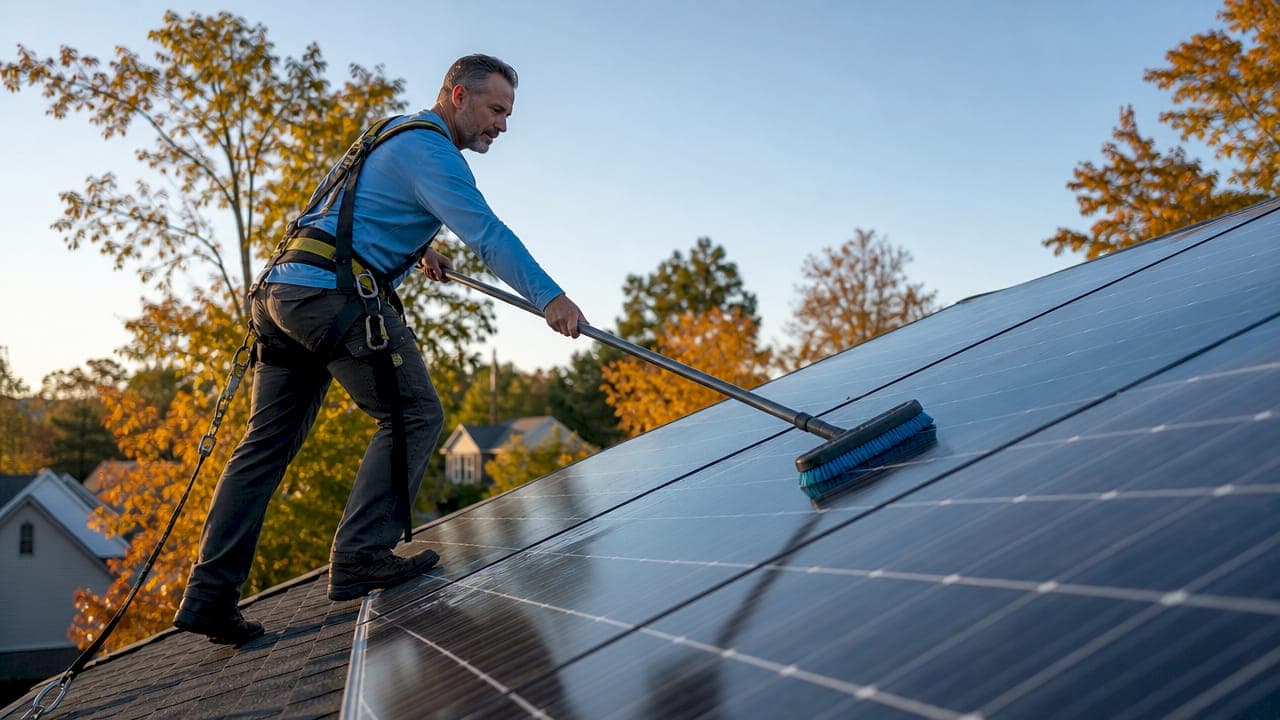
Solar panel soiling is the leading cause of preventable energy loss in residential and commercial systems. The choice between diy vs professional solar cleaning determines not just how clean your panels look, but how much power they actually produce, how long your warranty stays valid, and whether you or a trained technician takes on the safety risk. Soiling causes 4–7% average annual energy loss globally, and in dusty or agricultural regions that number climbs to 25%. Solaralchemist, based in Madison, Wisconsin, works with homeowners and business owners across Dane County who face exactly this decision every season.
DIY vs professional solar cleaning: what's the real difference?
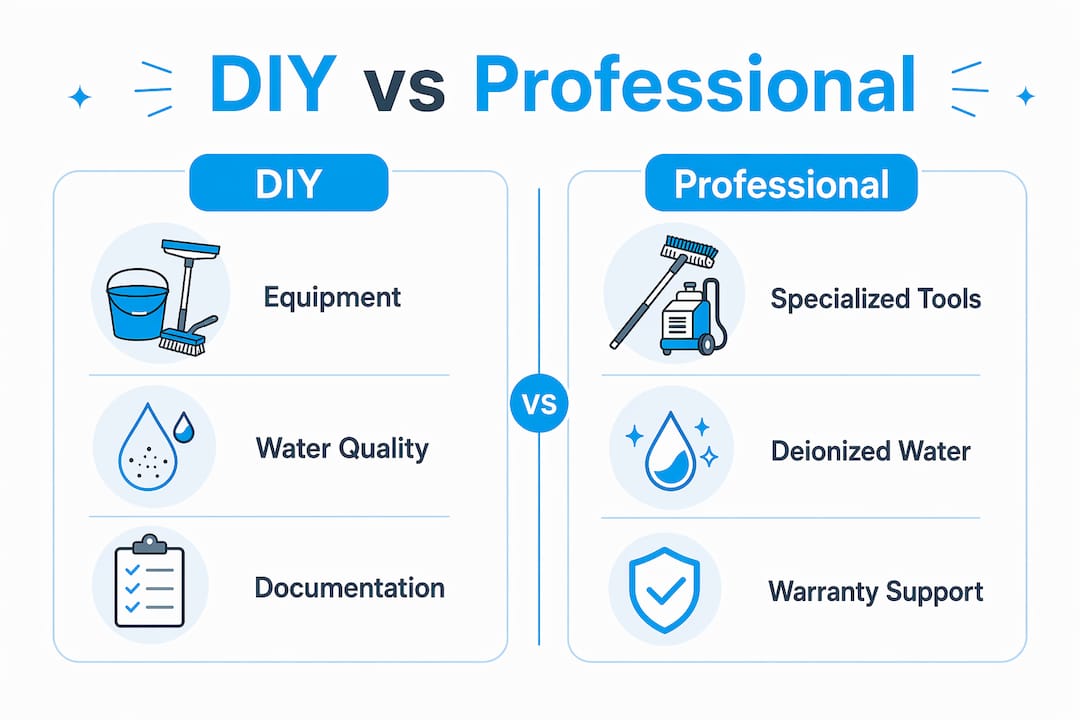
The core difference between DIY and professional solar cleaning comes down to equipment, water quality, and what happens after the cleaning ends. DIY cleaning means you supply the tools, the water, and the labor. Professional cleaning means a trained technician brings deionized water systems, soft-bristle brushes rated for panel glass, and a written inspection report.
Professionals use deionized water with TDS below 10 ppm to prevent mineral spotting. Tap water, which most homeowners use, leaves behind calcium and magnesium deposits that reduce light absorption over time. That residue compounds with each cleaning, quietly cutting into your system's output.
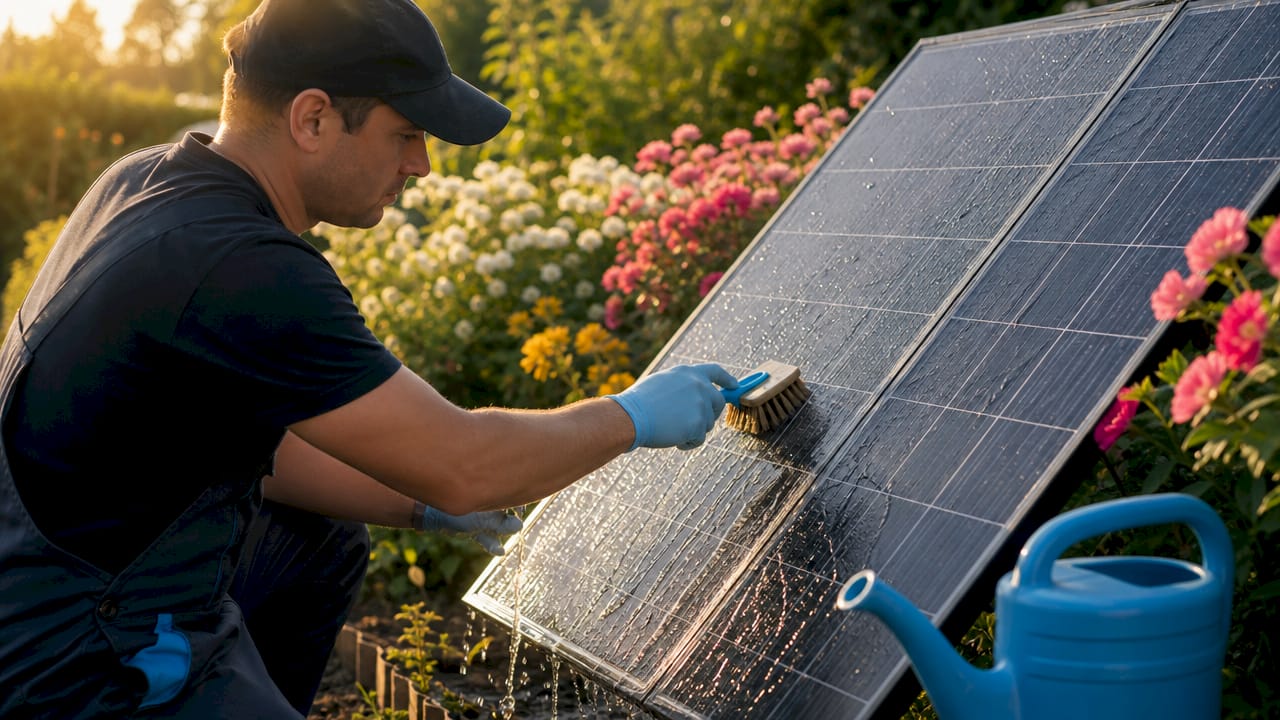
The other difference is documentation. Professional service reports create a paper trail that manufacturers and warranty administrators require for claims. DIY cleaning leaves no record, which can become a costly problem if a panel fails and you need to prove proper maintenance.
When is DIY solar panel cleaning appropriate and effective?
DIY cleaning works well under a specific set of conditions. Get those conditions wrong and you trade a small cost savings for a real safety or equipment risk.
The right setup for DIY cleaning includes:
- Ground-mounted arrays or single-story rooftops
- Roof pitch of 4:12 or less (a gentle slope you can safely stand on)
- Panels with light to moderate dust or pollen buildup
- Access to a water source you can connect to an extension pole
The right tools matter just as much:
- Soft-bristle brush rated for solar glass (no metal or stiff nylon)
- Water-fed extension pole to keep you off the roof
- Deionized or distilled water (avoid tap water when possible)
- Non-abrasive, pH-neutral cleaning solution if needed
DIY rinsing can recover 5–7% efficiency in typical climates when done correctly. That recovery is real and worth the effort for accessible systems. Cleaning frequency should run 1–2 times per year in most Midwest climates, and more often if you live near a gravel road, farm fields, or a heavily trafficked area.
OSHA requires fall protection on roofs steeper than 4:12, and falls remain the leading cause of rooftop injury and death. If your roof exceeds that pitch, stop the DIY plan and call a professional.
Pro Tip: Schedule DIY cleaning for early morning or early evening. Panels that are hot from midday sun can experience thermal shock when cold water hits the glass, which stresses the cells and seals over time.
What advantages does professional solar panel cleaning offer?
Professional cleaning goes beyond what a garden hose and a brush can accomplish. The advantages show up in equipment quality, safety, and the inspection that comes with every visit.
Here is what a professional cleaning service typically includes:
- Pre-cleaning inspection of panel surfaces for cracks, delamination, or soiling type
- Soft washing with deionized water fed through a water-purification system
- Gentle brushing with non-abrasive tools designed for photovoltaic glass
- Post-cleaning inspection of mounting hardware, wiring, and junction boxes
- Written service report documenting condition, work performed, and any findings
That inspection step is where professional cleaning separates itself from a DIY rinse. Technicians identify surface damage, loose mounting hardware, and wiring issues that a homeowner would miss entirely. Catching a loose ground wire or a cracked frame early costs far less than a failed system or a voided warranty.
Cost context for professional services:
- Professional cleaning typically costs $150–$500 per visit for a 20–25 panel system, or roughly $5–$20 per panel
- Annual maintenance contracts run $390–$720 and offer 15–30% savings over single visits
- Professional cleaning earns back its cost when energy losses exceed 10%
For multi-story homes or commercial arrays, professional cleaning is not optional. It is the only safe and warranty-compliant approach.
Pro Tip: Combine your annual professional cleaning with a full system inspection. You get the cleaning, the documentation, and an electrical check in one visit, which covers your warranty requirements and catches problems before they become expensive.
How to safely execute a DIY solar panel cleaning
If your setup meets the criteria above, follow this process to clean panels safely and effectively.
Step-by-step DIY cleaning process:
- Check the weather forecast. Clean on a cool, overcast day or in early morning. Avoid cleaning in direct midday sun.
- Shut off your solar system following your inverter manufacturer's instructions before touching any panels.
- Gather your tools: soft-bristle brush, water-fed extension pole, deionized or distilled water, and a bucket if needed.
- Rinse panels from the top down using low-pressure water to loosen surface dust and debris.
- Gently brush panels in straight lines, working from top to bottom. Do not scrub in circles.
- Rinse again to remove loosened debris and any cleaning solution residue.
- Allow panels to air dry. Do not wipe with towels or squeegees, which can scratch the glass.
What to never do during DIY cleaning:
- Never use a pressure washer. High pressure damages seals, frames, and voids manufacturer warranties immediately.
- Never use abrasive scrubbers, steel wool, or rough sponges on panel glass.
- Never use household cleaners, dish soap, or ammonia-based products. They leave residue and can degrade coatings.
- Never walk on panels. Manufacturers prohibit walking on panels because it creates microcracks that cause lasting production losses, often showing up months or years later.
"Many soiling deposits cement to panel glass through repeated dew and heat cycles, making a simple rinse ineffective. If rinsing does not remove a deposit, do not scrub harder. Call a professional before you scratch the glass or spread the contamination."
Pro Tip: Check your solar panel cleaning methods against your panel manufacturer's manual before you start. Some manufacturers specify approved cleaning agents and void warranties for anything else.
Comparing the risks and long-term costs of DIY vs professional cleaning
The upfront cost of DIY cleaning looks attractive. The hidden costs are where owners get surprised.
DIY risks that carry real financial consequences:
- Fall injuries on roofs steeper than 4:12, where OSHA requires fall protection equipment most homeowners do not own
- Microcracking from walking on panels, which degrades output silently over months
- Hard water spotting from tap water, which reduces light absorption with each cleaning
- Warranty voidance from using prohibited tools or chemicals
Safety and warranty risks often overshadow the apparent upfront savings of DIY cleaning, especially for multi-story or steep-roof systems. A single fall or a voided warranty on a $15,000 system erases years of cleaning cost savings instantly.
| Cost element | DIY | Professional |
|---|---|---|
| Per-visit cost | $20–$60 (tools, water) | $150–$500 per visit |
| Annual contract option | None | $390–$720 with inspection |
| Warranty documentation | None | Written report included |
| Inspection coverage | Surface only | Surface, wiring, mounting hardware |
| Risk of panel damage | Moderate to high | Low |
| Efficiency recovery | 5–7% when done correctly | 5–7% plus inspection-caught issues |
Poor DIY technique can degrade panel output over time through scratched glass, mineral buildup, and undetected microcracks. Professional maintenance sustains production by addressing all three. For business owners with large commercial arrays, the cost of soiling on revenue compounds quickly enough that professional contracts pay for themselves.
When should you choose professional cleaning?
Several clear signals tell you that professional cleaning is the right call, not a luxury.
Choose professional cleaning when:
- Your monitoring system shows a 10% or greater drop in expected output
- You notice hard water spots or heavy soiling that rinsing does not remove
- Your roof pitch exceeds 4:12 or your array is on a multi-story building
- You have a commercial system with more than 25 panels
- Your warranty requires documented professional maintenance
- You have not had a system inspection in more than 12 months
A hybrid strategy works well for many owners. Handle light, accessible cleaning yourself 1–2 times per year, and schedule one professional visit annually that includes a full inspection. That approach keeps costs reasonable while protecting your warranty and catching electrical or structural issues early. Solaralchemist offers annual maintenance plans that combine cleaning and inspection into a single documented service visit.
Local climate matters too. Wisconsin owners deal with pollen in spring, bird activity in summer, and leaf debris in fall. Each season brings different soiling types, and knowing when to clean solar panels based on your specific conditions is the first step toward a maintenance schedule that actually protects your investment.
Key Takeaways
Professional solar cleaning outperforms DIY in safety, water quality, and warranty documentation, while DIY remains a viable option only for accessible, low-pitch, ground-level systems.
| Point | Details |
|---|---|
| Soiling causes real losses | Panel soiling causes 4–7% annual energy loss globally, reaching 25% in dusty regions. |
| Water quality is the hidden factor | Tap water leaves mineral deposits; professionals use deionized water below 10 ppm TDS to prevent buildup. |
| Documentation protects your warranty | Professional service reports are required for warranty claims; DIY cleaning provides no paper trail. |
| DIY has strict safety limits | OSHA requires fall protection above a 4:12 roof pitch, making DIY unsafe for most steep or multi-story roofs. |
| Hybrid strategy balances cost and protection | Light DIY cleaning plus one annual professional visit covers both routine maintenance and warranty compliance. |
What I've learned from watching owners choose the wrong approach
The most common mistake I see is owners treating solar cleaning like washing a car. They grab a bucket, a sponge, and the garden hose, and they go at it on a hot afternoon. The panels look clean when they are done. The monitoring data tells a different story three months later.
Tap water is the silent efficiency killer. Most homeowners do not realize their local water supply has enough dissolved minerals to leave a film on the glass after every cleaning. That film is nearly invisible, but it cuts into light absorption the same way a dirty windshield cuts into visibility at dusk. You do not notice it until the problem is significant.
The other thing I have seen repeatedly is owners underestimating the inspection value of a professional visit. Cleaning is the visible part. The wiring check, the mounting hardware review, and the panel surface assessment are what actually protect the long-term investment. A loose ground wire found during a professional inspection costs almost nothing to fix. The same wire found after a system failure costs thousands.
My honest recommendation for most homeowners: do a light rinse yourself in spring after pollen season, and book a professional visit in late summer or early fall before winter. That schedule covers the two highest-soiling periods in the Midwest, keeps your warranty documentation current, and gives you a full system health check before the panels sit under snow for months.
Monitor your production data. If your system drops more than 10% below its expected output between cleanings, do not wait for the scheduled visit. That drop is your signal to call a professional now.
— Marquis
Solaralchemist's professional cleaning services for Wisconsin owners
Solaralchemist serves home and business owners across Madison and surrounding Dane County communities with professional-grade solar panel cleaning and maintenance.
Every service visit uses deionized water systems and soft-bristle equipment designed for photovoltaic glass, paired with a written inspection report that satisfies manufacturer warranty requirements. Annual maintenance contracts bundle cleaning and inspection into one documented visit, giving you both the efficiency recovery and the paper trail your warranty demands. Whether your system is a residential rooftop array or a commercial installation, Solaralchemist builds a maintenance schedule around your local conditions and system configuration. Request a consultation or check the 8 signs your panels need cleaning to find out where your system stands today.
FAQ
How often should solar panels be cleaned?
Most residential systems need cleaning 1–2 times per year. Systems near farms, gravel roads, or coastal areas may need cleaning every 2–3 months.
Does DIY cleaning void a solar panel warranty?
Using prohibited tools like pressure washers or abrasive scrubbers can void manufacturer warranties. Professional cleaning with documented service reports protects warranty compliance.
What water should I use to clean solar panels?
Deionized or distilled water is the correct choice. Tap water contains dissolved minerals that leave deposits on panel glass, reducing light absorption over time.
Can walking on solar panels damage them?
Walking on panels is prohibited by manufacturers. It creates microcracks that cause permanent output loss, often appearing months after the damage occurs.
When does professional cleaning pay for itself?
Professional cleaning earns back its cost when energy losses exceed 10% of expected output. Annual contracts at $390–$720 also deliver 15–30% savings over single-visit pricing.