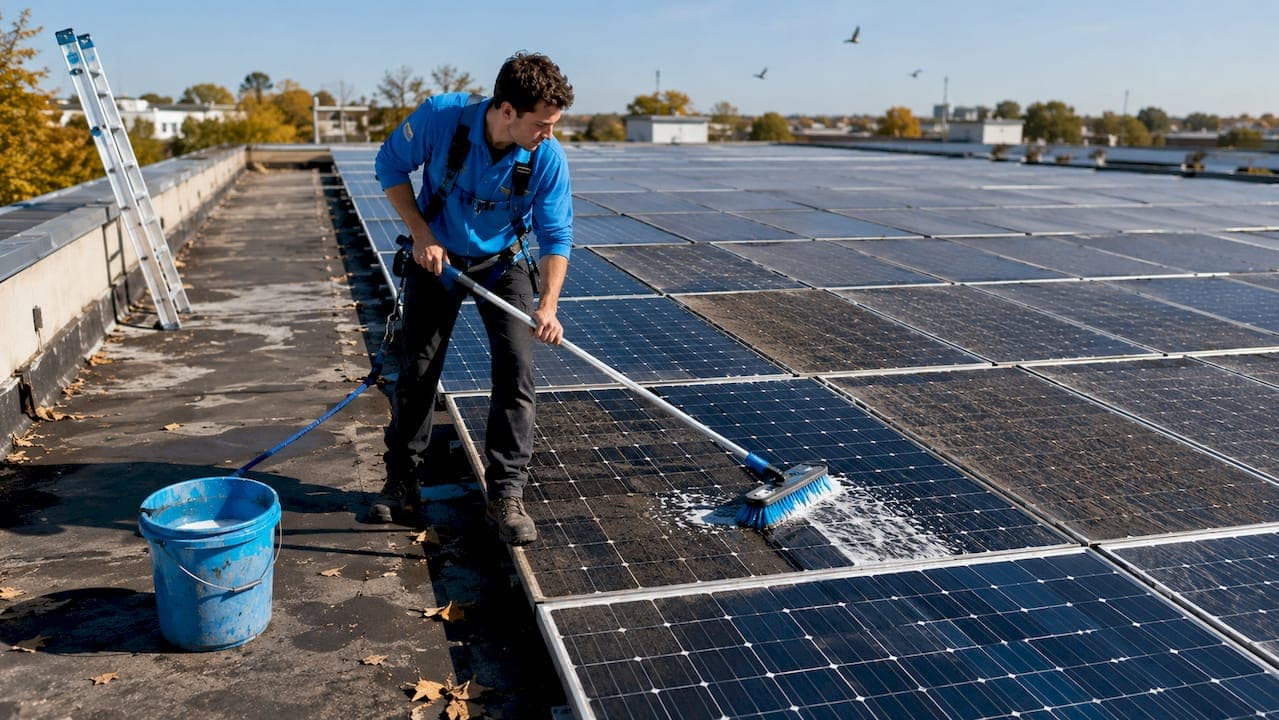
Flat roof solar panel cleaning is the process of removing soiling, debris, and biological buildup from photovoltaic (PV) modules mounted on low-slope or flat rooftops to restore peak energy output. Dirty panels lose efficiency faster than most owners realize, and flat roof installations face unique challenges: pooling water, bird traffic, and limited drainage all accelerate grime accumulation. This guide covers the right tools, timing, step-by-step methods, and flat-roof-specific maintenance checks you need to keep your system producing at full capacity. Whether you prefer DIY cleaning or are weighing professional help, the process starts with knowing exactly what you are dealing with.
What tools do you need for flat roof solar panel cleaning?
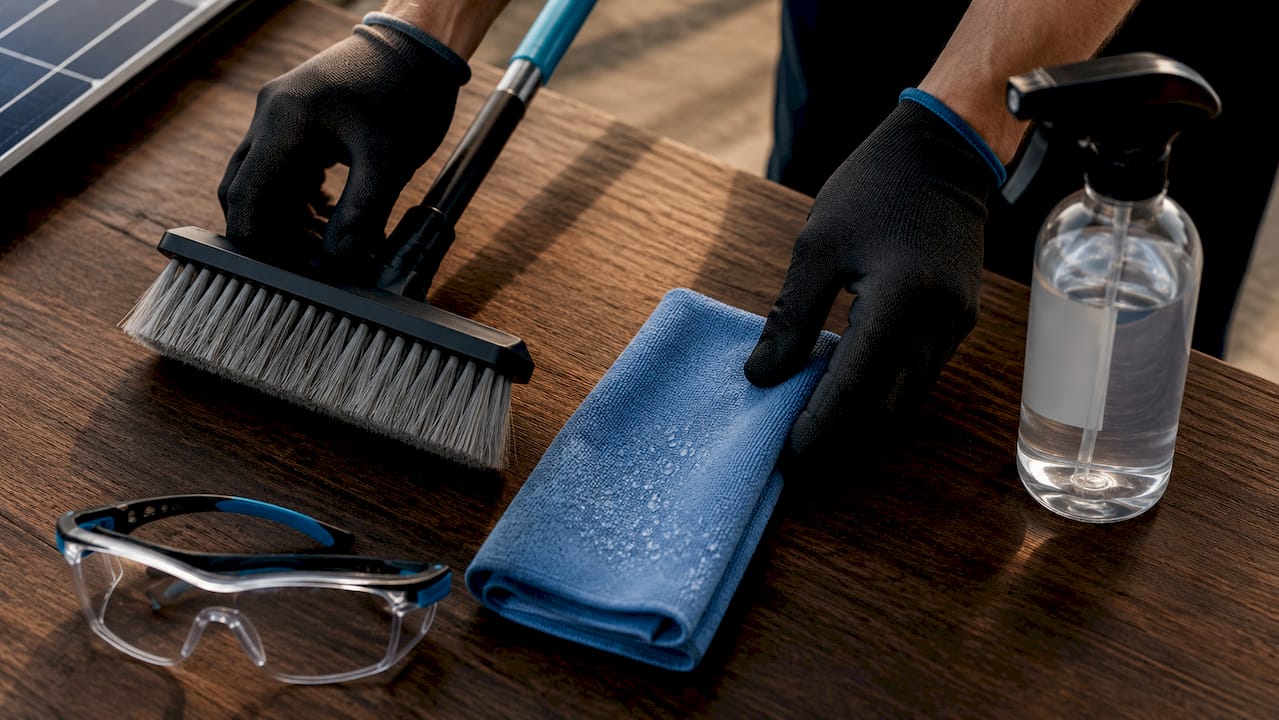
The right equipment protects your panels and keeps you safe. Mild, biodegradable, pH-neutral soaps and non-abrasive brushes are the industry standard. Harsh chemicals and abrasive pads strip the anti-reflective coating that makes your panels efficient in the first place.
Here is what you need before you start:
- Soft-bristle brush or sponge with a telescoping handle (at least 6 feet) so you can reach panels from the roof edge or ground level
- Garden hose with a gentle spray nozzle for pre-rinsing and final rinse; never use a pressure washer
- Mild, pH-neutral soap such as a diluted dish soap or a purpose-built solar panel cleaner
- Squeegee or microfiber cloth for post-rinse drying to prevent mineral deposits
- Non-slip footwear and, if roof access is required, a properly rated safety harness and anchor point
- Ladder that is inspected before use and set at the correct angle per fall protection standards
The table below compares the most common cleaning tools and agents so you can choose what fits your setup.
| Tool or Agent | Best Use | Avoid If |
|---|---|---|
| Soft-bristle brush | Scrubbing panel surface | Bristles are stiff or wire-tipped |
| Telescoping pole | Reaching panels from ground | Pole length is under 6 feet |
| pH-neutral soap | Loosening grime and bird droppings | Product contains bleach or solvents |
| Garden hose nozzle | Pre-rinse and final rinse | Pressure exceeds a gentle fan spray |
| Microfiber squeegee | Removing rinse water | Cloth has embedded grit from prior use |
| Pressure washer | Not recommended at all | Any situation |
Pro Tip: Check the label of any soap you buy for the word "biodegradable." Runoff from flat roofs often drains into gutters and downspouts, so a non-toxic formula protects both your roof membrane and local waterways.
For a deeper look at what causes panels to soil in the first place, the residential panel soiling guide from Solaralchemist breaks down the most common culprits by region and season.
When and how often should you clean flat roof solar panels?
Flat roof solar panels require cleaning at least twice per year, with higher frequency in dusty, coastal, or urban environments. That baseline of two cleanings per year assumes moderate conditions. If you live near a highway, agricultural area, or coastline, quarterly cleaning is a smarter target.
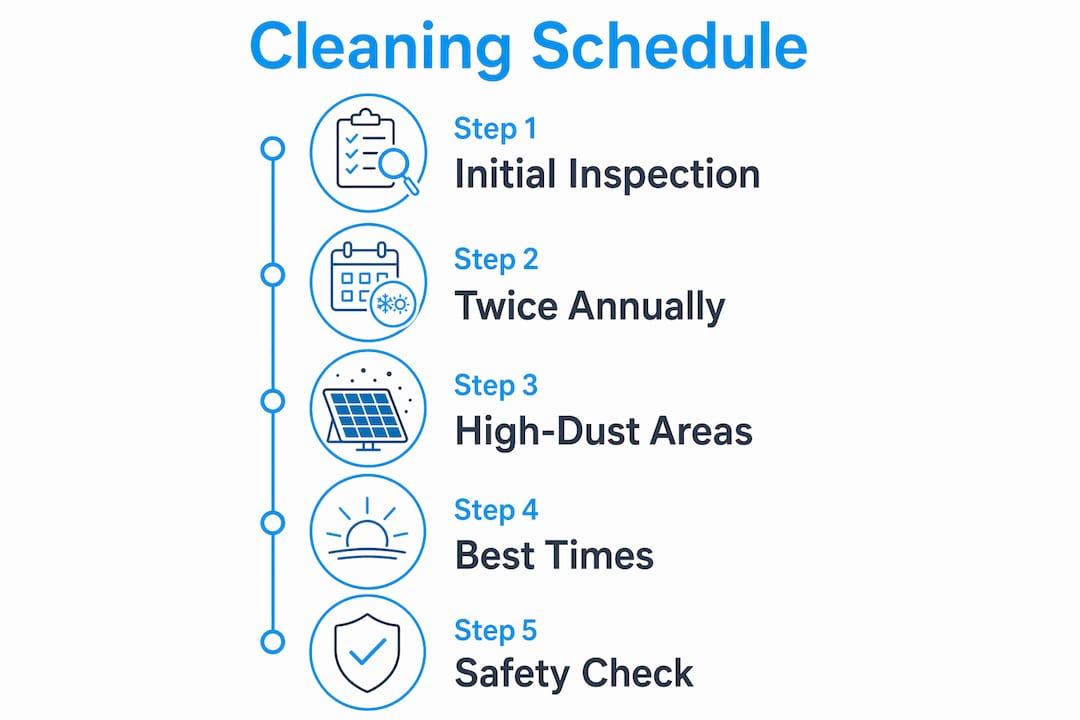
Timing within the day matters just as much as frequency. Clean during cooler parts of the day, specifically early morning or late afternoon, to reduce water spotting and thermal stress. Panels heated by midday sun can reach surface temperatures above 140°F. Cold water hitting a hot panel creates thermal shock, and rapid evaporation leaves mineral deposits that are harder to remove than the original dirt.
The table below shows recommended cleaning frequency by environment type.
| Environment Type | Minimum Cleanings Per Year | Notes |
|---|---|---|
| Suburban, low pollution | 2 | Spring and fall work well |
| Urban or near highways | 3–4 | Exhaust particulates accumulate fast |
| Coastal or high humidity | 3–4 | Salt film reduces output quickly |
| Agricultural or dusty areas | 4+ | Pollen and soil clog cells rapidly |
| Areas with heavy bird traffic | As needed | Spot-clean droppings immediately |
- Clean in spring after pollen season peaks
- Clean in fall before winter reduces daylight hours
- Spot-clean bird droppings within a few days; dried droppings cause localized shading that cuts output disproportionately to their size
- Avoid cleaning during freezing temperatures or when frost is forecast overnight
How to safely perform flat roof solar panel cleaning step by step
Safe roof access is the first rule of any flat roof solar maintenance job. Sunrun recommends avoiding roof access entirely for DIY cleaning and using a long-handled brush from the ground or roof edge instead. If you must access the roof, inspect your ladder, set it at the correct angle, and use fall protection before stepping up.
Follow these steps in order:
- Shut down the PV system. Power down the system following your inverter's shutdown procedure before any water contacts the panels or wiring. This removes electrical hazard from the equation entirely.
- Pre-rinse the panels. Use your garden hose on a gentle setting to float loose dust, pollen, and debris off the surface. This step prevents grit from scratching the glass during scrubbing.
- Apply soap solution. Mix a small amount of pH-neutral soap with water in a bucket. Apply it to the panel surface with your soft-bristle brush or sponge.
- Scrub top to bottom. Work from the top edge of each panel down to the bottom. Top-to-bottom cleaning lets gravity carry loosened grime away from areas you have already cleaned.
- Rinse thoroughly. Flush the entire panel surface with clean water. Soap residue left on the glass attracts new dirt faster than a clean surface would.
- Dry with a squeegee or microfiber cloth. Removing rinse water with a non-abrasive squeegee prevents mineral and chemical residue buildup that degrades output over time.
- Restart the system. Follow your inverter's startup sequence and verify output on your monitoring app to confirm performance has improved.
For stubborn bird droppings or hardened debris, let a soaked cloth sit on the spot for 2–3 minutes before scrubbing. Pre-soaking softens the material and prevents you from grinding it into the glass coating.
Pro Tip: A two-phase cleaning approach used by professional crews involves a pre-rinse soak to soften stubborn debris, followed by gentle agitation and an immediate rinse. This sequence reduces micro-scratching risk more than scrubbing dry or semi-dry panels.
The step summary below gives you a quick reference for each phase.
| Phase | Action | Key Risk to Avoid |
|---|---|---|
| Shutdown | Power down inverter | Electrical contact with water |
| Pre-rinse | Gentle hose spray | High-pressure nozzle damage |
| Scrub | Soft brush, top to bottom | Abrasive tools scratching glass |
| Rinse | Full flush with clean water | Soap residue left on surface |
| Dry | Squeegee or microfiber cloth | Mineral deposits from standing water |
| Restart | Follow inverter startup sequence | Skipping output verification |
What special maintenance does a flat roof solar system need?
Flat roof solar systems require maintenance beyond panel cleaning. Flat roof upkeep includes checking drainage, inspecting for ponding water, reviewing cable containment, and assessing roof membrane wear. Each of these factors directly affects how long your panels and your roof last together.
Ponding water is the most overlooked threat on flat roofs. Water that sits near panel mounting feet accelerates membrane degradation and can compromise the structural integrity of the mount itself. Verifying roof drainage clearance during cleaning is a habit that pays off in avoided repair costs.
Here is what to check during each cleaning visit:
- Drainage channels and scuppers: Clear any debris blocking water flow off the roof. A blocked drain turns a flat roof into a shallow pond after every rainstorm.
- Cable containment: Look for conduit or cable trays that have shifted, cracked, or come loose from their fasteners. Exposed wiring is both a safety hazard and a code violation.
- Mounting hardware: Check that panel racking bolts are tight and that ballast blocks (if used) have not shifted from wind loading.
- Roof membrane: Look for bubbling, cracking, or separation near panel feet and penetrations. Catch these early and a tube of compatible sealant fixes the problem. Ignore them and you are looking at a full membrane replacement.
- Panel frame condition: Check for corrosion at frame corners, especially on aluminum frames in coastal or high-humidity areas.
Integrating these checks with your cleaning schedule means you get a full system health review twice a year without scheduling a separate inspection. For expert guidance on flat roof solar maintenance, the team at Alpha Solar Solutions publishes detailed equipment and technique comparisons worth reviewing.
What cleaning mistakes do flat roof solar owners make most often?
The most common flat roof solar cleaning mistakes are also the most damaging. Reviewing the most frequent cleaning errors before you start saves you from costly panel repairs or voided warranties.
Avoid these mistakes:
- Using harsh chemicals or abrasive tools. Bleach, ammonia-based cleaners, and steel wool destroy the anti-reflective coating. Once that coating is gone, output drops permanently.
- Cleaning during peak heat or direct sunlight. Midday cleaning causes rapid evaporation and leaves mineral spots that require a second cleaning to remove.
- Accessing the roof without fall protection. Flat roofs feel stable but membrane surfaces become slippery when wet. A fall from a single-story commercial roof causes serious injury.
- Skipping the system shutdown. Water and live electrical components do not mix. Always power down the inverter before water contacts any part of the array.
- Leaving soap residue on panels. Residue acts like a magnet for dust and pollen. A thorough rinse takes two minutes and prevents the need for an extra cleaning cycle.
- Ignoring roof condition issues. A cracked membrane under your array is not a panel problem, but it will become one. Water intrusion through the roof can reach wiring and mounting hardware.
Pro Tip: If you are unsure whether a cleaning product is safe for solar panels, test it on a small corner of one panel and let it dry completely before applying it to the full array. Panel coatings vary by manufacturer, and what works on one brand may not be safe on another.
Key takeaways
Effective flat roof solar panel cleaning requires the right tools, correct timing, a safe step-by-step process, and integrated roof inspections to protect both output and system longevity.
| Point | Details |
|---|---|
| Clean at least twice per year | Increase to 3–4 times annually in dusty, coastal, or urban environments. |
| Use pH-neutral, non-abrasive tools | Soft brushes, mild soap, and a garden hose protect panel coatings and glass. |
| Always shut down the PV system first | Powering down the inverter before cleaning eliminates electrical hazard from water contact. |
| Clean during cooler parts of the day | Early morning or late afternoon prevents thermal shock and mineral spotting. |
| Inspect the roof during every cleaning | Check drainage, membrane condition, cable containment, and mounting hardware each visit. |
Why i think most flat roof owners underestimate the roof itself
Most cleaning guides focus entirely on the panels and treat the roof as background. After working with flat roof solar systems in Madison, Wisconsin, I have seen the opposite problem more often than not: the panels are fine, but the roof underneath is quietly failing.
Flat roofs do not shed water the way pitched roofs do. Every cleaning session is also a drainage test. If water is pooling near your panel feet after you rinse, that is a sign your drainage is compromised, not just a cosmetic issue. I always tell owners to watch where the water goes during the rinse phase. That two-minute observation tells you more about your roof's health than any formal inspection checklist.
The other thing I push back on is the idea that DIY cleaning is always the right call. For ground-mounted or low-slope systems where you can reach panels with a telescoping pole from a safe position, DIY works well. But the moment you need to walk on a wet membrane roof with a bucket and a brush, the risk-to-reward ratio shifts. A professional crew with proper fall protection and deionized water equipment does the job faster, safer, and with better results. The cost of one professional cleaning is a fraction of what a single fall or a voided panel warranty costs.
Timing is the one area where DIY owners consistently get it right once they know the rule: cool part of the day, never midday. That single habit improves rinse quality and reduces the chance you will need to clean the same panels twice in the same week.
— Marquis
Let Solaralchemist handle your flat roof solar maintenance
Flat roof solar systems need more than a quick rinse twice a year. Solaralchemist uses professional-grade deionized water systems and specialized equipment to clean and inspect flat roof arrays across Madison, Wisconsin and surrounding communities.

Not sure if your panels are due for a cleaning? The signs you need a cleaning guide on the Solaralchemist website walks you through eight specific indicators that your system is underperforming due to soiling. If you are ready to schedule service, the Madison, WI cleaning team handles flat roof systems of all sizes, from residential arrays to small commercial installations. Protect your investment with a crew that treats your roof and your panels with equal care.
FAQ
How often should flat roof solar panels be cleaned?
Flat roof solar panels need cleaning at least twice per year. Owners in dusty, coastal, or urban areas should clean three to four times annually to prevent efficiency loss from soiling.
What is the safest way to clean flat roof solar panels?
The safest method uses a long-handled soft brush from the roof edge or ground level to avoid walking on the roof surface. Sunrun advises against roof access for DIY cleaning and recommends hiring professionals when roof access is required.
Can i use a pressure washer on solar panels?
No. Pressure washers force water under panel frames and can crack glass or damage seals. A garden hose with a gentle spray nozzle is the correct tool for both pre-rinsing and final rinsing.
What time of day is best for cleaning solar panels?
Early morning or late afternoon are the best times. Cleaning during cooler periods reduces thermal stress on panels and prevents rapid evaporation that leaves mineral spots on the glass.
Do i need to shut down my solar system before cleaning?
Yes, always. PV systems must be powered down following the inverter shutdown procedure before any water contacts the panels or wiring to eliminate electrical hazard.