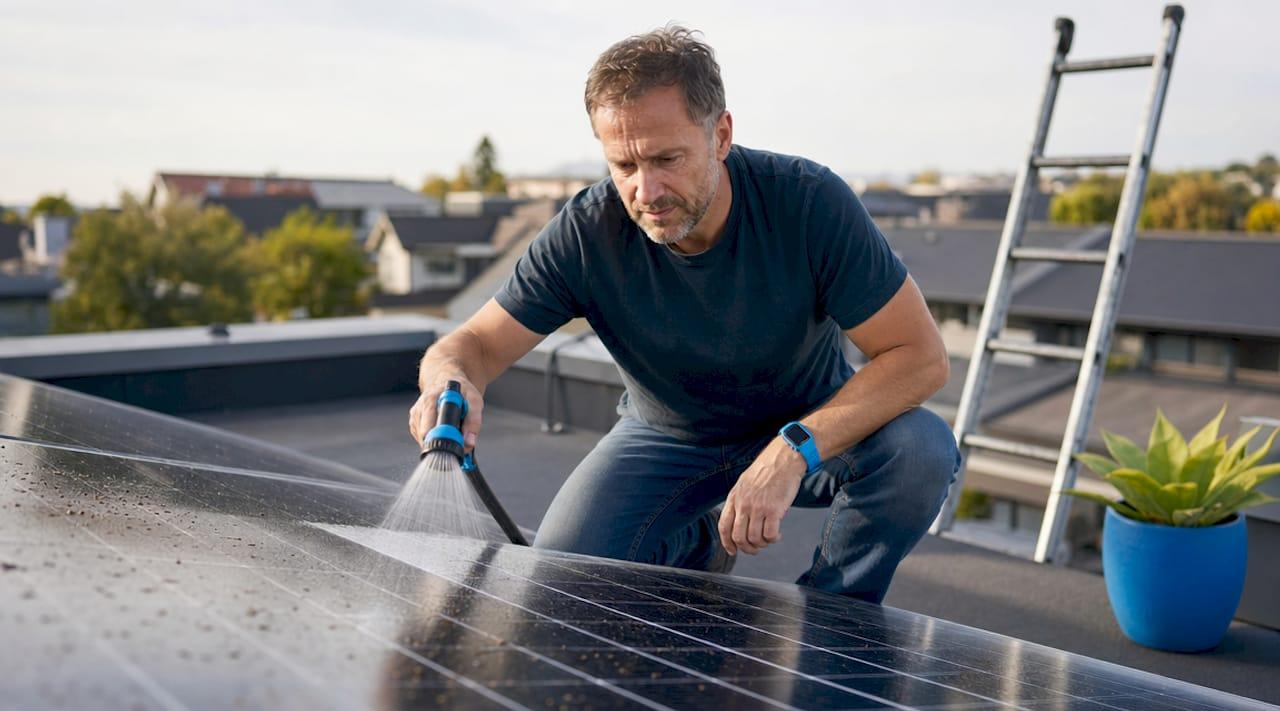
Residential solar panels accumulate dirt from a constant stream of environmental sources, and that buildup directly cuts the energy your system produces. Soiling is the industry term for this contamination, and it covers everything from fine dust and pollen to bird droppings and pollution film. Research shows soiling causes efficiency losses of 5 to 7% in the short term and can exceed 20 to 30% with prolonged neglect. For a system monitored through platforms like SolarEdge or managed by a company like Solaralchemist, understanding why residential solar panels get dirty is the foundation of any smart maintenance plan.
Why residential solar panels get dirty: the main environmental causes
Soiling is not simply a layer of loose dust you can blow off. It is a sticky film formed by moisture, airborne pollutants, and particles that bond to the glass surface over time. The exact composition of that film depends heavily on where you live and what surrounds your home.
The most common sources of contamination include:
- Dust and soil particles. Urban streets, agricultural fields, and desert terrain all generate fine particulate matter that wind carries onto panel surfaces. In the Midwest, tilled farmland near Madison, Wisconsin sends soil dust across neighborhoods every spring and fall.
- Pollen. Seasonal pollen from trees, grasses, and flowering plants coats panels in a sticky organic layer that does not rinse off easily. A single heavy pollen week in May can measurably reduce output.
- Bird droppings. These are among the most damaging contaminants. Bird droppings cause localized power loss of 20 to 30% per affected cell because they are both opaque and acidic, blocking light and etching the glass surface.
- Air pollution and industrial fallout. Vehicle exhaust, factory emissions, and construction dust deposit a gray film across panel surfaces. Urban panels grey out faster than rural ones.
- Salt spray. Homes within a few miles of coastlines face salt-laden air that forms a crystalline crust on glass, accelerating both soiling and corrosion.
- Rainwater mineral deposits. Rain physically washes loose particles but leaves behind mineral residues in hard-water areas. As water evaporates, calcium and magnesium compounds bake onto the surface, creating a base layer that attracts more dust.
Pro Tip: If you live near a highway, active construction site, or agricultural area, expect to clean your panels at least twice as often as the manufacturer's baseline recommendation.
How does panel tilt and placement affect dirt buildup?
Where and how your panels are installed determines how fast they soil and whether rain provides any natural cleaning benefit. Tilt angle is the single biggest installation variable.
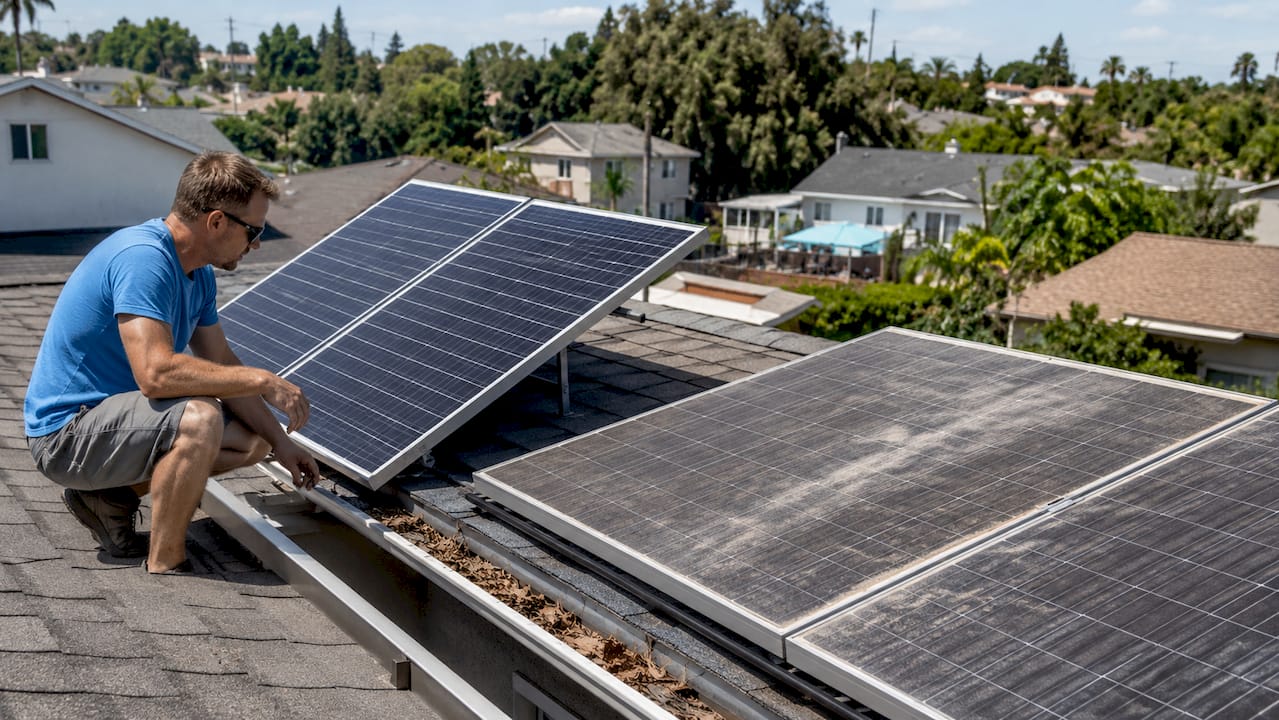
Panels tilted below 10 to 15 degrees cannot shed water effectively. Rainwater pools on the surface, evaporates, and leaves mineral deposits behind. Flat-roof and ground-mounted systems fall into this category and accumulate dirt far faster than steeply pitched roof panels. Steeper angles, typically 30 degrees or more, allow rainwater to run off quickly, carrying loose particles with it.
The table below summarizes how installation factors influence soiling rates:
| Installation factor | Effect on soiling |
|---|---|
| Tilt below 10 degrees | Water pools, mineral deposits form rapidly |
| Tilt above 30 degrees | Rain self-cleans loose particles effectively |
| Panels near trees or bird perches | Higher frequency of organic debris and droppings |
| Ground-mounted or flat-roof systems | Faster accumulation, more frequent cleaning needed |
| Downwind of highways or construction | Elevated dust and particulate deposition |
Panel surroundings matter just as much as angle. Panels near trees or bird perches accumulate significantly more organic debris and droppings, requiring more frequent cleaning regardless of tilt. A panel facing prevailing winds also collects more airborne particles than one sheltered by a roofline or wall.
Pro Tip: When reviewing your installation, check whether any nearby branches have grown over your array since it was installed. Trimming them back reduces both shading and droppings in one step.
What types of dirt do the most damage to solar efficiency?
Not all soiling is equal. The type of contaminant determines how much output you lose and whether that loss is temporary or permanent.
Fine dust creates a diffuse layer that reduces light transmittance across the entire panel surface. It is the most common form of soiling but also the easiest to remove. Coarse particles like gravel chips or dried mud adhere more strongly and may scratch the anti-reflective coating if wiped incorrectly. That coating is extremely fragile, and abrasive cleaning tools permanently damage it, reducing light transmission even after the dirt is gone.
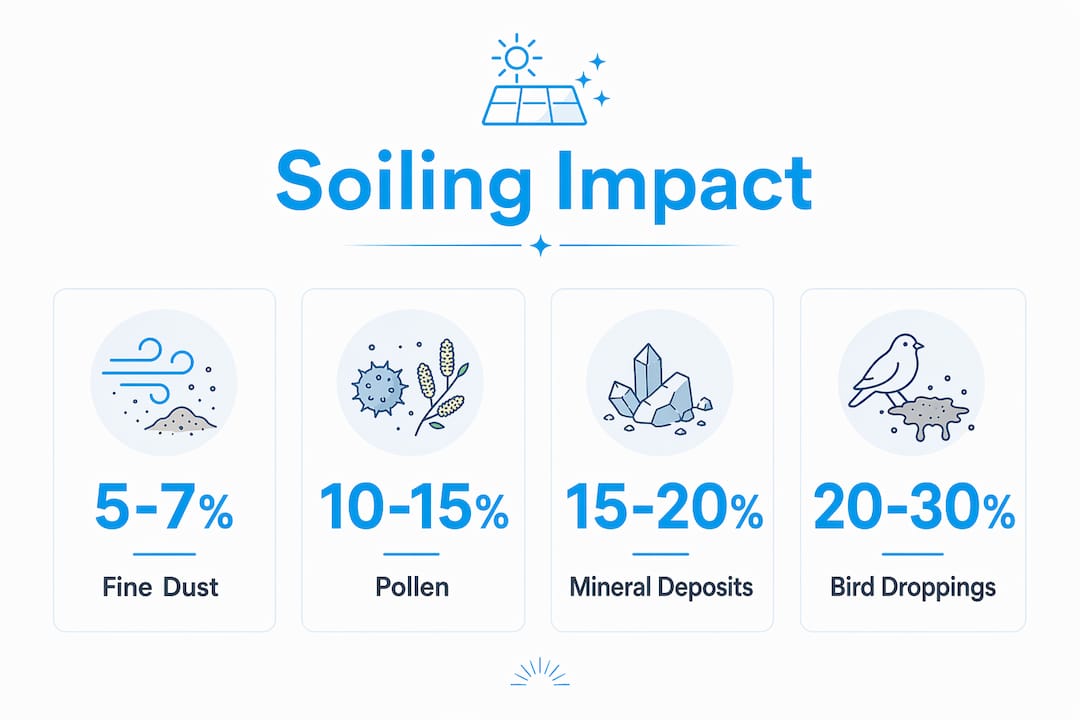
| Contaminant type | Efficiency impact | Reversibility |
|---|---|---|
| Fine dust | 5 to 7% output loss | Fully reversible with cleaning |
| Pollen and organic film | 10 to 15% output loss | Reversible, requires scrubbing |
| Bird droppings | 20 to 30% per cell | Reversible if caught early |
| Mineral deposits (hard water) | 5 to 20% cumulative | Partially reversible |
| Permanent coating damage | Variable, ongoing | Irreversible |
Pollen and sticky organic layers reduce light transmittance by forming a semi-opaque film that standard rain cannot break down. Bird droppings cause a more severe, localized problem. Because a solar panel is wired in series, one heavily soiled cell can drag down the output of the entire string, not just the affected area. This is why a single dropping in the wrong spot hits harder than a uniform dust layer across the whole panel.
Mineral deposits from hard water are a slow-building threat. Each rain cycle deposits a thin layer of calcium and magnesium that bakes on in sunlight. Over months, this creates a textured surface that traps more dust and resists rinsing. The thermal insulation effect of thick soiling also raises panel operating temperatures, which reduces output further and accelerates material aging. Soiling causes temporary losses but prolonged exposure accelerates degradation and shortens the designed 25 to 30 year system lifespan.
How does your climate and region shape soiling patterns?
Climate is the multiplier that determines how quickly all of the above contaminants accumulate. Two identical panels installed in different regions will soil at completely different rates.
The key regional patterns are:
- Dry and arid climates (desert Southwest, parts of the Great Plains) accumulate dust rapidly with almost no natural cleaning from rain. Panels in Phoenix, Arizona can lose measurable output within two to three weeks without cleaning.
- Humid climates promote sticky deposits. Condensation in the morning traps airborne particles and pollen against the glass, forming a film that dries hard by afternoon. The upper Midwest, including Wisconsin, sees this pattern heavily in spring and early summer.
- Rainy climates with well-tilted panels self-clean loose particles reasonably well. However, rain in hard-water areas worsens mineral fouling over time, so frequent rain is not a substitute for periodic manual cleaning.
- Urban environments add a layer of pollution film that rural systems do not face. Vehicle exhaust and industrial particulates create a gray coating that builds up steadily regardless of rainfall.
- Coastal areas face salt crystallization that is particularly aggressive. Salt residue is hygroscopic, meaning it draws more moisture and more particles to the surface continuously.
The complex interplay of humidity, temperature, and pollution means there is no single cleaning schedule that fits every home. Monitoring your system's output through a platform like SolarEdge or Enphase gives you the data to detect soiling effects early and schedule cleaning based on actual performance rather than guesswork. For guidance on reading those signals, the solar monitoring best practices resource from Solar Repair Today provides a practical framework.
What practical steps reduce dirt accumulation on your panels?
Managing soiling comes down to three things: cleaning at the right time, using the right tools, and scheduling based on your local conditions.
- Clean in the early morning or on overcast days. Cleaning hot panels with cold water risks thermal shock that causes micro-cracks in the glass. Early morning panels are cool and any dew helps loosen surface particles before you begin.
- Use demineralized or deionized water. Tap water with minerals leaves limescale deposits that attract more dust and worsen soiling over time. Deionized water rinses clean without leaving residue.
- Use soft brushes or microfiber cloths only. Avoid abrasive sponges, steel wool, or any scrubbing pad that can scratch the anti-reflective coating. Purpose-built solar panel brushes with soft bristles are the right tool.
- Never use a pressure washer. High-pressure water forces moisture into panel frames and junction boxes, risks delamination, and can void your manufacturer warranty.
- Address bird droppings immediately. Do not wait for your next scheduled cleaning. A damp microfiber cloth applied gently removes fresh droppings before they dry and etch the glass.
- Watch for output drops in your monitoring app. A sudden 5 to 10% drop on a clear day with no equipment alerts is a reliable signal that soiling has reached a level worth addressing.
- Adjust your schedule to your environment. Homes near agricultural land or under heavy tree cover in Wisconsin may need cleaning three to four times per year. A well-tilted suburban roof with moderate rainfall may need only one or two annual cleanings.
Pro Tip: Before cleaning, check your manufacturer's guidelines. Some panel warranties specify approved cleaning methods, and using the wrong tools or chemicals can void coverage. Solaralchemist publishes a warranty-safe cleaning guide that outlines what most major manufacturers require.
Reviewing a resource like common cleaning mistakes to avoid before your first DIY session can save you from the most costly errors homeowners make.
Key takeaways
Soiling is the primary ongoing threat to residential solar panel performance, and its causes, severity, and solutions all depend on your specific installation and local environment.
| Point | Details |
|---|---|
| Soiling reduces output significantly | Efficiency losses range from 5% short-term to over 30% with prolonged neglect. |
| Panel tilt controls self-cleaning | Panels below 15 degrees cannot shed water and accumulate mineral deposits faster. |
| Bird droppings are the worst single contaminant | One dropping can cut output by 20 to 30% per cell due to opacity and acidity. |
| Climate determines cleaning frequency | Arid, humid, urban, and coastal environments each create distinct soiling patterns. |
| Cleaning method matters as much as frequency | Deionized water and soft tools protect coatings; tap water and abrasives cause lasting damage. |
What I've learned watching panels soil in the Midwest
Most homeowners I talk to assume rain handles the cleaning. It does not, at least not completely. Rain washes off loose particles, but it also deposits minerals that form the base layer for the next round of soiling. In hard-water areas like much of Wisconsin, rain can actually make the problem worse over a full season if panels are not manually cleaned at least once or twice a year.
The other misconception I see constantly is treating all dirt as equal. A thin dust layer is annoying but manageable. A single bird dropping left on a panel for three weeks is a different problem entirely. It etches the glass, creates a hot spot, and pulls down the output of cells far beyond the affected area. Catching it early with a damp cloth takes two minutes. Waiting costs you real money.
What I find genuinely underappreciated is the role of tilt angle. Homeowners rarely think about this after installation, but it is one of the most predictive factors for how often you will need to clean. If your system sits on a low-pitch roof or a flat commercial-style mount, you are fighting mineral buildup every single rain cycle. Understanding that dynamic changes how you approach your seasonal maintenance schedule entirely.
The long-term ROI case for proper maintenance is straightforward. A system that runs at 90% efficiency for 25 years generates far more value than one that degrades to 70% by year ten because soiling was ignored. The panels themselves are built to last. What shortens their productive life is neglect, not age.
— Marquis
Keep your panels producing at their peak
Dirt accumulation is inevitable. How much it costs you depends entirely on how you manage it.

Solaralchemist uses professional-grade deionized water systems and purpose-built equipment to clean residential panels safely and thoroughly, without risking coatings, warranties, or panel integrity. Serving homeowners across Madison and the surrounding Wisconsin communities, the team at Solaralchemist brings the same precision to every cleaning that your system's manufacturer intended. If you are not sure whether your panels need attention right now, start with the 8 signs your panels need cleaning guide to assess your system before scheduling a visit.
FAQ
Why do solar panels get dirty so fast?
Panels are exposed to wind, rain, birds, and airborne particles continuously. Proximity to agricultural land, highways, or trees accelerates accumulation significantly, and even moderate soiling builds up within weeks in active environments.
Do solar panels collect dust even in rainy climates?
Yes. Rain removes loose particles but leaves mineral residues in hard-water areas, and pollen or sticky organic deposits require manual cleaning regardless of rainfall frequency.
How much efficiency do dirty solar panels lose?
Short-term soiling losses typically run 5 to 7%, but neglected panels can lose 20 to 30% or more over time. A single bird dropping on one cell can reduce that cell's output by up to 30%.
How do I prevent solar panel dirt buildup?
You cannot eliminate soiling, but you can reduce it by trimming nearby trees, scheduling cleanings based on your local climate, and using deionized water to avoid adding mineral deposits during the cleaning process itself.
Can I clean my solar panels myself?
You can, provided you use soft tools, deionized water, and clean during cool conditions. Avoid pressure washers and abrasive materials, and always check your manufacturer's warranty guidelines before starting.