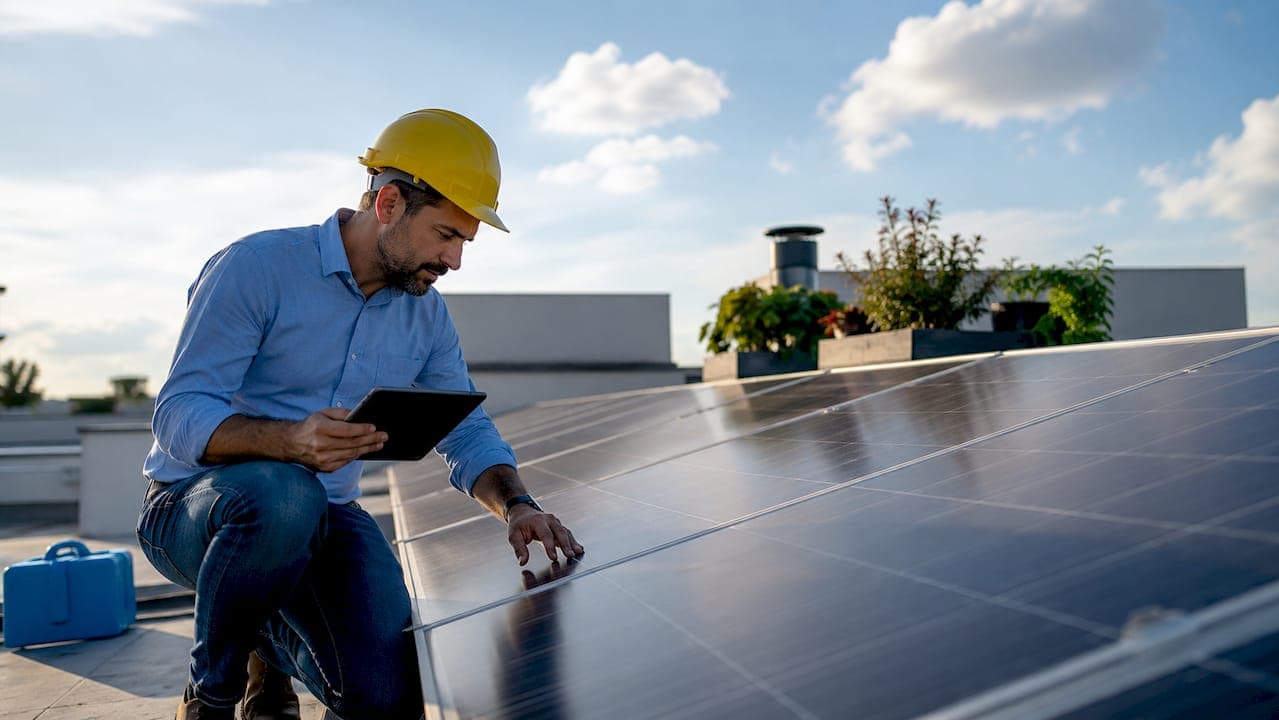
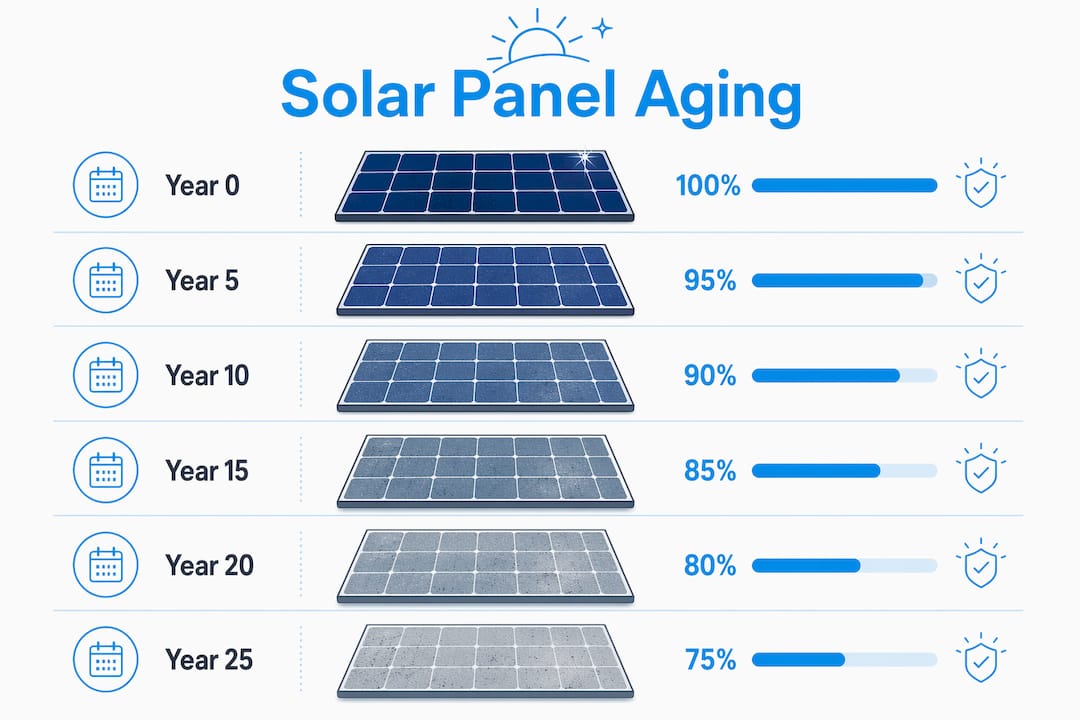
Solar panel degradation is the gradual, predictable loss of electricity output that every panel experiences as it ages. Modern high-quality crystalline silicon panels degrade at roughly 0.5% per year, retaining 85–92% of their original output after 25 years. That number is not a warning. It is a baseline that helps you plan maintenance, compare panel types, and make smarter replacement decisions. Understanding how solar panel age affects performance puts you in control of your investment rather than guessing at it.
How solar panel age affects performance: the degradation baseline
Solar panel degradation is the industry term for the slow efficiency loss that begins the day a panel is installed. The rate is not uniform across all products. Premium N-type panels degrade as low as 0.3% per year, while older polycrystalline models may lose 0.5–0.7% annually. That gap compounds significantly over a 25-year lifespan.
A panel degrading at 0.3% per year retains roughly 93% of its original output at year 25. One degrading at 0.7% retains closer to 84%. For a 10-kilowatt system, that difference translates to hundreds of kilowatt-hours of lost production per year. The solar panel lifespan effects you experience depend heavily on which category your panels fall into.
Performance warranties typically guarantee 80–87.4% output at 25 years, which confirms that manufacturers build their products around this degradation curve. The warranty is not a ceiling. It is a floor.
What causes solar panels to degrade over time?
Degradation does not come from one single cause. Several physical and environmental mechanisms work together over decades to reduce output.
The primary drivers include:
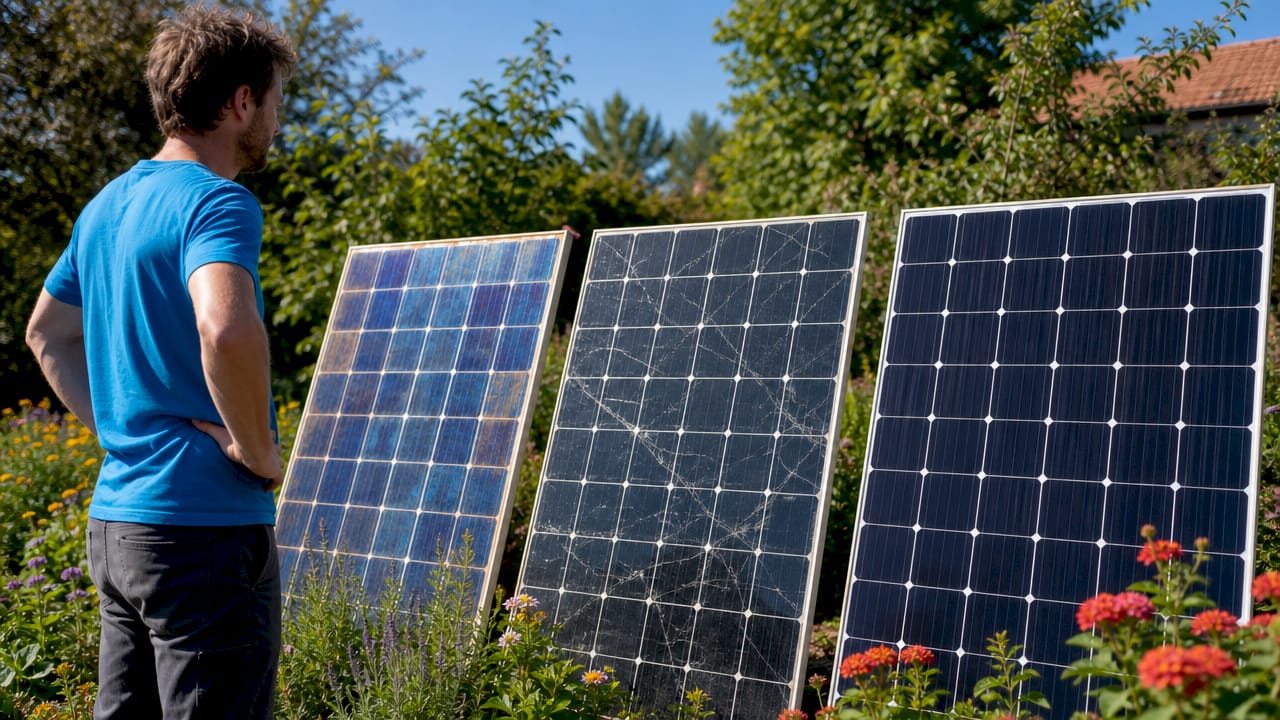
- Micro-cracks from thermal cycling. Panels expand and contract with daily temperature swings. Over years, this stress creates tiny fractures in the silicon cells. Micro-cracks increase electrical resistance slowly, reducing the current each cell can deliver.
- Encapsulant yellowing. The clear polymer layer protecting the cells turns yellow with UV exposure. This blocks incoming light before it ever reaches the silicon, reducing the panel's ability to generate power.
- Delamination. The layers inside a panel can separate over time, especially in high-humidity environments. Delamination allows moisture to reach the cells directly, accelerating corrosion.
- Series resistance increase. Encapsulant yellowing and series resistance are actually the dominant output killers, more so than micro-cracks alone. This is a detail most panel buyers never hear.
- UV and heat stress. Sustained heat and UV radiation break down both the encapsulant and the backsheet over time, compounding the effects above.
Material quality determines how quickly these mechanisms take hold. Panels built with higher-grade silicon, better encapsulants, and tighter manufacturing tolerances simply resist these forces longer.
Pro Tip: If your panels are more than 10 years old and output has dropped noticeably, check for visible yellowing or bubbling on the panel surface before assuming the cells themselves have failed.
Do old solar panels underperform compared to newer panel types?
Not all panels age the same way. Panel technology and manufacturing quality create real differences in long-term output that buyers often underestimate at the point of purchase.
| Panel type | Typical annual degradation | Output at year 25 | Warranty coverage |
|---|---|---|---|
| Premium N-type monocrystalline | 0.3% | ~93% | Up to 30 years |
| Standard monocrystalline | 0.5% | ~88% | 25 years |
| Polycrystalline | 0.5–0.7% | 84–88% | 25 years |
| Budget or older panels | 0.7%+ | Below 84% | Often shorter |
Half-cut cell technology limits the electrical impact of micro-cracks by splitting each cell into two smaller units. When one half-cell develops a crack, only half the cell's output is affected rather than the full cell. This design improvement directly extends panel longevity and is now standard in most premium products.
The cost difference between a budget panel and a premium N-type panel at purchase can be significant. Over 25 years, however, the premium panel often produces more total energy and requires less concern about early replacement. The solar panel efficiency over time argument for buying quality upfront is strong when you run the numbers across a full lifespan.
Performance warranties on premium products now extend to 30 years with annual degradation caps of 0.5% or lower. That extra five years of guaranteed output is a real financial asset, not just a marketing claim.
How do environment and installation factors influence aging?
Where your system sits and how it was installed shapes the aging solar panel performance you will see over time. Two identical panels installed in different climates can show meaningfully different output after a decade.
- Heat stress. High ambient temperatures accelerate encapsulant degradation and increase thermal cycling stress. Systems in hot, sunny climates face faster aging than those in cooler regions. You can read more about heat effects on output to understand the specific mechanisms at work.
- Humidity and frost. High humidity promotes delamination and corrosion. Freeze-thaw cycles in colder climates like Wisconsin create mechanical stress that worsens micro-cracking over time.
- Air pollution and soiling. Dust, pollen, bird droppings, and industrial particulates block light and trap heat against the panel surface. This accelerates surface degradation beyond what UV alone would cause.
- System size and inverter reliability. Inverter failure is a more frequent system failure point than panel degradation in typical residential setups. Owners often mistake a failing inverter for aging panels. Monitoring your system's output data separately from the inverter's reported data helps you tell the difference.
- Installation quality. Poor racking, inadequate ventilation underneath panels, and incorrect wiring all accelerate aging. A well-installed system in a mild climate will consistently outperform a poorly installed one in ideal weather.
Extreme degradation rates in some polycrystalline panels can reach 2.5% annually in harsh climates. That is five times the rate of a premium panel in a controlled environment. Climate is not something you can change, but panel selection and maintenance can offset much of its impact.
Pro Tip: Install a monitoring system that tracks individual string or panel output. A sudden drop in one section almost always points to an inverter or wiring issue, not panel aging.
What do solar panel warranties cover regarding aging?
Warranties are the manufacturer's formal acknowledgment that degradation happens and their commitment to a minimum performance floor. Understanding them protects you from paying for a replacement you may not need.
Two separate warranties cover most solar panel systems:
- Product warranty. This covers physical defects, manufacturing failures, and premature material breakdown. Typical terms run 10–12 years for standard panels and up to 25 years for premium products.
- Performance warranty. This guarantees a minimum output level at specific intervals. Performance warranties typically guarantee at least 80–84% output at 25 years, with annual degradation caps of 0.5–0.7%.
If your panels fall below the warranted output threshold, the manufacturer owes you either replacement panels or compensation. The threshold matters. A panel producing 79% of original output at year 20 is a warranty claim. A panel producing 83% is not.
The economic decision on replacement is separate from the warranty decision. Panels from the 1980s and 1990s still operate above 80% capacity after 35–40 years in some documented cases. End of life is an economic calculation, not a hard stop. When the cost of lost production exceeds the cost of new panels plus installation, replacement makes financial sense. Until that point, a well-maintained aging system keeps generating real value.
Keeping up with your warranty protection requirements through regular maintenance is also critical. Some manufacturers require documented cleaning and inspection records to honor performance claims.
Practical steps to maximize solar panel lifespan
Managing the impact of aging on solar panels does not require expensive interventions. Consistent, low-cost habits make the biggest difference over a 25-year horizon.
- Clean panels on a regular schedule. Dirt and debris reduce output independently of degradation. Scheduled maintenance prevents performance drops beyond natural degradation rates. In Wisconsin, post-winter cleaning in spring and a mid-summer check cover most of the year's soiling load.
- Monitor output monthly. Compare your system's actual production against its projected output for the season. A drop of more than 5% below projection warrants investigation before assuming it is normal aging.
- Inspect for physical damage annually. Look for cracked glass, visible yellowing, or delamination bubbles. Catching physical damage early prevents moisture ingress that accelerates cell-level degradation.
- Address inverter health separately. Replace aging inverters before they cause you to misread your panel performance. Most string inverters last 10–15 years, well short of your panels' lifespan.
- Evaluate replacement economics at year 20. Run the numbers on what newer, higher-efficiency panels would produce versus your current output. If the payback period on new panels is under 8 years, repowering is worth serious consideration.
Proper cleaning and maintenance extend panel lifespan significantly by removing the compounding effects of soiling on top of natural degradation. The two effects are additive. Removing one of them keeps your system closer to its rated output year after year.
Key takeaways
Solar panels degrade at a predictable rate of roughly 0.5% per year, retaining 85–92% of original output at 25 years, with premium N-type panels performing significantly better and lasting well beyond warranty milestones.
| Point | Details |
|---|---|
| Degradation rate varies by panel type | Premium N-type panels degrade as low as 0.3% per year; budget panels can exceed 0.7% annually. |
| Environment accelerates aging | Heat, humidity, frost, and pollution push degradation beyond the standard rate in harsh climates. |
| Inverters fail before panels | Inverter faults are the most common system failure point and are often mistaken for panel aging. |
| Warranties set a performance floor | Performance warranties guarantee 80–84% output at 25 years; falling below that threshold is a valid claim. |
| Cleaning and monitoring extend lifespan | Regular cleaning and monthly output checks prevent compounding losses beyond natural degradation. |
Solar panels age better than most owners expect
The most common misconception I encounter is that solar panels "wear out" the way a car engine does. They do not. Degradation is slow, linear, and largely predictable. A well-maintained system installed today will still be generating meaningful power in 2050.
What I have seen repeatedly is that owners panic at the first sign of output drop and assume their panels are failing. Nine times out of ten, the culprit is a dirty panel surface, a struggling inverter, or a loose connection, not the panels themselves. The panels are almost always fine.
The real financial risk is not degradation. It is neglect. A system that goes years without cleaning or inspection loses output from soiling and minor issues that compound over time. That loss is entirely preventable. The panels that genuinely underperform their warranties are almost always the ones that were never maintained.
My honest advice: buy the best panels you can afford, install a monitoring system, clean them at least once a year, and let the degradation curve work in your favor. Panels from the 1980s are still running. Yours will too.
— Marquis
Solaralchemist keeps your panels performing as they age
Dirt and soiling add output losses on top of natural degradation. Removing that layer is the single most cost-effective thing you can do for an aging system.
Solaralchemist uses professional-grade deionized water systems and specialized equipment to clean panels safely without scratching surfaces or voiding manufacturer warranties. Not sure if your system needs attention? Check the signs your panels need cleaning to know exactly when to call. Solaralchemist serves solar owners across Madison, DeForest, Watertown, Whitewater, Delavan, and Lake Mills, WI. Reach out to schedule a cleaning and keep your system producing at its best.
FAQ
How fast do solar panels lose efficiency with age?
Modern high-quality panels degrade at roughly 0.5% per year, retaining 85–92% of original output after 25 years. Premium N-type panels degrade as low as 0.3% annually.
Do old solar panels still produce usable power?
Yes. Panels from the 1980s and 1990s have been documented operating above 80% capacity after 35–40 years. End of life is an economic decision, not a hard cutoff.
What is the biggest cause of solar panel performance loss?
Encapsulant yellowing and series resistance increase are the dominant physical causes of output loss, outweighing micro-cracks in most real-world cases.
How do I know if my output drop is aging or something else?
Inverter failure is a more frequent failure point than panel degradation in residential systems. Check your inverter's performance data and compare it against your monitoring system before concluding your panels have aged out.
What does a solar panel performance warranty actually guarantee?
Performance warranties typically guarantee 80–84% output at 25 years with annual degradation caps of 0.5–0.7%. If your panels fall below the warranted threshold, you are entitled to replacement or compensation from the manufacturer.