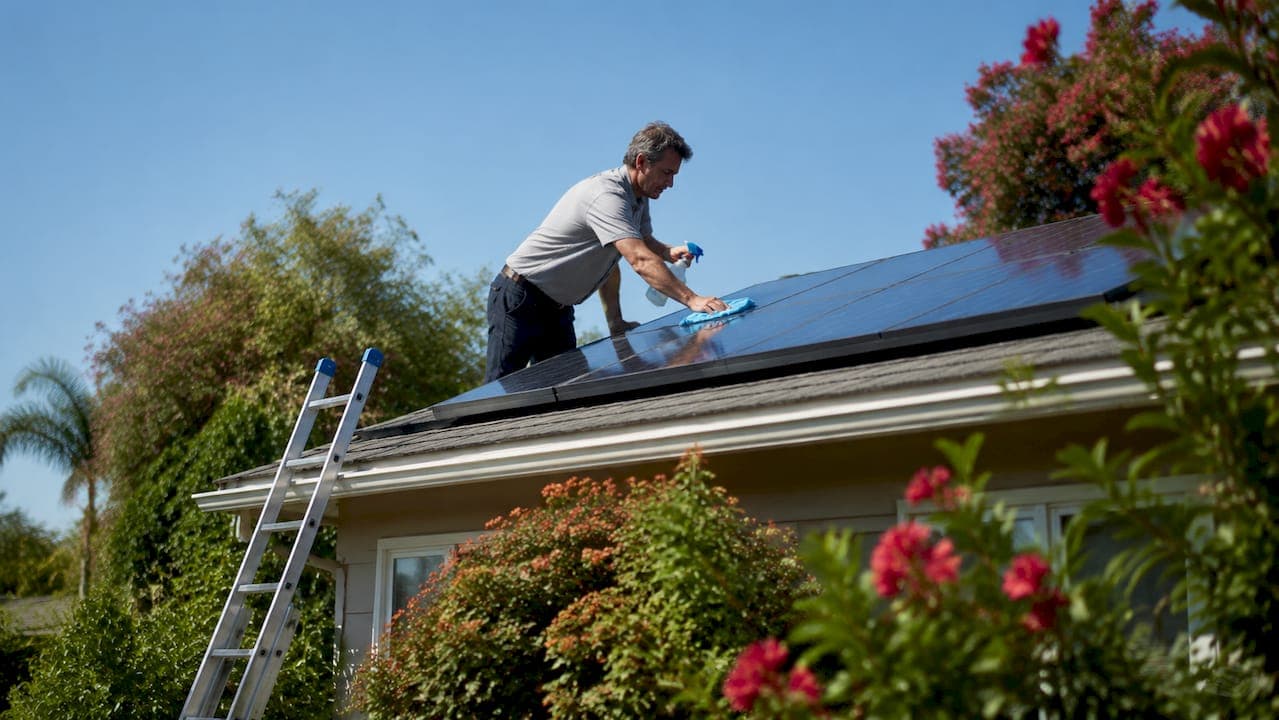
Solar panel lifespan extension is the practice of using consistent maintenance, smart monitoring, and environmental management to keep your system producing at peak output for 25 years or more. Neglecting this care can cost you 15–25% of your output within just 3–5 years, while proactive owners maintain 20–30% higher efficiency over the same period. The difference translates to $285–$665 in annual energy value, depending on your local rates. These solar panel lifespan extension tips cover everything from cleaning schedules and inverter care to shading audits and nano-coating technology, giving you a complete system maintenance guide grounded in 2026 expert research.
1. How does regular cleaning boost solar panel lifespan and efficiency?
Dirt, dust, pollen, and bird droppings are the most common and most underestimated threats to your panels. Soiling loss compounds quietly over months, and many owners do not notice until their utility bill tells the story. The fix is straightforward, but the details matter.
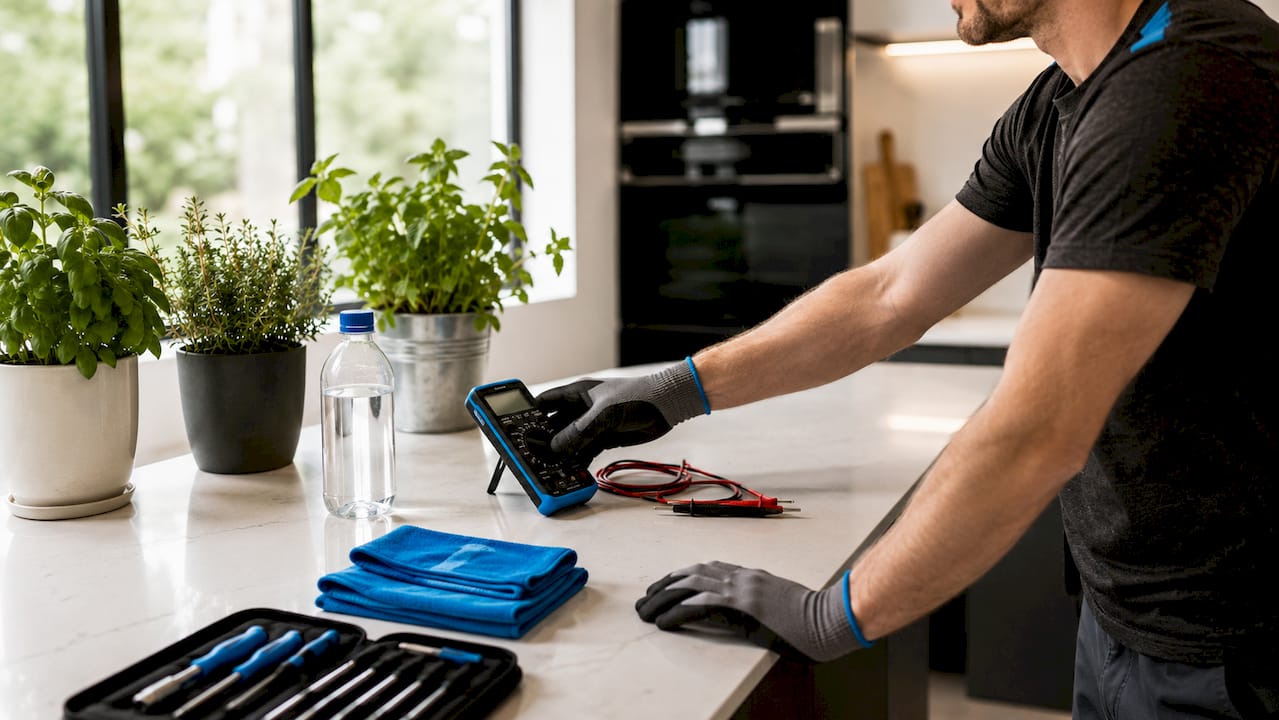
Cleaning frequency depends on your local environment. Panels near agricultural fields, construction zones, or high-traffic roads need cleaning two to four times per year. Panels in cleaner suburban settings in places like Madison, Wisconsin, typically need one to two cleanings annually. Skipping even one season in a dirty environment accelerates surface buildup that blocks light transmission.
Best cleaning practices:
- Clean panels in the early morning or evening. Cleaning in midday heat risks micro-cracking cells from thermal shock, since panels can reach 80°C in direct sun and cold water creates sudden stress.
- Use a soft brush or microfiber cloth with mild, non-abrasive soap and clean water.
- Rinse thoroughly to avoid soap residue, which attracts more dirt.
- Avoid pressure washers. The force can damage seals and surface coatings.
- Check the common cleaning mistakes most owners make before your first session.
Pro Tip: If you live in an area with hard tap water, use deionized or distilled water for the final rinse. Mineral deposits from hard water leave a film that reduces light absorption over time. Solaralchemist uses professional-grade deionized water systems for exactly this reason.
One technology worth knowing: hydrophobic nano-coatings made from SiO₂ or TiO₂. These coatings reduce particle adhesion by 60–80% and extend your cleaning intervals by two to three times. In dirty environments, they pay back their cost in 18–24 months. They are applied once by a professional and require no ongoing effort from you.
2. What maintenance routines and inspections keep panels and inverters lasting longer?
A structured inspection routine is the backbone of any solar system maintenance guide. Most owners skip this entirely, which is why so many systems underperform well before their warranty expires.
Follow this annual inspection sequence:
- Visual inspection twice per year. Walk the perimeter of your home and look up at your panels. Check for visible cracks, discoloration, loose mounting hardware, or debris buildup. Ground-based inspections with binoculars are safer than rooftop access and still catch most visible issues.
- Monthly performance review via monitoring app. Log into your inverter's app (Enphase Enlighten, SolarEdge, or Fronius Solar.web) and compare your current output to the same month last year. A drop beyond the normal 0.5–0.8% annual degradation rate signals a problem worth investigating.
- Inverter fan cleaning every 6–12 months. Dust buildup on inverter fans causes overheating, which shortens component life. A can of compressed air handles this in under five minutes.
- Capacitor replacement every 7–10 years. The inverter's electrolytic capacitors degrade silently. Replacing them proactively costs $200–$600 and delays a full inverter replacement, which runs $1,500–$3,000.
- Professional electrical inspection every 3–5 years. A licensed electrician checks wiring, connectors, and grounding. After extreme weather events like hail or high winds, schedule this immediately rather than waiting.
Pro Tip: Set a recurring calendar reminder every six months labeled "Solar Check." It takes 15 minutes and catches 80% of common issues before they become expensive repairs.
The inverter is the component most owners ignore until it fails. Inverter lifespan runs 10–15 years, so if your system is approaching year 8, start budgeting for either a replacement or internal component service. Inverter replacement accounts for 8–12% of your original system price, so planning ahead prevents a financial surprise.
3. How to manage shading, temperature, and environmental factors to prevent degradation
Environmental factors cause more long-term damage than most owners realize. Shading and heat are the two biggest culprits, and both are manageable with the right approach.
Shading is more damaging than it looks. Even 5% shading on a string can reduce whole-system output by 15–20% in non-optimized string configurations. A single branch that grew over your roof last summer could be costing you hundreds of dollars per year.
Key strategies for shading and temperature management:
- Use a Solar Pathfinder or a shading analysis app annually to map obstructions across all seasons. Trees that cause no shading in winter can block significant light in summer.
- Trim trees and remove new obstructions before they become a seasonal problem. Schedule this in late fall before leaves return.
- Install panels with the correct tilt angle for your latitude. In Wisconsin, a tilt of roughly 40–45 degrees maximizes annual output and promotes rain runoff that naturally rinses surface debris.
- Maintain airflow beneath your panels. Panels installed flush against a roof without a gap trap heat and run hotter, which accelerates cell degradation. A few inches of clearance makes a measurable difference.
- Never clean panels during peak midday heat. Beyond the thermal shock risk to the glass, hot panels dry water instantly, leaving mineral streaks that reduce output.
Statistic to know: Thermal management and shading avoidance often yield more practical lifespan extension than panel upgrades alone. You do not need new equipment. You need to manage what you already have.
4. What advanced tools and technologies can extend solar panel lifespan?
Technology has made solar maintenance significantly easier and more precise than it was even five years ago. These tools are worth understanding before your next system decision.
| Technology | Key Benefit | Best For |
|---|---|---|
| Microinverters | Per-panel monitoring, 25-year lifespan | New installs or system upgrades |
| String inverters | Lower upfront cost | Budget-focused installs |
| Enphase Enlighten | Real-time per-panel alerts | Microinverter systems |
| SolarEdge monitoring | Panel-level optimization data | Power optimizer systems |
| Fronius Solar.web | System-wide performance tracking | String inverter systems |
| Hydrophobic nano-coatings | Reduces cleaning frequency by 2–3x | Dirty or dusty environments |
| Critter guards | Prevents rodent nesting under panels | Homes near wooded areas |
Microinverters last 25 years and eliminate the costly 12–15 year string inverter replacement cycle. They also allow per-panel monitoring, so a single underperforming panel shows up immediately in your app rather than dragging down the whole string undetected.
Critter guards are an underrated investment. Squirrels and birds nest under panels and chew through wiring. A one-time installation of galvanized mesh around your array's perimeter prevents this entirely.
Pro Tip: If you have a string inverter system and are not ready to switch to microinverters, pair it with a third-party monitoring device like a Sense energy monitor. You get granular data without replacing your inverter.
5. What common solar panel issues indicate lifespan reduction?
Catching problems early is the difference between a $200 repair and a $3,000 replacement. These are the signs that your system needs attention now.
Warning signs to watch for:
- Output drops beyond normal degradation. Performance degradation runs 0.5–0.8% per year under normal conditions. A sudden 10–15% drop points to shading, a failed connector, or an inverter fault.
- Visible cracks or discoloration. Micro-cracks from hail or thermal stress reduce cell efficiency and worsen over time. Yellowing or browning of the encapsulant layer signals moisture intrusion.
- Loose or corroded mounting hardware. Panels that shift even slightly change their tilt angle and can create dangerous electrical faults.
- Inverter error codes. Most modern inverters display fault codes on their display or in their app. Look these up immediately rather than waiting for a professional visit.
- Hot spots detected by infrared. A professional with an infrared camera can identify hot spots caused by cell damage or shading that are invisible to the naked eye.
The annual maintenance cost for a residential system runs $0 for DIY owners to $350 for professional service. That investment is small compared to the cost of a full panel or inverter replacement. Build a simple repair budget starting at year 5 and increase it as your system ages.
Key takeaways
Consistent, proactive maintenance is the single most effective strategy for extending your solar panel system's productive life and protecting its financial return.
| Point | Details |
|---|---|
| Clean on schedule | Soiling loss cuts output by 15–25%; clean 1–4 times per year based on your local environment. |
| Inspect twice yearly | Visual checks from the ground catch cracks, corrosion, and shading issues before they compound. |
| Service your inverter | Replace capacitors every 7–10 years to avoid a $1,500–$3,000 full inverter replacement. |
| Manage shading actively | Even 5% shading on a string drops whole-system output by up to 20%; audit annually with a Solar Pathfinder. |
| Use monitoring apps | Platforms like Enphase Enlighten and SolarEdge catch performance drops the moment they occur. |
What I've learned after years of watching solar systems age
Most solar owners treat their system like a smoke detector: install it, forget it, and only think about it when something goes wrong. That mindset is the single biggest reason systems underperform by year 10.
I have seen panels in identical neighborhoods with identical equipment produce wildly different results by year 8. The difference is never the panels. It is always the owner's habits. The systems that hold their output longest belong to owners who do two things consistently: they clean on a schedule, and they check their monitoring app once a month.
The rooftop access question is one I feel strongly about. I advise against owners climbing onto their roofs for inspections. A pair of binoculars from the ground, combined with your monitoring app data, gives you 90% of the information you need without the fall risk. Leave the rooftop work to professionals who carry the right equipment and insurance.
The other thing I would push back on is the idea that technology upgrades are the path to longevity. Nano-coatings and microinverters are genuinely useful, but they do not replace the basics. A $30 soft brush and a consistent cleaning schedule will do more for your system's lifespan than any gadget. Start simple. Stay consistent. The returns compound over 25 years.
— Marquis
How Solaralchemist helps you protect your solar investment
Solaralchemist is Madison, Wisconsin's specialized solar panel cleaning and maintenance company, built specifically for residential solar owners who want their systems performing at full capacity year after year.
If you are unsure whether your panels need attention, start with the 8 signs your panels need cleaning guide on the Solaralchemist website. It walks you through exactly what to look for before scheduling a service visit. Solaralchemist uses professional-grade deionized water systems and specialized equipment that protect your panels while removing the buildup that costs you money every month. For homeowners in the region, you can also explore the annual maintenance checklist to build a routine that works alongside professional service.
FAQ
How often should I clean my solar panels?
Clean your panels one to four times per year depending on your local environment. Homes near farms, construction sites, or high-traffic roads need more frequent cleaning than suburban properties.
What is the normal degradation rate for solar panels?
Solar panels degrade at roughly 0.5–0.8% per year under normal conditions. A drop significantly beyond that rate signals a maintenance issue like shading, connector failure, or inverter fault.
How long does a solar inverter last?
Most string inverters last 10–15 years. Microinverters last up to 25 years. Replacing internal capacitors every 7–10 years can extend a string inverter's life and delay a full replacement.
Can shading really reduce my whole system's output?
Yes. Even 5% shading on a single string in a non-optimized system can cut total output by 15–20%. Annual shading audits with a tool like Solar Pathfinder are worth the effort.
Is professional solar cleaning worth the cost?
Professional cleaning using deionized water removes mineral deposits and soiling that DIY methods often miss. The cost savings from cleaning typically outweigh the service fee within one billing cycle in high-soiling environments.