
Solar cleaning vendor selection is the process of identifying a service provider who can reliably maintain your solar installation's energy output and protect its long-term asset value. The wrong vendor costs you more than a dirty panel. It costs you degraded performance, voided warranties, and years of compounding losses. This guide covers the solar maintenance vendor selection criteria that matter most in 2026: experience, technical capability, pricing structures, contract terms, and the evaluation process that separates reliable partners from risky ones.
What are the essential criteria for evaluating solar cleaning vendors?
A structured solar cleaning vendor selection guide starts with a clear framework. Without defined criteria, you end up comparing apples to oranges and making decisions based on price alone.
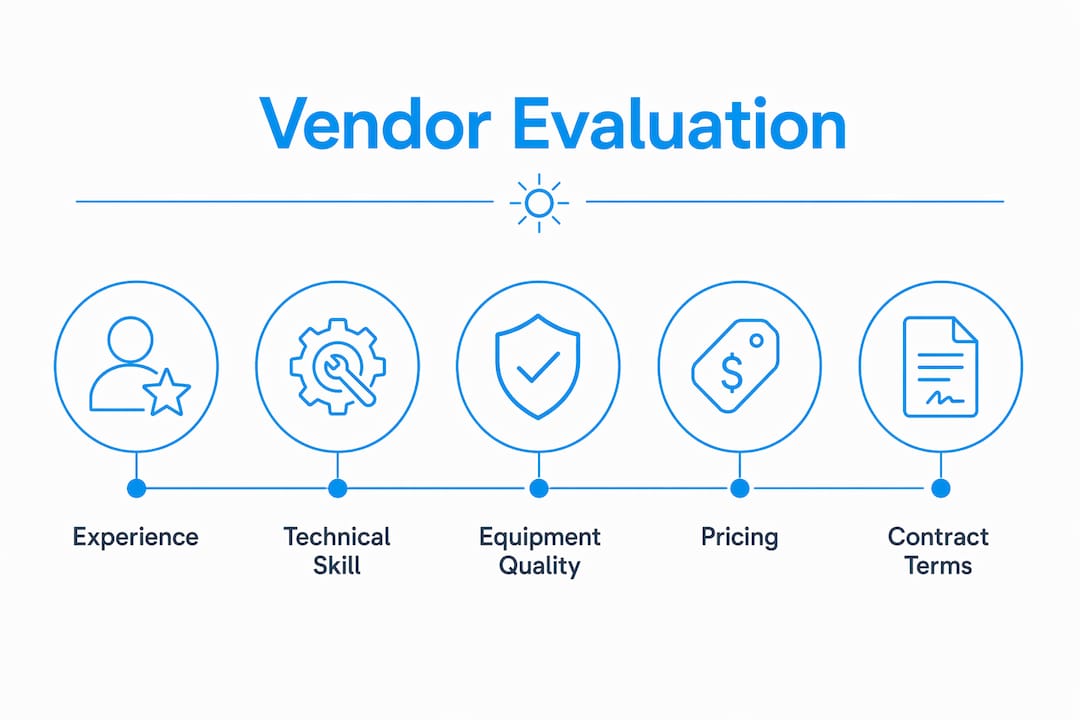
Experience and track record are the foundation. Vendors with less than three years of commercial experience pose measurable risks to your system. Ask for references from projects with comparable system size and technology. Relevant system experience matters more than total years in the industry. A vendor who has cleaned 500 residential rooftop arrays is not automatically qualified to service a 2 MW commercial ground-mount installation.
Service scope determines how much value you actually get. The best solar panel cleaning options go beyond a rinse and wipe. Look for vendors who offer:
- Deionized water cleaning systems that leave no mineral residue
- Panel inspection and fault reporting after each visit
- Preventive maintenance checks on mounting hardware and wiring
- Real-time monitoring integration or reporting
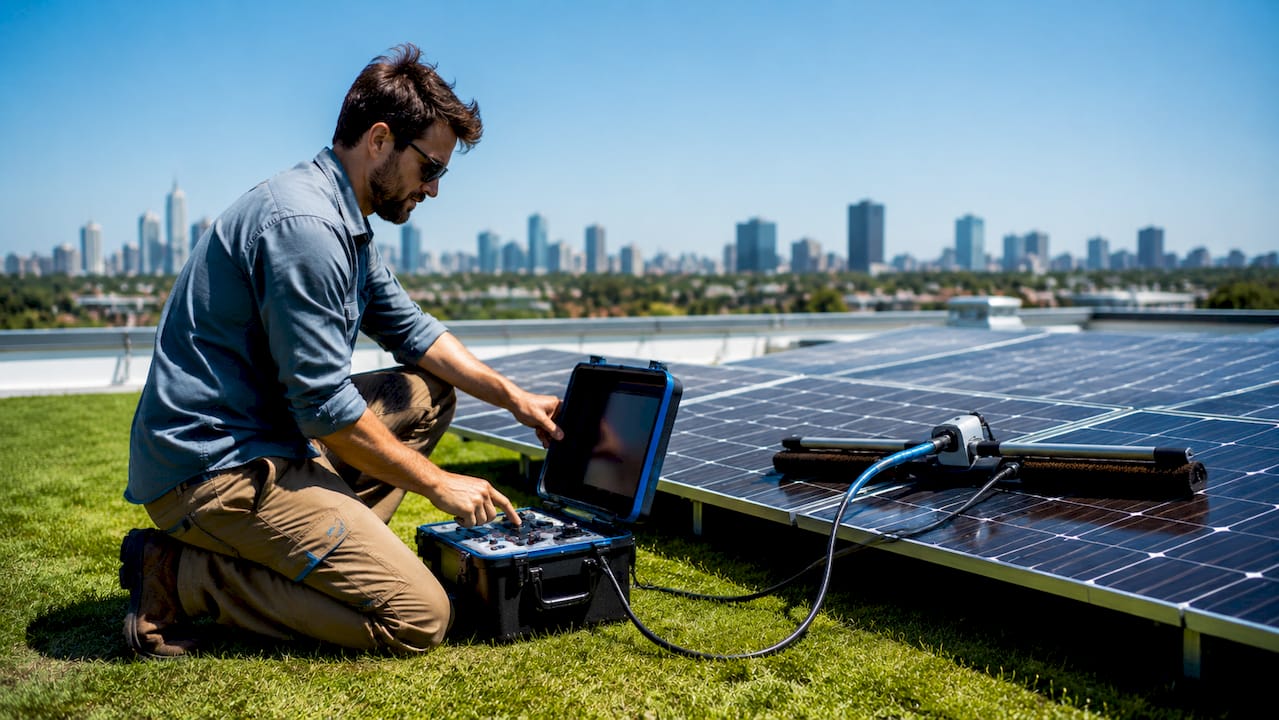
Technical capability and equipment quality are non-negotiable. Real-time monitoring capability is the standard for detecting inefficiencies quickly and maintaining system availability. Vendors who show up with tap water and a squeegee are not in the same category as those using professional-grade deionized systems.
Pricing models vary widely. Flat fees work for simple residential systems. Tiered bundles suit commercial facilities with multiple arrays. Performance-based pricing, where vendor compensation ties to energy yield, aligns incentives and drives higher returns compared to reactive service models.
Contract terms define your protection. Strong SLAs with defined response times and data transparency differentiate high-value operations and maintenance partners from vendors who disappear after the invoice clears.
Pro Tip: Ask every vendor candidate to provide a sample SLA before you issue a formal request for proposal. Vendors who hesitate or offer vague language are showing you exactly how they will behave when something goes wrong.
How do you conduct a structured vendor evaluation?
A multi-stage vendor evaluation funnel starting with desktop research, shortlisted RFPs, site walk-throughs, and weighted scoring yields the best vendor matches for commercial sites. The same logic applies to residential owners evaluating multiple bids.
Follow these steps in order:
- Desktop research and pre-screening. Search for vendors with verifiable reviews, active business licenses, and documented project histories. Eliminate any vendor without a public portfolio or references.
- Issue a focused RFP. Your request for proposal should specify your system size, panel type, roof pitch or ground-mount configuration, cleaning frequency, and reporting requirements. Vague RFPs produce vague bids.
- Host mandatory site walk-throughs. Mandatory site walk-throughs for top bidders eliminate lowball guesses by forcing vendors to address site-specific challenges before submitting final bids. This step alone filters out vendors who are guessing at scope.
- Check references and verify performance data. Call at least two references per vendor. Ask them to share utility bills or monitoring data that confirms the vendor's claimed production improvements.
- Score candidates with a weighted matrix. Apply a scoring system to your shortlist.
The table below shows a proven weighting model for enterprise and commercial solar projects:
| Evaluation Criterion | Weight | Why It Matters |
|---|---|---|
| Experience and track record | 25% | Reduces operational risk and warranty exposure |
| Technical capability | 20% | Determines cleaning quality and fault detection speed |
| Equipment quality | 15% | Affects panel safety and long-term surface integrity |
| Pricing and contract terms | 20% | Impacts total cost of ownership over the contract period |
| Reporting and transparency | 20% | Enables performance verification and dispute resolution |
A weighted scoring system prioritizing experience at 25%, technical capability at 20%, and equipment quality at 15% already accounts for 60% of decision-making criteria in enterprise solar projects. The remaining weight goes to pricing and transparency.
Pro Tip: Build your scoring matrix in a spreadsheet before you receive any bids. Filling it in after you have already heard pitches introduces bias. Score each vendor blind to the others until all data is collected.
What do solar cleaning services actually cost?
Pricing is where most buyers get confused. Most homeowners pay between $150 and $300 per individual solar panel cleaning service, with variation driven by roof pitch, accessibility, and location. That range gives you a baseline, but it does not tell the full story.
The table below breaks down the three most common pricing structures you will encounter when choosing a solar cleaning service:
| Pricing Model | Best For | Risk |
|---|---|---|
| Flat fee per visit | Residential, simple rooftops | No incentive for thoroughness |
| Tiered bundle packages | Commercial, multi-array sites | Scope creep if terms are vague |
| Performance-based pricing | Large commercial and utility-scale | Requires strong data infrastructure |
Hidden costs are the real budget threat. Manual water-based cleaning can incur long-term costs exceeding $12,000–$18,000 per MW, while robotic systems lower total ownership costs over five years. That gap is significant for facility managers running large arrays. For a detailed breakdown of how to reduce cleaning expenses over time, the cost savings analysis from Solaralchemist covers the key pricing factors worth tracking.
Site-specific variables also shift costs in ways vendors rarely volunteer upfront. Steep roof pitches require safety rigging. Remote ground-mount arrays add travel time. Shading from trees or structures increases cleaning frequency requirements. Get all of these factors addressed in writing before you sign anything.
Common mistakes that derail solar vendor selection
Most vendor selection failures come down to a handful of avoidable errors. Knowing them in advance puts you ahead of the majority of buyers.
- Choosing on price alone. The lowest bid almost always reflects the lowest service standard. A vendor charging 40% less than competitors is cutting corners somewhere, whether on equipment, insurance, or labor.
- Skipping reference verification. Vendors will show you their best case studies. Call the references they do not offer. Ask specifically whether production data improved after service and whether the vendor responded promptly to issues.
- Accepting vague SLA language. Phrases like "best efforts" and "reasonable response time" are not enforceable. Your contract needs specific numbers: response time in hours, cleaning completion windows, and reporting deadlines.
- Ignoring monitoring capability. Proactive maintenance leveraging data analytics reduces corrective costs by 40–60% compared to reactive checklists. A vendor without monitoring capability is managing your system blind.
- Overlooking contract exit terms. Long-term solar cleaning contracts should include clear termination clauses. If a vendor locks you into a multi-year agreement with no performance-based exit, that is a red flag.
"Aligning vendor incentives with performance outcomes requires robust data quality, clear bonus and penalty contract language, and dispute resolution mechanisms." — pv magazine USA
For facility managers ready to negotiate contract terms, the contract negotiation guide from Solaralchemist walks through SLA language, penalty clauses, and renewal terms in practical detail.
Key takeaways
Selecting the right solar cleaning vendor requires a structured evaluation of experience, technical capability, pricing models, and contract terms before any agreement is signed.
| Point | Details |
|---|---|
| Use a weighted scoring matrix | Score vendors on experience, capability, equipment, pricing, and transparency before comparing bids. |
| Require site walk-throughs | Mandatory site visits eliminate lowball bids and surface hidden scope challenges early. |
| Understand total cost of ownership | Manual cleaning can exceed $12,000–$18,000 per MW over time; factor in long-term costs, not just per-visit price. |
| Demand enforceable SLAs | Contracts must include specific response times, performance metrics, and data reporting requirements. |
| Prioritize monitoring capability | Vendors with real-time monitoring detect issues faster and reduce corrective maintenance costs by up to 60%. |
What i have learned after years of watching vendors get evaluated
The single biggest mistake I see solar owners make is treating vendor selection like a commodity purchase. They collect three bids, pick the middle price, and assume the work will be comparable. It rarely is.
The vendors who consistently deliver results share one trait: they are obsessed with data. They show up with monitoring reports, not just clean panels. They flag a shading issue or a micro-inverter anomaly before you even notice a production dip. That proactive posture is not common. When you find a vendor who operates that way, the contract terms matter less because the relationship is built on accountability.
SLAs matter more than cleaning frequency. I have seen systems cleaned four times a year by a mediocre vendor underperform systems cleaned twice a year by a vendor with strong monitoring and reporting. Frequency is a vanity metric. Output is the only number that counts.
On pricing, the performance-based model is the most honest structure available. When a vendor's compensation ties directly to your system's energy yield, you stop having to chase them for quality. Their incentive and yours are the same. Getting there requires solid data infrastructure and clear contract language, but the effort pays off in every renewal cycle.
If you are a facility manager evaluating vendors for a commercial installation, do not skip the commercial maintenance cost analysis. The numbers will change how you think about what "affordable" actually means over a five-year contract.
— Marquis
Why Solaralchemist is the right partner for your solar maintenance needs
Solaralchemist is a Madison, Wisconsin-based solar panel cleaning and maintenance company built specifically for owners who take system performance seriously. Every service uses professional-grade deionized water systems and specialized equipment designed to protect panel surfaces while maximizing energy output.
Whether you are a homeowner trying to figure out when to clean your panels or a facility manager building a long-term maintenance program, Solaralchemist brings the technical depth and local expertise to get it right. The team advises clients on vendor evaluation criteria, service scope, and contract terms so you never have to guess at what good looks like. Reach out to learn how Solaralchemist can protect your renewable energy investment year-round.
FAQ
How do i start choosing a solar cleaning service?
Begin with desktop research to verify licenses, reviews, and project history, then issue a focused RFP and require a site walk-through before accepting any final bid.
What should a solar cleaning contract include?
A strong contract specifies response times, cleaning frequency, performance metrics, data reporting requirements, and clear termination clauses tied to measurable outcomes.
How much does professional solar panel cleaning cost?
Most homeowners pay $150–$300 per cleaning visit, with commercial sites varying based on system size, roof pitch, and accessibility.
Why does vendor experience matter so much?
Vendors with less than three years of commercial experience carry higher risk. Relevant system experience, verified against actual utility bills, is a more reliable indicator than total years in business.
What is performance-based pricing in solar maintenance?
Performance-based pricing ties vendor compensation to your system's energy yield or availability. It aligns incentives between you and the vendor and drives higher returns compared to flat-fee reactive service models.