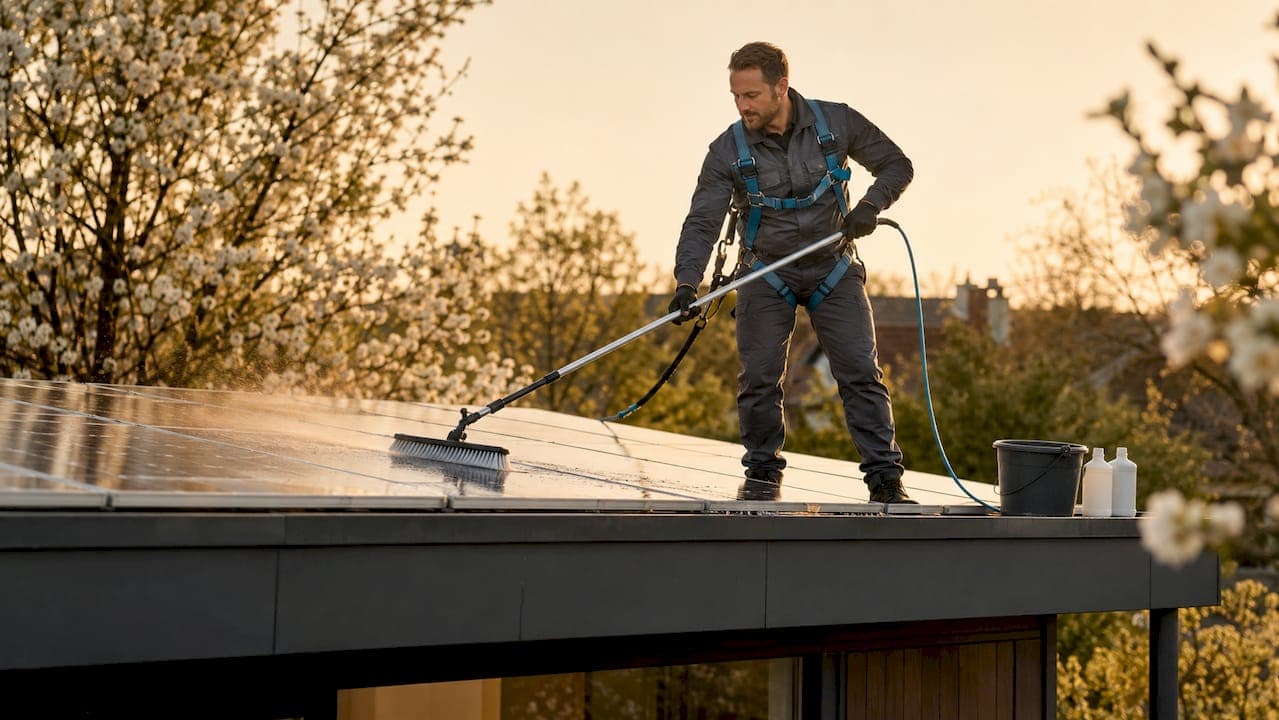
Solar panel soft washing is defined as a low-pressure cleaning method that uses gentle water flow, soft-bristle brushes, and mild biodegradable soap to remove dirt, grime, and organic buildup from photovoltaic panels without damaging their surface coatings or seals. Unlike pressure washing, which forces water at damaging velocities, soft washing protects the glass, anti-reflective coatings, and frame seals that keep your panels producing at full capacity. Soiling causes 4–7% average energy loss globally across PV systems. That number climbs fast in dusty, pollen-heavy, or bird-trafficked environments like Wisconsin. Knowing what solar panel soft washing involves puts you in control of your system's long-term output.
What is solar panel soft washing and how is it done?
Solar panel soft washing is the recognized industry standard for safe photovoltaic maintenance. The process relies on three things: low water pressure, non-abrasive tools, and cleaning agents that won't strip protective coatings. Dirty panels can lose 5–25% output depending on soiling severity. That kind of loss adds up fast on a system you paid tens of thousands of dollars to install.
The step-by-step soft washing process
Follow these steps for cleaning solar panels effectively without risking damage:
- Rinse first. Use a garden hose with a gentle spray nozzle to wet the panel surface. This loosens surface dust and prevents dry scrubbing, which scratches glass.
- Apply mild soap. Use a small amount of biodegradable, eco-friendly soap diluted in water. Avoid dish soaps with degreasers or any product containing ammonia or bleach.
- Scrub gently. Sunrun recommends soft-bristle, long-handled brushes or microfiber sponges for this step. Work in straight lines, not circles, to reduce micro-scratching.
- Handle bird droppings carefully. Soak the deposit first, then gently lift rather than scrubbing. Aggressive scrubbing spreads acidic residue and damages anti-reflective coatings.
- Final rinse. Flush the panel thoroughly to remove all soap residue. Leftover soap dries into streaks that reduce light transmission.
- Air dry. Let panels dry naturally. Wiping with towels risks scratching and leaves lint.
Tools you need
The right equipment makes the job safe and effective. You need a garden hose with an adjustable nozzle, a soft-bristle brush with a long handle, a microfiber sponge, and a bucket of diluted mild soap. Skip abrasive pads, steel wool, and any brush with stiff plastic bristles. These scratch the glass and create micro-fractures that reduce panel efficiency over time.
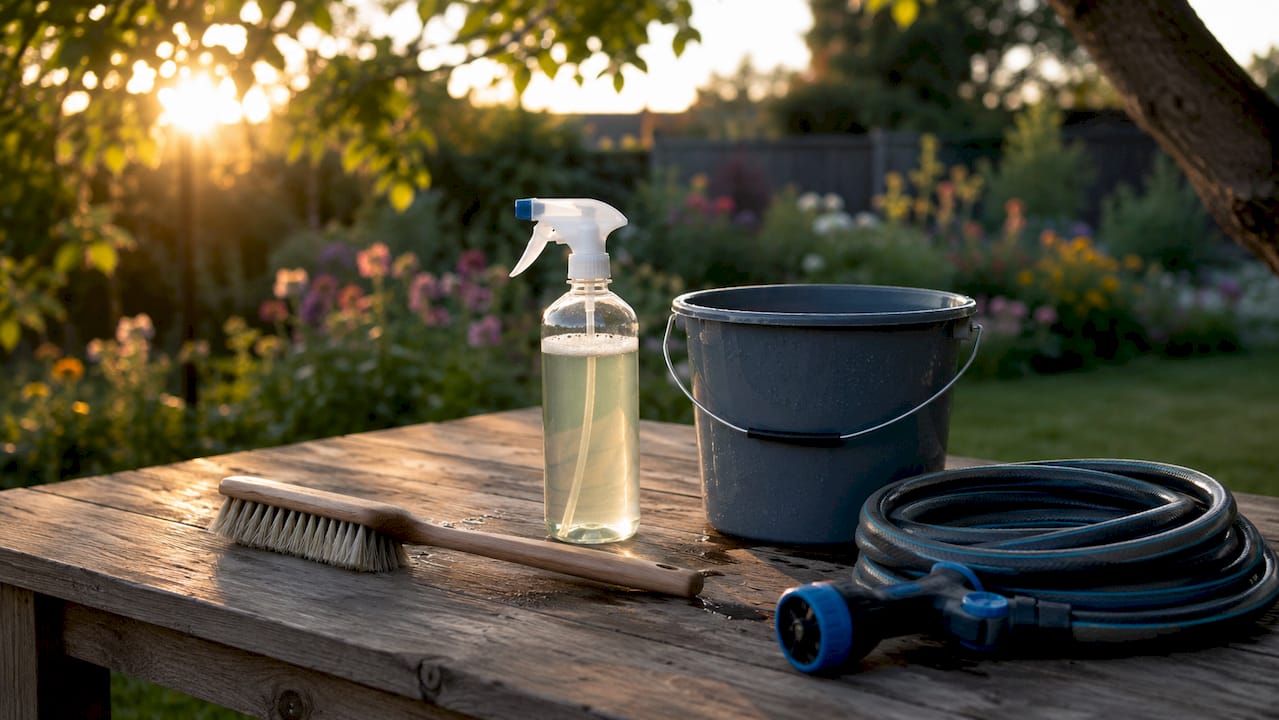
Pro Tip: Clean panels during cooler hours, either early morning or late evening. Soap evaporates instantly on hot glass in midday sun, leaving streaks that are harder to remove than the original dirt.
Soft washing vs. pressure washing: which is safer?
Pressure washing solar panels causes damage that is often invisible until your output data tells the story. High-pressure jets crack tempered glass, breach the silicone seals around panel frames, and strip anti-reflective coatings. Soft washing avoids these cracks and seal breaches that pressure washers cause. Once a seal is compromised, moisture enters the panel laminate and degrades the photovoltaic cells permanently.
Here is a direct comparison of the two methods:
| Factor | Soft Washing | Pressure Washing |
|---|---|---|
| Water pressure | Low (garden hose level) | High (1,500–3,000 PSI) |
| Risk to glass | Minimal | Cracking and micro-fractures |
| Risk to seals | None | Breach risk, moisture ingress |
| Coating damage | None with proper soap | Strips anti-reflective layers |
| Warranty impact | Preserves warranty | Often voids manufacturer warranty |
| Cleaning effectiveness | High for all soiling types | High but at significant cost to panel life |
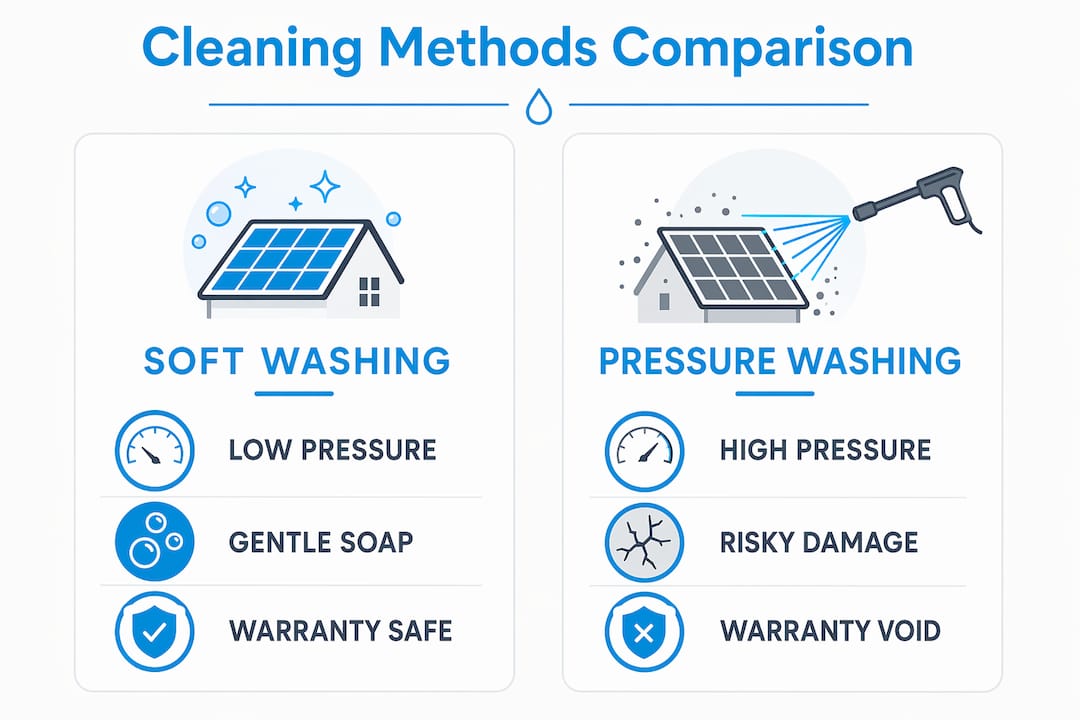
The warranty point matters more than most homeowners realize. Most solar panel manufacturers, including LG, SunPower, and Panasonic, specify gentle cleaning methods in their warranty terms. Using a pressure washer gives them grounds to deny a claim if panel degradation is traced back to cleaning damage.
Soft washing also wins on environmental grounds. You use less water overall because you are not compensating for poor technique with brute force. Biodegradable soaps break down without harming surrounding soil or runoff water. For businesses tracking sustainability metrics, that matters.
How often should you soft wash solar panels?
No single cleaning schedule works for every installation. Site-specific conditions should guide cleaning frequency to balance cost and energy recovery. A rooftop array in Madison, Wisconsin faces different soiling patterns than one in Phoenix, Arizona. Pollen season, bird activity, nearby construction, and tree canopy all affect how fast panels soil.
General guidelines by environment:
- Residential in moderate climates: Once or twice per year, typically in spring after pollen season and in fall before winter.
- Coastal or desert locations: Every 2–3 months due to salt spray or heavy dust accumulation.
- Near agricultural land or highways: Monthly inspection with cleaning as needed.
- Urban rooftops: Quarterly, due to pollution particulates and soot.
Rainwater removes light surface dust effectively in many climates. Forcing frequent washes for minor debris wastes time and money. The real trigger for cleaning should be a measurable drop in output, not a calendar date.
Pro Tip: Use performance monitoring data before and after each cleaning session. Compare output on clear-sky days to establish your baseline, then track how long it takes for output to drop by a meaningful percentage. That data tells you exactly how often your specific system needs attention.
Timing within the day matters too. Cleaning in the early morning gives you cool panels, dew that pre-softens debris, and enough daylight to see what you are doing. Late evening works as a second option. Midday cleaning on hot panels causes thermal stress and streaking.
Can you DIY solar panel soft washing?
Most homeowners with a single-story or accessible rooftop can handle soft washing themselves. DIY soft washing requires only a garden hose, soft brush, microfiber sponge, and mild soap, with total equipment costs under $50. A typical 20-panel system takes 30–45 minutes to clean properly. That is a reasonable investment for recovering lost output. For more detail on what the process costs versus what it saves, the solar panel cleaning cost savings breakdown is worth reviewing before you start.
Common DIY mistakes to avoid
- Using tap water for the final rinse in hard water areas. Tap water leaves mineral deposits that cloud the glass. Deionized water prevents mineral staining and is what professional services use as standard.
- Scrubbing in circular motions. This creates swirl scratches on the glass surface.
- Cleaning panels while they are still connected and hot. Always clean during off-peak sun hours.
- Using a ladder on an unstable surface. Falls from rooftops are the leading cause of DIY solar cleaning injuries.
When to call a professional
Hire a professional service when your system is on a steep or high roof, when you have more than 20 panels, or when your manufacturer warranty requires professional maintenance documentation. Professional services like Solaralchemist use deionized water systems that eliminate mineral residue entirely. They also carry insurance, which protects you if anything goes wrong during the cleaning. For guidance on cleaning without scratching panels, the technique differences between DIY and professional methods are significant. Businesses with large commercial arrays should review commercial solar maintenance strategies to understand how professional scheduling affects annual energy yield.
Key takeaways
Soft washing is the only cleaning method that protects panel coatings, preserves warranties, and recovers lost output without introducing new damage.
| Point | Details |
|---|---|
| Soft washing defined | Low-pressure water, soft brushes, and mild soap clean panels safely without damaging coatings or seals. |
| Energy loss from soiling | Dirty panels lose 5–25% output; regular soft washing directly recovers that production. |
| Pressure washing risks | High-pressure jets crack glass, breach seals, and void most manufacturer warranties. |
| Cleaning frequency | No universal schedule exists; use performance monitoring data to set site-specific intervals. |
| DIY vs. professional | DIY works for accessible single-story systems; steep roofs and large arrays warrant professional service. |
Why i think most homeowners underestimate this
I have seen panels that were cleaned with a pressure washer by a well-meaning homeowner who thought he was doing the right thing. The glass looked fine from the ground. The output data told a different story. Micro-fractures in the anti-reflective coating had scattered light instead of transmitting it, and the system was producing 18% below its rated capacity on a clear day. The damage was permanent.
The mistake I see most often is treating solar panels like a car hood. They look similar. They get dirty the same way. But the physics are completely different. A car hood is painted steel. A solar panel is laminated glass over photovoltaic cells with a coating that took an engineer months to design. Scrubbing it with the wrong brush or blasting it with pressure undoes that engineering in minutes.
What I have found actually works is this: clean less often than you think you need to, but clean correctly every single time. Track your output data. Let rain do the light work. Reserve manual cleaning for the soiling events that rain cannot handle, like pollen season, bird activity, or post-construction dust. When you do clean, use the gentlest method available. The panels that last 30 years and hold their rated output are almost always the ones that were never touched with anything abrasive.
Eco-friendly biodegradable soaps are not just a marketing preference. They are genuinely better for the panel surface because they do not leave chemical residue that attracts more dust. I have tested this directly. Panels cleaned with standard dish soap re-soiled faster than panels cleaned with a purpose-formulated biodegradable cleaner. The chemistry matters.
— Marquis
Professional soft washing services in madison, WI
Solaralchemist provides professional solar panel soft washing for residential and commercial clients across Madison and surrounding Wisconsin communities, including DeForest, Watertown, and Lake Mills. Every cleaning uses professional-grade deionized water systems that eliminate mineral residue, paired with specialized soft-bristle equipment designed specifically for photovoltaic surfaces. Solaralchemist technicians are trained, insured, and familiar with the manufacturer warranty requirements that protect your investment. If you are not sure whether your panels need attention, the signs your panels need cleaning page walks you through exactly what to look for. Contact Solaralchemist for a cleaning assessment and a maintenance plan built around your system's actual performance data.
FAQ
What is solar panel soft washing?
Solar panel soft washing is a low-pressure cleaning method using soft brushes, mild biodegradable soap, and gentle water flow to remove dirt and organic buildup from panel surfaces without damaging coatings or seals.
Is soft washing safe for all solar panel types?
Yes. Soft washing is safe for monocrystalline, polycrystalline, and thin-film panels because it uses no abrasive tools and no high-pressure water that could crack glass or breach frame seals.
How often should solar panels be soft washed?
Cleaning frequency depends on your location and soiling conditions. Most residential systems in moderate climates need cleaning once or twice per year, but performance monitoring data gives you the most accurate schedule for your specific array.
Can i use tap water to soft wash my solar panels?
Tap water works for the scrubbing stage, but hard water leaves mineral deposits during the final rinse. Deionized water for the final rinse prevents mineral staining and keeps panels clear, especially in areas with high mineral content in the water supply.
Does soft washing void solar panel warranties?
Soft washing preserves warranties. Pressure washing, abrasive pads, and harsh chemicals are the methods most likely to void manufacturer warranties by causing physical damage to glass, coatings, and seals.