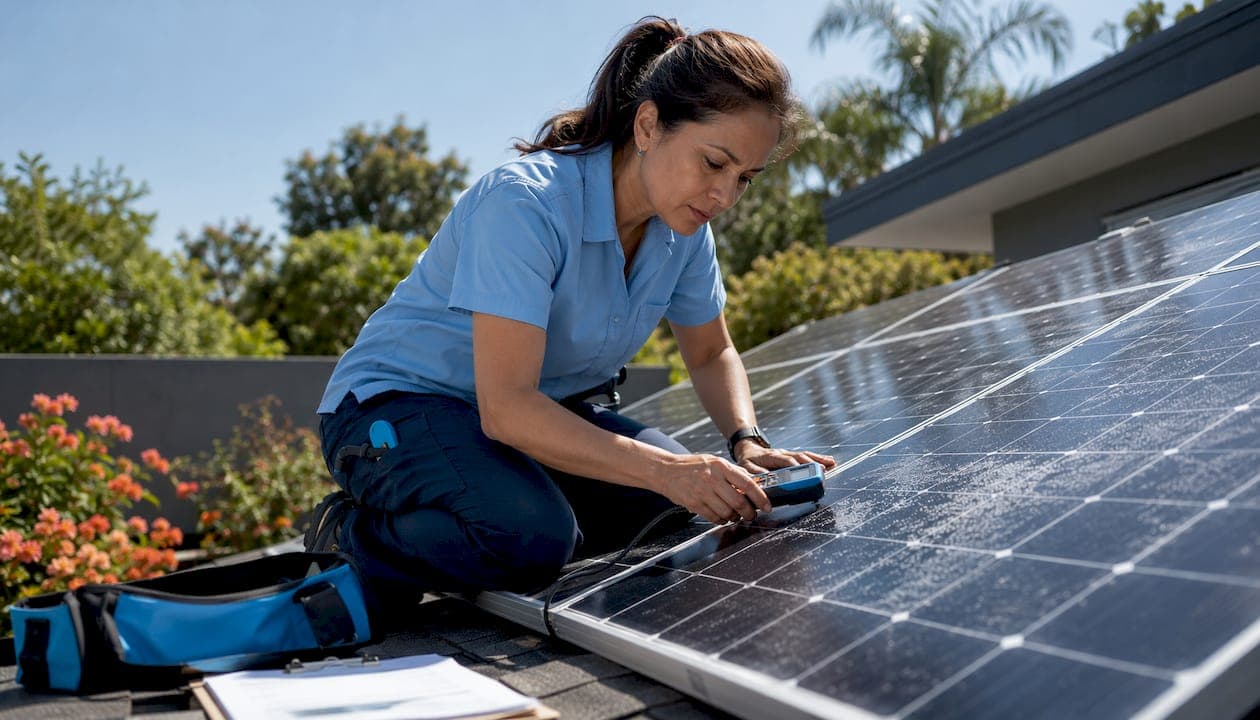
What is solar panel condensation damage?
Solar panel condensation damage is internal moisture accumulation inside a PV module caused by a failed hermetic seal. When that seal breaks down, humid air enters the panel, and as temperatures drop at night, that air condenses into liquid water trapped inside the laminate. The result is not just fogging. It is the beginning of corrosion, electrical failure, and accelerated material breakdown.
The mechanism starts with delamination, the loss of adhesion between the panel's internal layers. A standard crystalline silicon module is a layered sandwich: tempered glass, an EVA encapsulant, the solar cells, another encapsulant layer, and a protective backsheet. Once those bonds fail, gaps form, and capillary action pulls moisture deep into the module. From there, the damage compounds quickly.
Common signs of internal condensation damage include:
- Persistent fogging or clouding visible through the glass
- Yellowing or brown discoloration inside the panel
- Dark spots or streaks on the cell surface
- Visible mold growth behind the glass
- Unexplained drops in energy output
What environmental factors cause condensation damage?
High humidity, rapid temperature swings, and UV radiation are the three primary stressors that break down encapsulants and seals over time. Panels in climates with hot days and cold nights face this stress daily. Wisconsin homeowners, for example, deal with freeze-thaw cycles that put real mechanical strain on panel edges and frame seals every single season.
Damp heat conditions, defined in laboratory testing as 85°C at 85% relative humidity, create an alkaline micro-environment inside modules that accelerates corrosion of sensitive cell layers. When white EVA encapsulant absorbs moisture at those conditions, it releases magnesium-bearing compounds that attack the silicon nitride passivation layer. That is not a slow process. It is a chemical cascade.
Key environmental risk factors for homeowners and businesses:
- Coastal or high-humidity climates with persistent moisture exposure
- Regions with large daily temperature swings
- Areas with heavy UV exposure that degrades encapsulant bonds
- Manufacturing voids or microcracks that give moisture an entry point
- Improper mounting that traps water at panel edges
How condensation damage affects solar panel performance
Once moisture is inside a panel, it attacks on multiple fronts simultaneously. Corrosion of the metallic contacts and internal circuitry reduces conductivity, which shows up as increased series resistance and falling power output. Electrical short circuits can take down entire strings of panels, not just the one affected module.
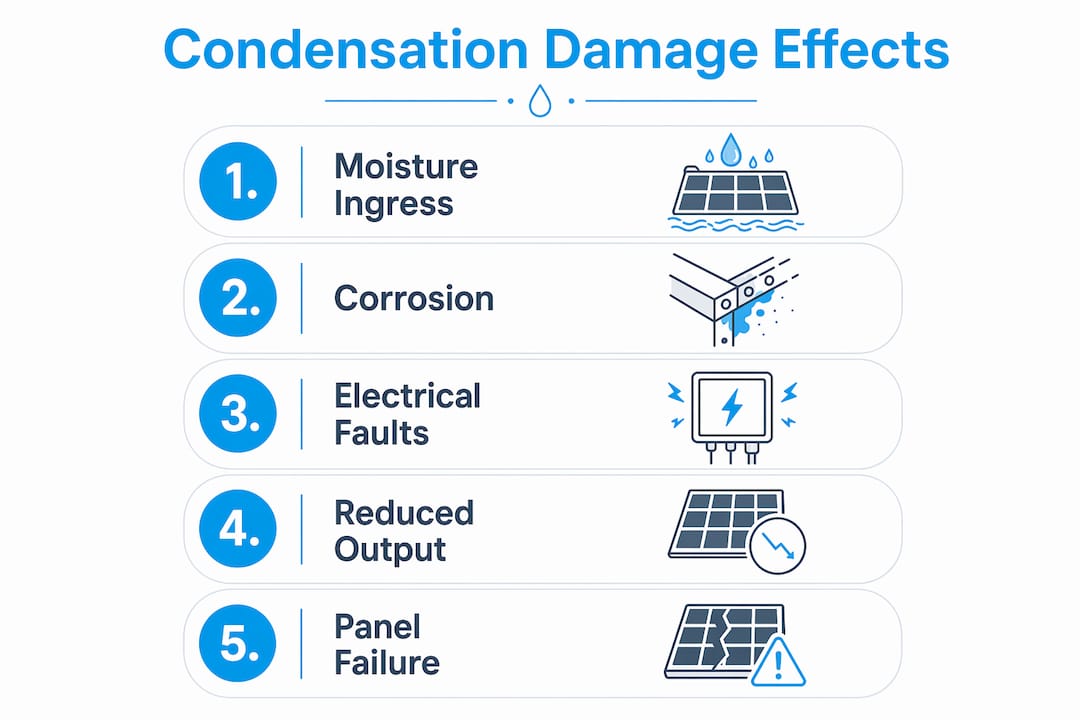
The EVA encapsulant makes things worse through a chemical process called hydrolysis. When EVA reacts with moisture and UV radiation, it produces acetic acid. That acid corrodes metal contacts and further breaks down adhesive bonds, creating a feedback loop that accelerates every other form of damage. Mold growth adds another layer of harm by blocking sunlight from reaching the cells.
Risks condensation damage poses to your system:
- Corrosion of silver and aluminum contacts reducing current flow
- Electrical shorts that disable individual cells or entire panels
- Mold or moisture vapor blocking optical transmission
- Accelerated EVA degradation through acetic acid production
- Shortened panel lifespan and costly premature replacement
How to detect condensation damage in your solar panels
Surface condensation on the outside of a panel after a cold night is normal and harmless. It evaporates as the panel warms up. Internal moisture is a different problem entirely, and distinguishing the two requires more than a visual check.
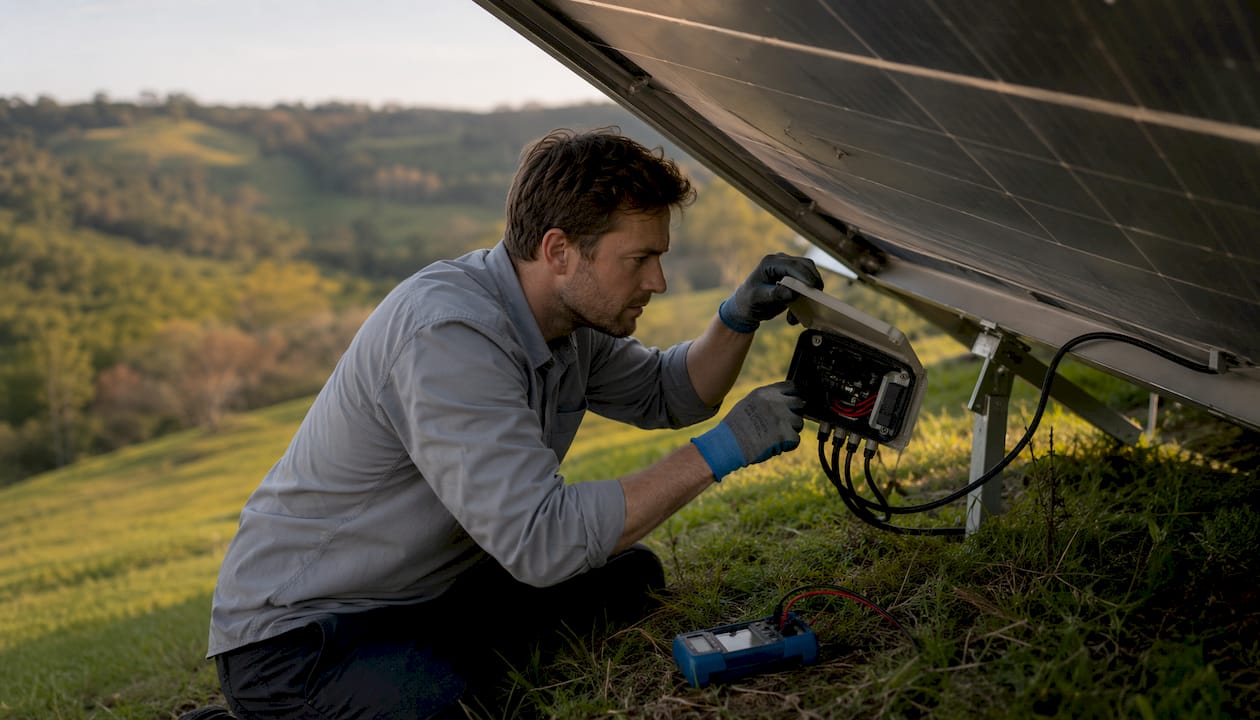
Persistent fogging that does not clear by midday is a reliable sign of hermetic seal failure. Discoloration, dark patches, or visible mold inside the glass are also red flags. For anything beyond a visual inspection, professional-grade tools are necessary. Electroluminescence cameras and insulation resistance testers can identify latent defects invisible to the naked eye, including moisture pathways that have not yet caused visible symptoms.
Practical detection steps for homeowners and businesses:
- Inspect panels visually every six months for fogging, discoloration, or mold
- Monitor your inverter data for unexplained output drops
- Schedule a professional electrical diagnostic after 5–10 years of system operation
- Request electroluminescence imaging if you suspect internal damage
- Document findings with photos to support any warranty claims
Pro Tip: Never attempt DIY electrical testing on a suspected moisture-damaged panel. Insulation resistance testers and EL cameras require trained operators to interpret results accurately. A misread can lead you to miss active damage or, worse, create a safety hazard.
Prevention and maintenance strategies that actually work
Panels are designed to be water-resistant, but trapped moisture causes damage, not rain exposure. Keeping the hermetic seal intact is the entire game. That means maintaining the mounting hardware, protecting wiring from UV degradation, and scheduling professional inspections before small issues become expensive ones.
Manufacturers typically require documented proof of regular inspections to validate warranty claims related to moisture damage. Skipping inspections does not just risk your panels. It risks your coverage. A professional cleaning service using deionized water also removes the mineral deposits and grime that can stress frame seals over time.
Maintenance best practices to protect your investment:
- Schedule professional inspections annually, or after any severe weather event
- Keep mounting hardware tight and corrosion-free to prevent frame flex
- Protect all wiring and conduit from UV exposure to prevent insulation cracking
- Use manufacturer-approved cleaning methods that do not stress seals or glass
- Keep a maintenance log with dates, findings, and any corrective actions taken
Pro Tip: Add a seal and moisture pathway check to your annual inspection checklist. Ask your technician to examine panel edges, frame corners, and backsheet surfaces for any signs of lifting, cracking, or discoloration. These are the first places moisture finds its way in.
For professional cleaning that protects your seals and keeps your system producing at full capacity, Solaralchemist's maintenance approach is built around exactly this kind of preventive care.
Repair options and costs for condensation damage
Here is the hard truth about repair: once moisture is inside a panel, resealing it in the field is not viable. Attempting to seal the edges of a panel that already has internal moisture traps the water and acetic acid inside, accelerating the very damage you are trying to stop. Standard industry practice treats moisture-damaged panels as candidates for replacement, not repair.
Costs vary depending on panel brand, system size, and whether the damage is covered under warranty. A single residential panel replacement typically runs several hundred dollars including labor, while larger commercial arrays can face costs that scale quickly across multiple affected modules. Professional solar panel repair services can assess whether individual panels are salvageable or whether full replacement is the only path forward.
Warranty implications and manufacturer guidelines
Most solar panel manufacturers offer two separate warranties: a workmanship warranty covering manufacturing defects, and a performance warranty guaranteeing output levels over 25 years or more. Condensation damage caused by a manufacturing defect in the seal or encapsulant may fall under the workmanship warranty. Damage caused by improper installation or lack of maintenance typically does not.
Manufacturers generally require proof of regular professional inspections to validate moisture-related warranty claims. Without that documentation, a claim can be denied even when the damage is legitimate. Read your warranty terms carefully, keep your inspection records, and work with certified technicians who can provide written reports. That paper trail is your protection.

Solaralchemist serves homeowners and businesses across Madison, Wisconsin and the surrounding region with professional-grade solar panel cleaning and maintenance. If you are seeing unexplained output drops or want to get ahead of moisture damage before it starts, check the signs your panels need attention now.
Key Takeaways
Solar panel condensation damage begins with hermetic seal failure, and once internal moisture takes hold, panel replacement is usually the only effective solution.
| Point | Details |
|---|---|
| Seal failure drives damage | Delamination breaks internal bonds, letting moisture enter via capillary action and condense inside the module. |
| EVA hydrolysis accelerates harm | Moisture reacts with EVA to produce acetic acid, corroding metal contacts and creating a feedback loop of degradation. |
| Internal vs. surface moisture | Surface condensation clears by midday; persistent internal fogging signals hermetic seal failure requiring professional diagnosis. |
| Resealing is not a repair | Sealing a moisture-damaged panel traps water and acid inside, worsening damage. Replacement is standard industry practice. |
| Inspections protect your warranty | Manufacturers require documented professional inspections to validate moisture-related warranty claims. |