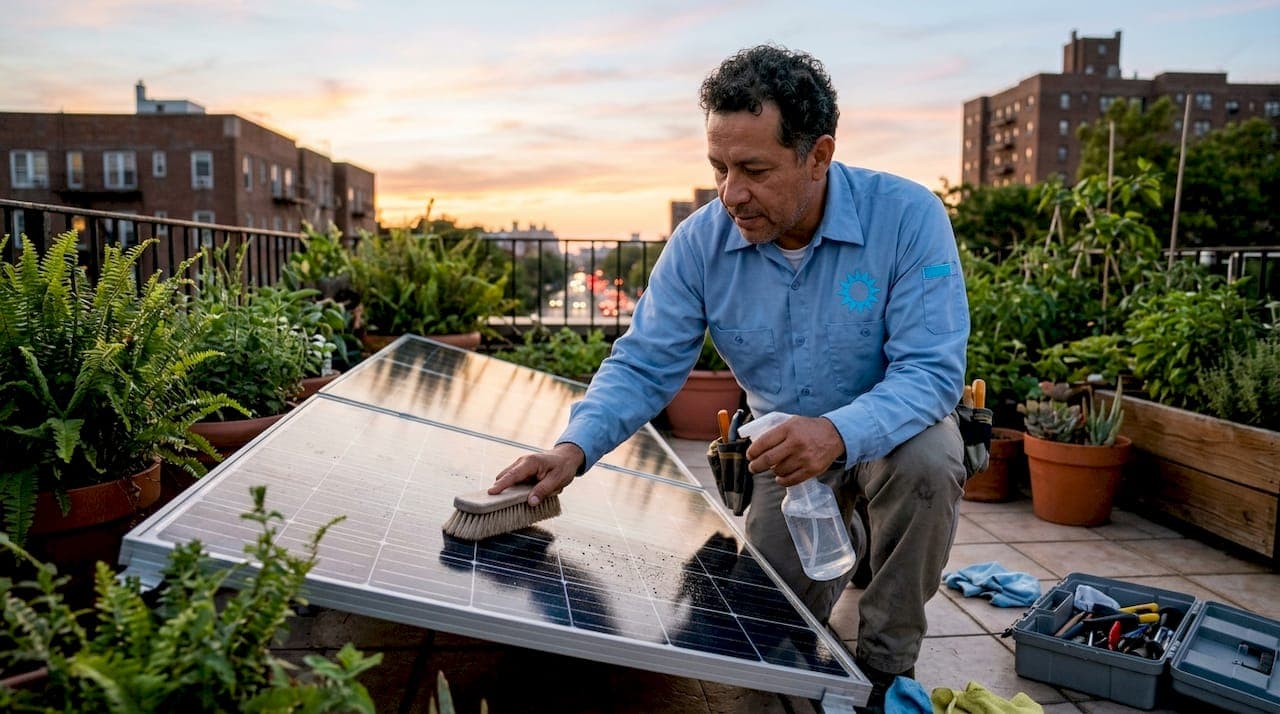
Solar panel grime in urban environments is defined as the accumulation of dust, soot, vehicle exhaust particles, bird droppings, and organic residues that bond to panel glass and block sunlight from reaching photovoltaic cells. This buildup is the leading cause of preventable energy loss in city solar installations. Soiling causes 6–7% efficiency losses within months of installation, and severe long-term accumulation can push losses past 30%. For facility managers and urban solar owners, understanding what grime is and how it forms is the first step toward protecting your investment.
What is solar panel grime in urban environments?
Solar panel grime is the industry term for soiling: a composite layer of contaminants that adheres to the glass surface of photovoltaic modules. In urban settings, this layer is far more complex than simple dust. City air carries a mixture of inorganic and organic particles that combine on panel surfaces to create a persistent, sticky film.
Inorganic components include:
- Soot and black carbon from vehicle exhaust and diesel engines
- Industrial particulate matter from nearby manufacturing or construction
- Mineral dust carried by wind from roads, parking lots, and bare soil
- Ash from combustion sources, including wood burning and industrial stacks
Organic components add another layer of complexity:
- Bird droppings, which are highly acidic and bond tightly to glass
- Pollen from urban trees and green spaces, especially heavy in spring
- Mold spores and algae, which colonize damp panel surfaces over time
- Leaf debris and tree sap near rooftop installations with overhead canopy
The interaction between these particles and urban humidity is what makes city grime especially damaging. Urban soiling forms sticky sludge when inorganic dust and organic pollutants combine with moisture. That sludge layer does not blow off in the wind and does not wash away cleanly with light rain. It requires deliberate removal.
How does grime affect solar panel efficiency and health?
Grime reduces output through a straightforward mechanism: it blocks photons. Fewer photons reaching the silicon cells means less electricity generated. The effect scales with the density and distribution of the soiling layer.
| Grime type | Efficiency impact | Damage risk |
|---|---|---|
| Light dust film | 6–7% output loss | Low |
| Sticky sludge buildup | Up to 70% localized loss | Moderate |
| Bird droppings (concentrated) | Severe shading on affected cells | High |
| Non-uniform grime patches | Hot spot formation | Permanent cell damage |
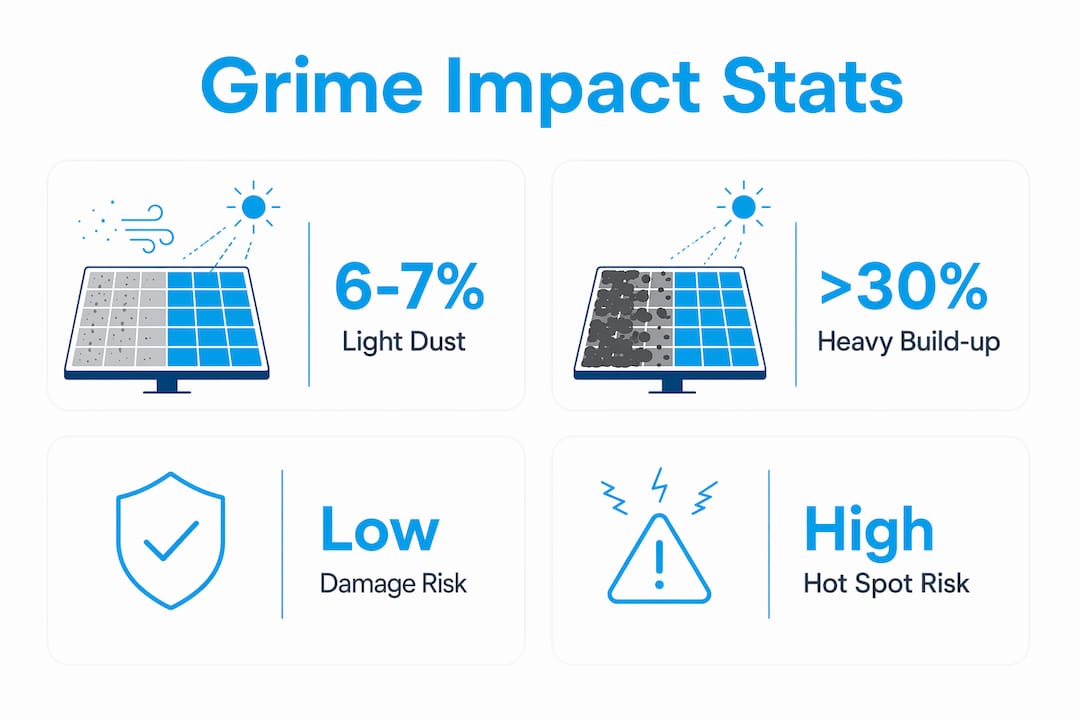
The most dangerous scenario is non-uniform grime. Uneven grime causes hot spots that create internal heating in shaded cells. Those cells are forced to dissipate energy as heat rather than electricity, which can irreversibly damage the cell junction. The result is permanent output degradation that no amount of cleaning can reverse.
Physical damage extends beyond the cells themselves. Low tilt panels trap sediment at their lower edges, concentrating grime against the panel frame seals. Over time, that acidic sludge degrades the seal material, allowing moisture to enter the module. Water ingress accelerates corrosion of internal wiring and laminate layers.
Pro Tip: Monitor your inverter's daily output data. A gradual decline over 4–6 weeks, without a change in weather patterns, is a reliable early signal that soiling has crossed the threshold where cleaning pays off.
Urban soiling patterns: how location shapes grime buildup
Grime accumulation is not uniform across a city. Site-specific factors like building height, traffic proximity, and industrial emissions dictate both the chemistry of the grime and how quickly it builds. This means a generic cleaning calendar rarely fits every installation.
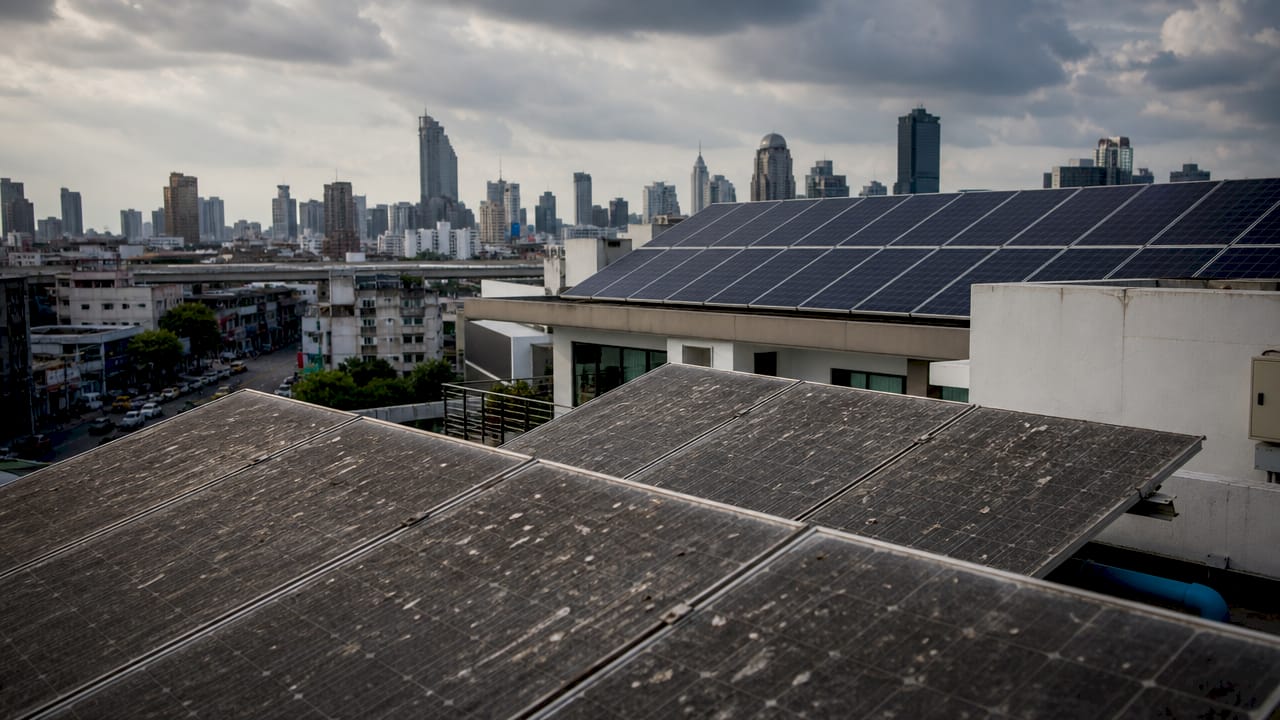
Panels on low-rise buildings near busy roads collect heavy soot and tire rubber particulates. Rooftop arrays on high-rise buildings face more wind-driven mineral dust and bird activity. Installations near parks or tree canopies deal with pollen and organic debris that other sites never see. Each of these grime profiles responds differently to cleaning methods and frequencies.
Rain is not the reliable cleaning agent most owners assume it is. Light rain in cities can worsen grime by washing loose dust into panel corners and edges, creating concentrated shading zones. A brief shower moves dirt around rather than removing it. Only sustained, heavy rainfall at the right panel angle provides meaningful self-cleaning, and urban environments rarely deliver that consistently.
Panel tilt angle is one of the strongest predictors of soiling severity. Flat or low-tilt installations, common in commercial rooftop arrays, allow water to pool and sediment to settle. Steeper residential panels shed water more effectively, but they still accumulate grime in the lower frame channel. Low tilt installations are more prone to seal degradation from concentrated sediment, which makes inspection of the frame perimeter a priority during every maintenance visit.
Facility managers overseeing multiple buildings should map each site's soiling profile individually. A rooftop array two blocks from a highway will need cleaning twice as often as one on a quieter street, even within the same city.
Best practices for managing urban solar panel grime
A fixed calendar is the wrong starting point for urban solar maintenance. Output monitoring should drive cleaning decisions. When your system's production drops measurably below its baseline for the season, that is your signal to inspect and clean.
- Set a monitoring baseline. Record daily kilowatt-hour output during the first clean month after installation. Use that figure as your reference point for each season going forward.
- Inspect visually twice per year. Walk the array in spring and fall. Look for bird droppings, sludge lines at panel edges, and any discoloration that suggests hot spot activity.
- Clean when output drops or grime is visible. Urban arrays with high pollution may need quarterly cleaning, while lower-traffic locations may manage with one or two cleanings per year.
- Use only deionized water or residue-free solutions. Soap residues increase dirt adherence and leave a film that attracts the next layer of grime faster. Deionized water leaves no mineral deposits and is the professional standard.
- Use soft brushes or microfiber tools. Abrasive pads scratch the anti-reflective coating on panel glass, permanently reducing light transmission.
- Never clean panels in direct midday sun. Thermal shock from cold water on hot glass can stress the laminate. Clean in the early morning or late afternoon.
- Inspect frame seals during every cleaning. Look for cracking, lifting, or discoloration at the panel perimeter, especially on low-tilt arrays.
For facility managers, professional cleaning services remove the liability of roof access and provide documentation for warranty compliance. Solaralchemist uses professional-grade deionized water systems that leave panels spotless without chemical residue. You can review the signs your panels need cleaning to determine whether your array has crossed the threshold for a professional visit.
Pro Tip: For rooftop arrays near bird nesting sites, install anti-perch deterrents along panel frames. Bird droppings are the single most damaging grime source per square centimeter, and prevention costs far less than the output losses they cause.
Common mistakes to avoid include using pressure washers at high settings, which can force water under panel seals, and cleaning only the visible center of panels while ignoring the frame edges where sludge concentrates. A full guide to cleaning mistakes to avoid covers the most frequent errors that reduce panel lifespan.
Key Takeaways
Urban solar panel grime is a composite soiling layer that causes measurable, progressive efficiency losses and physical damage when left unmanaged in city environments.
| Point | Details |
|---|---|
| Grime definition | Urban soiling combines soot, dust, bird droppings, and organic matter into a sticky layer that blocks sunlight. |
| Efficiency losses | Soiling causes 6–7% short-term losses and can exceed 30% in severe long-term accumulation. |
| Hot spot risk | Non-uniform grime creates overheating in shaded cells, causing permanent and irreversible panel damage. |
| Rain is unreliable | Light rain moves grime to panel edges rather than removing it, often worsening shading zones. |
| Cleaning method matters | Use only deionized water or residue-free solutions; soap residues accelerate future grime adhesion. |
What urban grime taught me about solar maintenance
Most owners I talk to assume rain handles the cleaning. That assumption costs them money every single month. I have seen rooftop arrays in dense urban neighborhoods running at a fraction of their rated output simply because no one had cleaned them in two years. The owners thought the system was underperforming because of the equipment. The panels were fine. The grime was the problem.
The other misconception I run into constantly is that a fixed schedule is enough. Clean in April, clean in October, done. That works in rural areas with predictable dust. It does not work near a highway, a construction site, or a bird migration corridor. I have cleaned panels in june that looked like they had not been touched in three years, even though the owner had cleaned them the previous fall. The site was next to a parking structure with heavy diesel traffic. The grime chemistry there was completely different from a quiet residential neighborhood.
What actually works is treating your monitoring data as your maintenance trigger. When output drops and weather does not explain it, that is your signal. Pair that with a visual inspection twice a year, and you will catch problems before they become permanent damage. The soiling mechanisms and fixes are well understood. The gap is almost always in applying that knowledge consistently to the specific conditions of your site.
Urban solar maintenance is not complicated. It just requires paying attention to the right signals instead of following a generic calendar.
— Marquis
Solaralchemist's professional cleaning for urban solar arrays
Urban grime requires a different approach than a garden hose and a sponge.

Solaralchemist specializes in professional solar panel cleaning for urban and suburban installations across Madison, Wisconsin and the surrounding area. The team uses professional-grade deionized water systems that remove soot, sludge, bird droppings, and organic residue without leaving any chemical film behind. Every visit includes a frame seal inspection and output baseline check. Not sure whether your array needs attention? The 8 signs your panels need cleaning page walks you through the clearest indicators. Facility managers overseeing multiple sites can also review the facility management cleaning guide for scheduling frameworks built around real urban soiling data.
FAQ
What is solar panel grime made of in cities?
Urban solar panel grime is a mixture of vehicle soot, industrial particulates, mineral dust, bird droppings, pollen, and organic matter. These combine with humidity to form a sticky sludge layer that does not wash off with light rain.
How much efficiency do dirty solar panels lose?
Soiling causes 6–7% efficiency losses in the short term, with severe long-term accumulation pushing losses past 30%. Localized sludge buildup on individual panel sections can cause up to 70% output loss in that area.
Does rain clean solar panels in urban areas?
Light rain in cities typically makes grime worse by washing dust into panel corners and edges. Only sustained, heavy rainfall at adequate panel tilt provides meaningful self-cleaning, which urban conditions rarely deliver consistently.
How often should urban solar panels be cleaned?
Panels in high-pollution urban areas may need cleaning quarterly. Lower-traffic locations generally manage with one or two cleanings per year. Output monitoring is more reliable than a fixed calendar for determining when cleaning is needed.
Why should I avoid soap when cleaning solar panels?
Soap leaves a residue on panel glass that attracts and holds the next layer of dirt more readily than clean glass. Deionized water or residue-free cleaning solutions are the professional standard and leave no film behind.