Solar panel inspection is the process of systematically evaluating commercial photovoltaic systems to detect performance, safety, and warranty-related issues before they cause significant revenue loss or costly repairs. For commercial property managers and business owners, understanding why solar panel inspection matters commercially is not optional. A neglected 2 MW rooftop system can lose $8,000–$20,000 annually in unrealized generation revenue from soiling, shading, and inverter faults alone. That figure represents real money walking out the door every year. Structured inspection programs, guided by standards like IEC 62446-2 and performance ratio (PR) monitoring, are the primary defense against that loss.
Why solar panel inspection matters commercially: the core case
Commercial solar systems are technical assets, not passive infrastructure. Like HVAC equipment or elevators, they require active monitoring and planned maintenance to reach their 25-year design life. The moment a system goes unmonitored, degradation compounds silently. Soiling, electrical faults, and inverter failures do not announce themselves. They erode your performance ratio month after month until the financial damage becomes undeniable.
Performance ratio (PR) is the key metric that comprehensive inspections aim to protect. PR measures actual system output against the theoretical maximum under real conditions. Maintaining PR above 85% is the operational benchmark for well-managed commercial arrays. When PR drops below that threshold, revenue loss is already in progress.

What key issues do commercial solar panel inspections detect?
Inspections surface problems that remote monitoring alone cannot catch. The most common and costly issues fall into four categories.
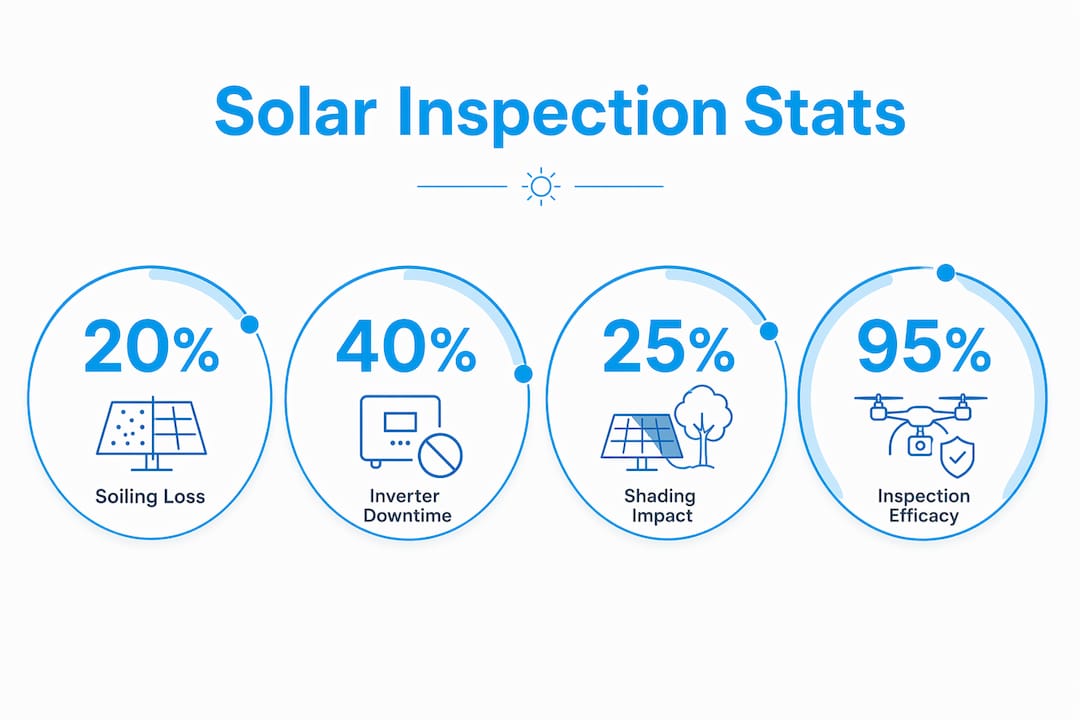
Soiling and shading losses are the most visible culprits. Dirt, bird droppings, pollen, and debris reduce output by 5–20% without regular cleaning. Flat or low-tilt commercial roofs accumulate soiling faster than angled residential arrays. In high-particulate environments, annual soiling losses can exceed 25% on unmaintained systems. That is a quarter of your expected generation gone before a single panel fails.
Inverter faults are the silent revenue killers. Inverter failures cause approximately 40% of total system downtime in commercial solar installations. A single 1 MW inverter failure costs $1,250 per day in lost generation. Early detection through inverter diagnostics during inspections cuts that exposure dramatically.
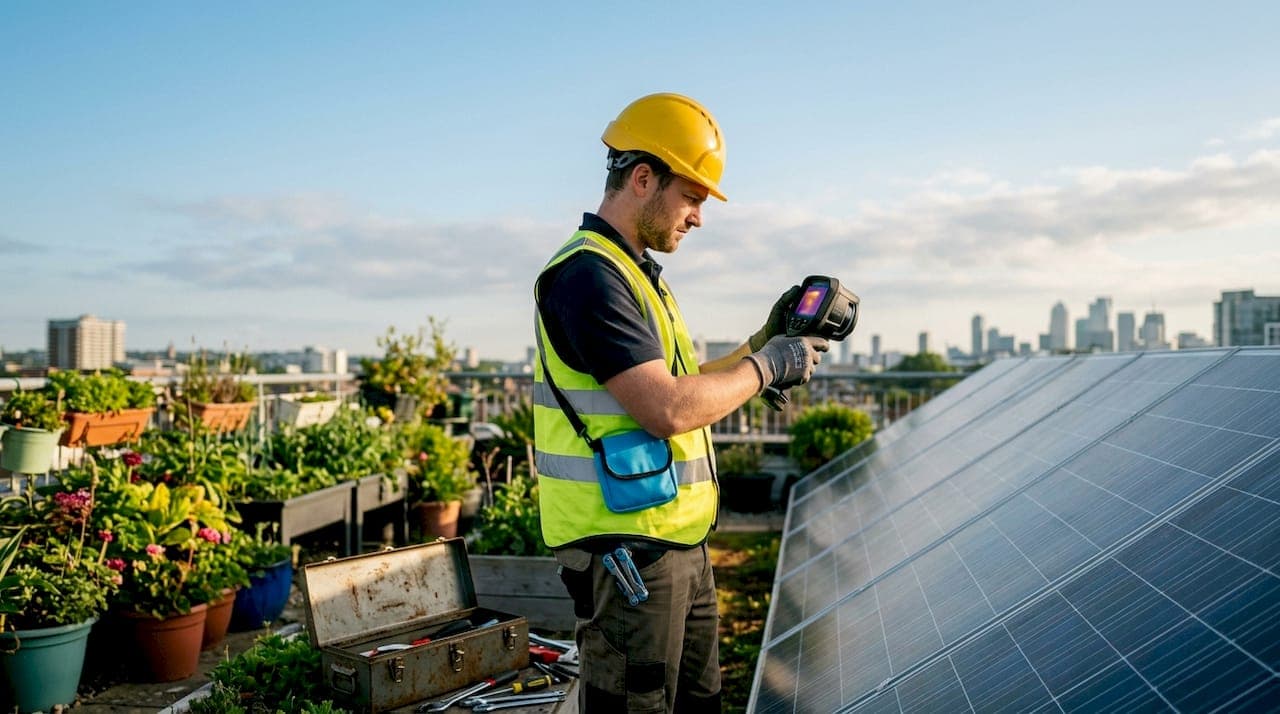
Electrical faults including loose connections, corrosion, and hot spots create both revenue loss and fire risk. Thermographic imaging during inspections identifies hot spots invisible to the naked eye. These faults, left undetected, escalate from minor inefficiencies to panel fires or full system shutdowns.
Warranty and safety risks compound every other problem. Manufacturers may reject warranty claims if routine maintenance records are missing. A single undocumented inspection cycle can void coverage worth tens of thousands of dollars.
Regular inspections are not a maintenance expense. They are a revenue protection strategy. Every fault caught early is a repair bill avoided and a warranty claim preserved.
Pro Tip: Document every inspection with timestamped photos, thermal scan reports, and electrical test results. That paper trail protects your warranty and strengthens your position in insurance claims or refinancing discussions.
How often should commercial solar inspections occur?
Inspection frequency is not one-size-fits-all. It depends on your site environment, system age, and compliance requirements.
Commercial systems require three tiers of attention:
- Annual comprehensive inspections. These cover thermal imaging, IV curve tracing, inverter diagnostics, insulation resistance testing, and electrical torque checks under IEC 62446-2 standards. This is the inspection that protects your warranty and catches hidden failures.
- Routine visual inspections at least twice per year. Walk the array, check for physical damage, debris accumulation, shading from new obstructions, and obvious soiling. These take less time but catch fast-moving problems between full diagnostics.
- Quarterly inspections for high-risk sites. Facilities near highways, agricultural operations, or industrial zones accumulate soiling faster. Quarterly checks prevent compounding losses in these environments.
Cleaning frequency follows a similar logic. Most commercial systems need professional cleaning 2–4 times per year depending on local conditions. Knowing when to clean solar panels based on performance data rather than a fixed calendar is the more precise approach. A drop in PR below your baseline is a stronger trigger than a date on a spreadsheet.
| Site condition | Recommended cleaning frequency | Inspection frequency |
|---|---|---|
| Low dust, urban rooftop | 2x per year | 2x visual + 1x annual full |
| Moderate dust, suburban | 3x per year | 2x visual + 1x annual full |
| High dust, agricultural, or industrial | 4x per year | Quarterly visual + 1x annual full |
Pro Tip: Set a PR alert threshold in your monitoring system. When output drops more than 5% below your rolling 30-day average, trigger an unscheduled inspection rather than waiting for the next calendar date.
What tools and methods do modern commercial solar inspections use?
The technology behind commercial solar inspections has advanced well beyond a visual walkthrough. Each method targets a specific failure mode.
- Visual assessment catches physical damage, soiling, shading, and panel discoloration. It is the fastest and cheapest first pass, but it misses electrical and thermal faults entirely.
- Thermographic (infrared) imaging detects hot spots, bypass diode failures, and cell-level defects invisible to the eye. This is the most critical tool for fire risk prevention and is included in annual inspections under IEC 62446-2.
- IV curve tracing measures the electrical output curve of individual strings against manufacturer specifications. Deviations reveal shading, soiling, degradation, or wiring faults with precision that no visual check can match.
- Drone inspections with autonomous software cover large commercial arrays faster than ground crews. Drone inspections create digital audit trails that are critical for insurance claims, refinancing, and mergers and acquisitions. They also reduce the safety risk of sending technicians onto large rooftops.
- SCADA systems and PR monitoring provide continuous performance data between physical inspections. When integrated with inspection findings, they allow rapid fault detection and trend analysis across multi-site portfolios.
The combination of these methods gives commercial property managers a complete picture of system health. No single tool is sufficient on its own.
How do inspections protect your investment and optimize returns?
The financial case for regular solar panel performance checks is direct. Budgeting 0.5–1.5% of initial system cost annually for preventive maintenance protects ROI across the system's full lifetime. That investment is small compared to the cost of a single emergency repair or a denied warranty claim.
The broader benefits of investing in solar panel inspections extend across four areas:
- Revenue protection. Catching soiling and inverter faults early prevents the $8,000–$20,000 annual losses that unmanaged systems routinely suffer. Your commercial solar maintenance cost savings compound over time when faults are addressed before they cascade.
- Warranty compliance. Inspection documentation preserves warranty validity by proving that routine maintenance occurred. Missing records give manufacturers grounds to deny claims on equipment that fails prematurely.
- Safety and liability reduction. Undetected hot spots and electrical faults are fire hazards. Regular thermographic scans reduce that risk and lower your insurance exposure.
- Asset value and ESG reporting. Documented O&M records strengthen your position in audits, refinancing, and ESG disclosures. Lenders and investors treat well-maintained solar assets as lower-risk collateral.
Pro Tip: Ask your O&M provider whether their contract includes performance guarantees. High-quality contracts specify 95–98% system availability with financial remedies for missed targets. That alignment of incentives protects you if service quality slips.
Self-diagnosis and unauthorized electrical repairs void warranties and create serious safety hazards. Certified professionals are not a luxury. They are a requirement for maintaining both safety and coverage.
Key Takeaways
Commercial solar inspections are the single most effective tool for protecting energy yield, warranty coverage, and long-term asset value on commercial photovoltaic systems.
| Point | Details |
|---|---|
| Inspections prevent major revenue loss | Unmanaged systems lose up to $20,000 annually from soiling, shading, and inverter faults. |
| Inverter faults drive most downtime | Inverter failures cause 40% of system downtime; early detection cuts daily losses of $1,250 per failed MW. |
| Frequency depends on site conditions | High-dust sites need quarterly inspections and up to four cleanings per year to maintain performance. |
| Documentation protects warranties | Missing maintenance records give manufacturers grounds to deny claims on failed equipment. |
| Drone and thermal tools add precision | Thermographic imaging and drone audits catch faults that visual checks miss and create insurable records. |
What I've learned managing commercial solar as a technical asset
The biggest mistake I see commercial property managers make is treating their solar array like a rooftop rather than a revenue-generating machine. Once the installation crew leaves, the assumption becomes that the system runs itself. It does not.
I have seen systems running at 60% of their rated output for over a year before anyone noticed. The monitoring dashboard showed generation numbers, and nobody compared them against the expected baseline. That is not a technology failure. That is an asset management failure. The annual solar maintenance checklist exists precisely because human attention needs a structured prompt.
The other misconception I push back on hard is the idea that reactive repairs are cheaper than scheduled inspections. They are not. Emergency inverter replacements, fire damage remediation, and denied warranty claims cost multiples of what a structured O&M program would have cost over the same period. The math is not close.
What actually works is treating your solar system the way a facilities director treats an elevator. You schedule it, you document it, and you hire certified professionals to do it. You do not wait for the elevator to stop working before you call someone. The same discipline applied to commercial solar protects your investment, your tenants, and your balance sheet.
— Marquis
Solaralchemist's commercial solar maintenance services
Commercial property managers in Wisconsin need a maintenance partner who understands both the technical demands of photovoltaic systems and the operational realities of managing large facilities.
Solaralchemist provides professional-grade solar panel cleaning and maintenance for commercial properties across Madison and surrounding communities, using deionized water systems and specialized equipment that protect panel surfaces while maximizing energy output. Every service visit is documented to support your warranty compliance and O&M records. Whether your system needs a scheduled cleaning program tailored to your site's soiling conditions or a full maintenance consultation, Solaralchemist delivers the technical execution your investment requires. Contact Solaralchemist to discuss a maintenance schedule built around your system's performance data and facility needs.
FAQ
What is a commercial solar panel inspection?
A commercial solar panel inspection is a structured evaluation of a photovoltaic system using visual assessment, electrical testing, thermographic imaging, and IV curve tracing to identify faults, soiling, and warranty risks before they cause revenue loss.
How much output can soiling cost a commercial solar system?
Soiling reduces commercial solar output by 5–20% on average, and up to 25% annually on flat-roof systems in high-particulate environments without regular cleaning and inspection.
Does skipping inspections void my solar warranty?
Manufacturers may reject warranty claims if routine maintenance records are missing. Documented inspections including thermal scans, torque checks, and firmware updates are required to preserve warranty validity.
How do drone inspections benefit commercial solar owners?
Drone inspections cover large arrays faster than ground crews, detect faults through thermal imaging, and create digital audit trails that support insurance claims, refinancing, and ESG reporting.
What is performance ratio and why does it matter?
Performance ratio (PR) measures actual system output against the theoretical maximum under real conditions. Maintaining PR above 85% is the operational benchmark for well-managed commercial solar arrays, and inspections are the primary tool for keeping it there.