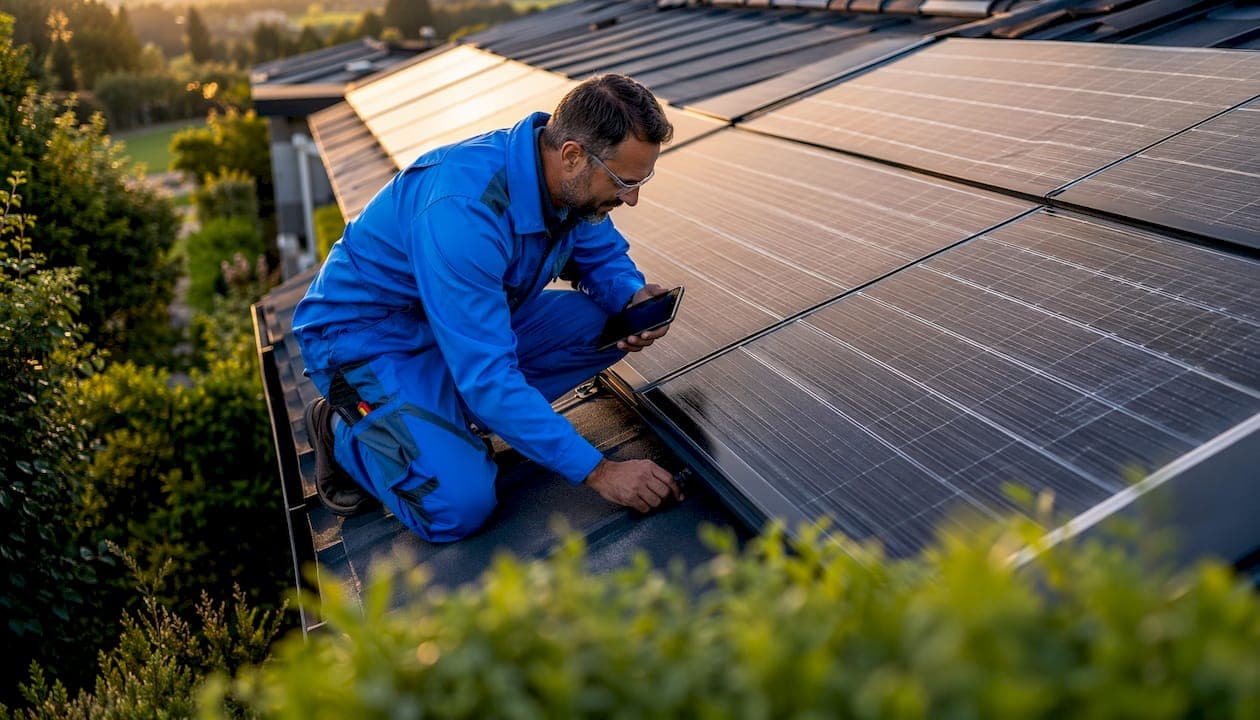
Neglected solar panels lose 15–25% of their energy output over time, making home energy bill reduction through solar maintenance one of the highest-return habits a homeowner can build. The industry term for this practice is solar system maintenance, which covers cleaning, electrical inspections, and performance monitoring. Done right, it keeps your system producing at full capacity and your monthly electricity costs as low as possible. Skip it, and you pay twice: once in lost generation and again in repair bills.
What does home energy bill reduction solar maintenance actually involve?
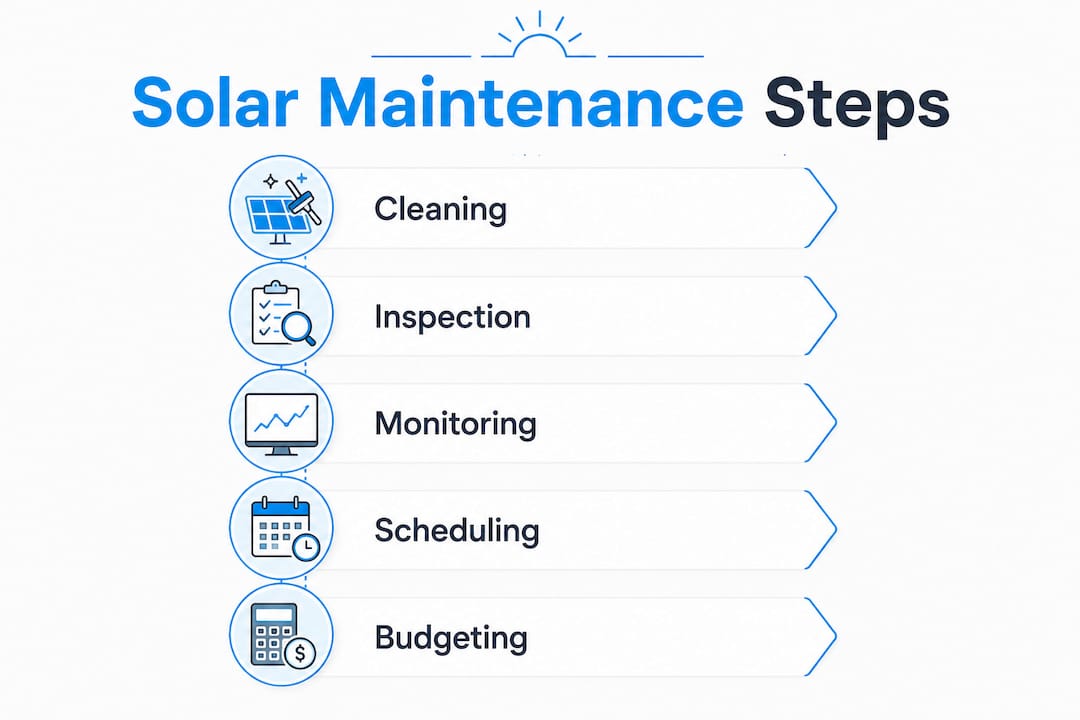
Solar system maintenance covers three core tasks: cleaning, inspection, and monitoring. Each one targets a different source of energy loss, and skipping any one of them leaves money on the table.
Cleaning removes the dirt, pollen, bird droppings, and dust that block sunlight from reaching your cells. 1–2 cleanings per year recover 5–25% of lost generation for most climates. That range is wide because soiling rates vary by location. A home near a dusty road or under heavy tree cover needs more frequent attention than one in a clean suburban neighborhood.
Inspection goes deeper than cleaning. A professional annual inspection covers IV curve tracing, insulation resistance testing, thermal imaging, and mechanical checks. These electrical diagnostics catch defects that no cleaning will fix, including loose wiring, corroded connectors, and failing diodes. Catching these early prevents the kind of damage that turns a $200 maintenance visit into an $800+ repair bill.
Monitoring is your early warning system. Most modern inverters and solar apps report daily production data. Watching that data regularly tells you when something is wrong before it becomes expensive.
Here are the core solar panel upkeep tasks every homeowner should track:
- Visual inspection: Check panels monthly for visible debris, cracks, or shading from new tree growth.
- App monitoring: Review your inverter app weekly for production drops or fault codes.
- Annual professional cleaning: Schedule at least once per year, twice if you live in a dusty or pollen-heavy area.
- Annual professional inspection: Book a full electrical checkup every 12 months to catch hidden faults.
- Inverter health check: Note that inverters typically need replacement around the 12–15 year mark. Budget for it early.
Pro Tip: Set a recurring calendar reminder every 90 days to log into your inverter app and compare current output to the same period last year. A consistent drop signals a maintenance need before it shows up on your electricity bill.
How do you use monitoring data to time your maintenance?
Data-driven maintenance scheduling beats fixed calendar cleaning every time. The reason is simple: your panels do not get dirty on a schedule. They get dirty based on weather, seasons, and local conditions.
The industry standard trigger for cleaning is a consistent output drop of 10% or more on clear sunny days. That threshold matters because small daily fluctuations are normal. A 10% sustained drop on good weather days is the signal that soiling or a fault is costing you real money.
Here is how to read your monitoring data and act on it:
- Log your baseline. Record your system's average daily output during its first clean month of operation. This is your performance benchmark.
- Track specific yield. Specific yield is kilowatt-hours produced per kilowatt of installed capacity. Comparing this number month over month removes weather variability from the equation.
- Watch string balance. Your inverter reports output from each string of panels. If one string drops while others hold steady, a single panel or connection in that string is failing.
- Read fault codes immediately. Inverter fault codes and string imbalance indicate developing faults. Do not dismiss them as glitches. Look them up in your inverter manual and act within a week.
- Compare performance ratios seasonally. Your system should produce proportionally similar output relative to sunlight hours across the same season each year. A declining ratio year over year points to panel degradation or wiring issues.
Pro Tip: Screenshot your inverter dashboard on the first of each month and save it to a dedicated folder. When you call a technician, you can show them exactly when a drop started. That data cuts diagnostic time and service costs.
What are safe and effective solar panel cleaning techniques?
Cleaning your panels the wrong way causes permanent damage. The most common mistake homeowners make is using tap water, which leaves mineral deposits that cause irreversible shading on the cell surface. Professional cleaners use deionized water systems specifically to avoid this problem.
DIY cleaning vs. professional cleaning
| Factor | DIY cleaning | Professional cleaning |
|---|---|---|
| Water quality | Tap water risks mineral buildup | Deionized water leaves no residue |
| Equipment | Garden hose, soft brush | Specialized poles, purified water systems |
| Safety | Roof access risk, warranty concerns | Ground-level or trained roof access |
| Cost | $0–$30 in supplies | $100–$200 per visit |
| Effectiveness | Moderate, weather-dependent | Consistent, documented results |
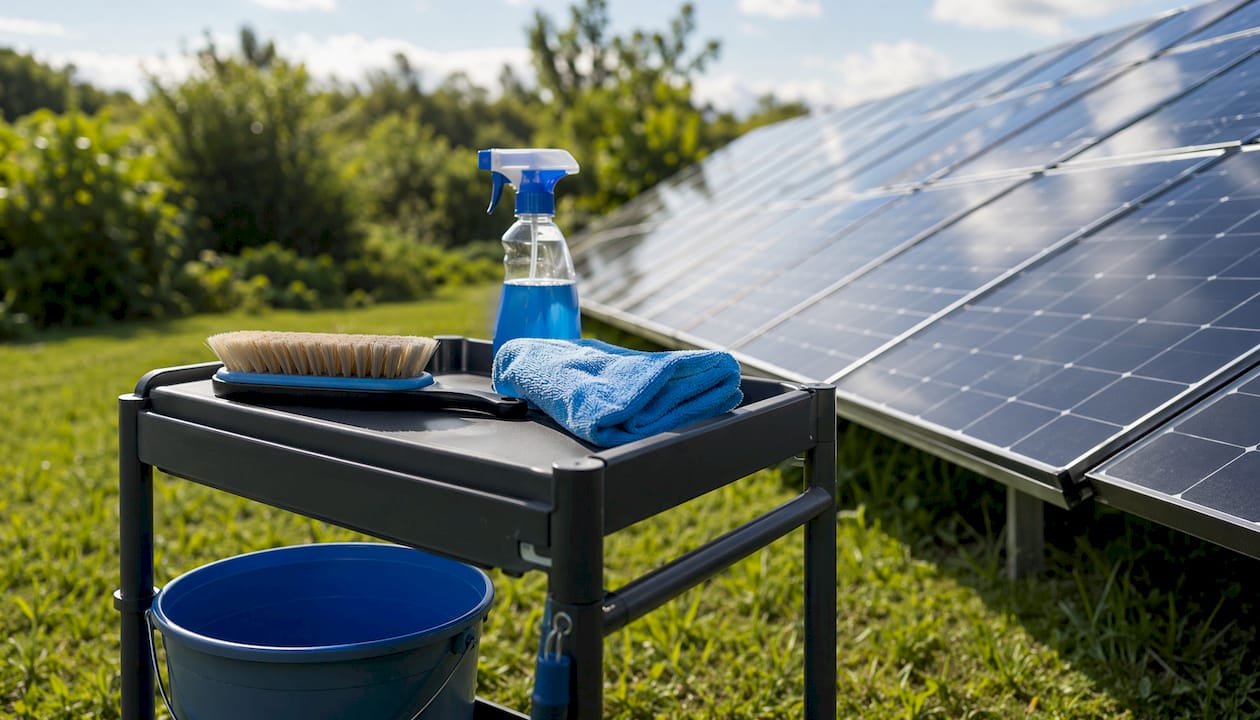
Safe DIY cleaning is possible if your panels are accessible from the ground or a low-pitch roof with proper safety equipment. Use a soft brush with an extendable pole and filtered water if deionized water is not available. Never use abrasive pads, pressure washers, or harsh detergents. These void most manufacturer warranties.
For homeowners with steep roofs, second-story installations, or panels near electrical components, professional cleaning is the safer choice. Roof falls are a real risk, and a voided warranty from improper cleaning costs far more than a professional service visit.
Seasonal timing matters too. In Wisconsin and similar northern climates, the best cleaning windows are late spring after pollen season and late summer before fall leaf drop. A seasonal maintenance schedule aligned to your local climate maximizes the return on each cleaning visit.
How should you plan and budget for professional solar maintenance?
Budgeting for solar maintenance is straightforward when you treat it as insurance rather than an optional expense. Annual maintenance costs for homeowners typically run $150–$400, covering one or two professional cleanings and an annual inspection. DIY cleaning supplies cost $0–$30 if you handle basic upkeep yourself between professional visits.
The math on skipping maintenance is unfavorable. Neglecting routine upkeep reduces output by 15–25% and can trigger repair bills that far exceed what the skipped maintenance would have cost. A homeowner who avoids a $200 annual service visit risks a repair bill of $800 or more when a preventable fault progresses to component failure.
A professional inspection should include documented IV curve tracing and thermal imaging. These documented inspection records serve two purposes: they validate your system's health for warranty claims, and they increase resale value by showing prospective buyers a maintained system. Ask any service provider for written reports after each visit.
When evaluating a maintenance contract, ask these questions before signing:
- Does the contract include both cleaning and electrical inspection, or only one?
- What documentation do you provide after each visit?
- Are inverter diagnostics included, or billed separately?
- How do you handle warranty-related findings?
Budgeting $150–$300 per year on average for cleaning and inspection protects your system's return on investment. The cost savings from cleaning consistently outpace the service cost when you factor in recovered generation and avoided repairs.
Pro Tip: Ask your maintenance provider to timestamp and photograph panel condition before and after each visit. This documentation is your best defense if a manufacturer ever questions a warranty claim.
Key Takeaways
Regular solar system maintenance is the most direct way to protect your energy bill savings and extend the productive life of your investment.
| Point | Details |
|---|---|
| Output loss from neglect | Skipping maintenance causes 15–25% energy output loss, directly raising your electricity bill. |
| Cleaning frequency | One to two professional cleanings per year recovers 5–25% of lost generation for most climates. |
| Monitoring as a trigger | A sustained 10% output drop on clear days is the signal that cleaning or repair is needed. |
| Annual inspection value | Professional inspections catch electrical faults that cleaning alone cannot fix, preventing costly repairs. |
| Annual budget target | Spending $150–$300 per year on maintenance protects your system's long-term return on investment. |
Why I think most homeowners underestimate solar maintenance
Most homeowners treat their solar system like a smoke detector. They install it, forget it, and only notice it when something goes wrong. The problem is that solar degradation is invisible. Your panels look fine from the ground while quietly losing 20% of their output to soiling and a corroded connector you cannot see.
The insight that changed how I think about this: cleaning is not the same as maintenance. Cleaning recovers lost output from dirt. Maintenance catches the electrical faults that will eventually take your system offline entirely. Homeowners who only clean and never inspect are managing half the problem.
The most cost-effective approach combines monitoring-based cleaning triggers with one annual professional inspection. You clean when the data tells you to, not on a rigid calendar. You inspect every year without exception. This combination catches problems early, when they are cheap to fix, and keeps your solar panel lifespan on track toward the 25-plus year mark most systems are designed to reach.
The homeowners I see with the best long-term results are not the ones who spent the most. They are the ones who paid attention consistently. A monthly glance at your inverter app and one professional visit per year is genuinely enough to protect most systems.
— Marquis
Solaralchemist keeps your system producing year-round
Solaralchemist is a specialized solar panel cleaning and maintenance company based in Madison, Wisconsin. The team uses professional-grade deionized water systems and specialized equipment to clean panels without leaving the mineral deposits that permanently reduce efficiency.
If your monitoring app is showing a drop or you simply cannot remember the last time your panels were cleaned, Solaralchemist can help you schedule a cleaning based on your system's actual performance data. For homeowners across the Madison area, including Watertown and surrounding communities, Solaralchemist provides documented cleaning and inspection services that protect your warranty and your investment. Visit solaralchemist.net to learn more about local service options.
FAQ
How often should I clean my solar panels?
Most homeowners need 1–2 professional cleanings per year. Dusty environments, heavy pollen seasons, or nearby trees may require more frequent cleaning to prevent significant output loss.
What causes the biggest drop in solar panel output?
Dirt, soiling, and wiring degradation are the primary causes. Neglecting routine maintenance reduces energy output by 15–25% over time, which shows up directly on your electricity bill.
Can I clean my solar panels myself?
You can clean accessible panels with a soft brush, an extendable pole, and filtered water. Avoid tap water, which leaves mineral deposits, and never use a pressure washer, as it risks voiding your warranty.
What does a professional solar inspection include?
A full inspection covers IV curve tracing, thermal imaging, insulation resistance testing, and mechanical checks. These electrical diagnostics catch hidden faults that cleaning alone cannot address.
How much should I budget for solar maintenance each year?
Plan to spend $150–$300 per year on average for cleaning and inspection combined. This annual investment consistently delivers better returns than paying for repairs caused by skipped maintenance.