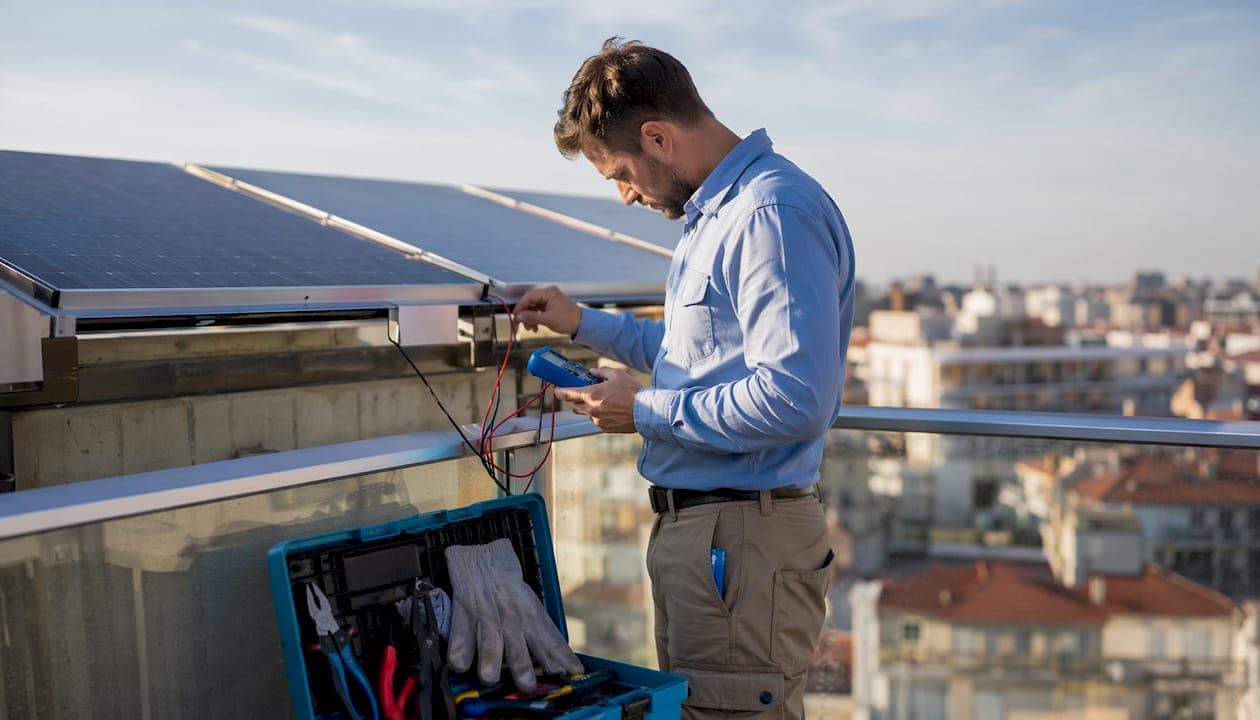
Solar panel string wiring is defined as the method of connecting photovoltaic modules in series so their voltages add together while current stays constant throughout the chain. This configuration is the foundation of most residential and commercial grid-tied solar systems, where string inverters require high DC input voltage to operate efficiently. Understanding what is solar panel string wiring matters whether you are planning a new installation, troubleshooting a drop in output, or simply trying to make sense of your solar panel wiring diagram. NEC 690 governs how these strings must be sized and protected, and getting the design right from the start prevents costly faults down the road.
What is solar panel string wiring and how does series wiring work?
A solar string is a series-connected group of PV modules where the positive terminal of one panel connects to the negative terminal of the next. This chain continues until all panels in the string are linked, and the final positive and negative leads run to the inverter. The result is a single electrical path with summed voltage and unchanged current.
Here is what that means in practice:
- Voltage adds up. If each panel produces 40 volts and you connect 10 panels in series, the string delivers 400 volts to the inverter.
- Current stays the same. The string carries only as much current as the weakest panel produces. No panel in the chain can push more current than the others allow.
- One panel affects the whole string. Shade, dirt, or a fault on a single panel limits the entire string's output.
- Parallel wiring works differently. In a parallel configuration, current adds and voltage stays fixed. Parallel suits battery systems needing low voltage and high current, while series wiring suits grid-tied systems requiring high voltage for string inverters.
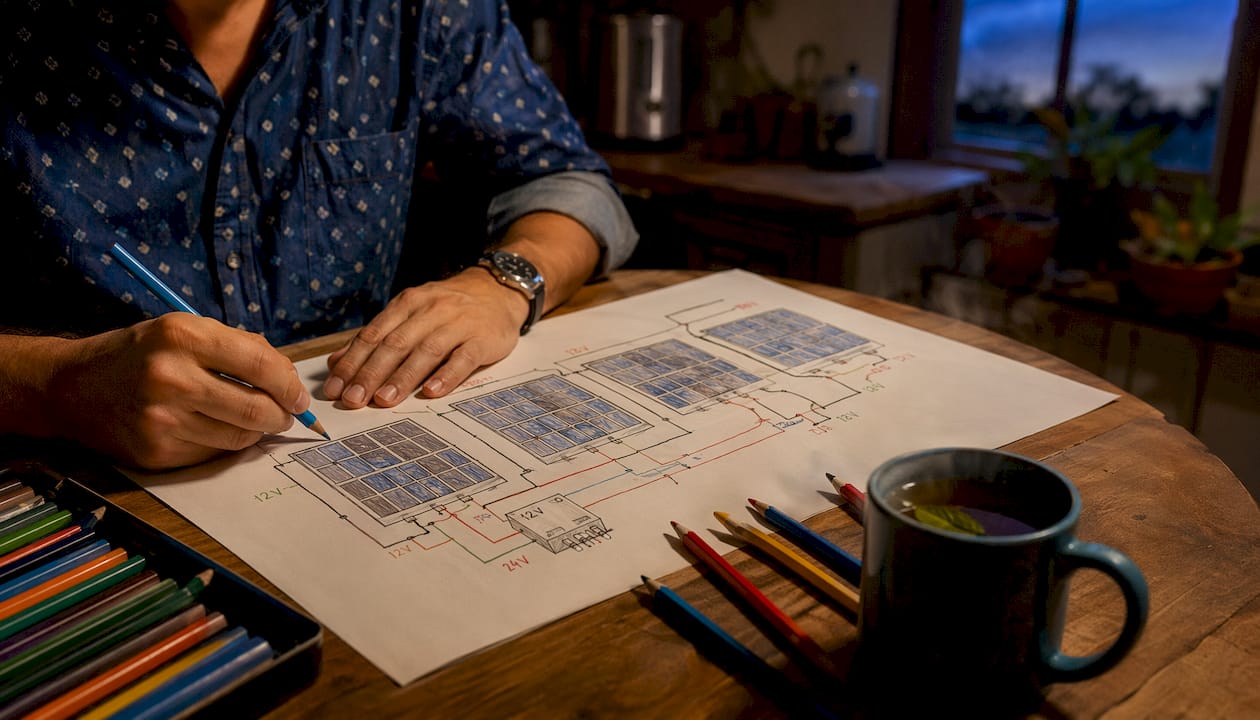
Pro Tip: Draw a simple solar panel wiring diagram before you touch a single connector. Label each panel's voltage and current, then calculate the string total. Catching a design error on paper costs nothing. Catching it after installation costs hours.
The series wiring concept is straightforward, but its implications for system design run deep. Every decision about string length, panel selection, and inverter matching flows from these two rules: voltage adds, current holds.
How to design and size solar panel strings properly
String sizing is where most DIY mistakes happen. The goal is to keep the string's voltage inside the inverter's operating window across every season and temperature condition.
Follow these steps to size a string correctly:
- Find your panel's Voc and Vmp. Voc is the open-circuit voltage listed on the panel datasheet. Vmp is the voltage at maximum power. Both matter for different calculations.
- Calculate cold-weather Voc. Cold weather increases panel Voc, so you must apply the panel's temperature coefficient to find the highest voltage the string will ever produce. Multiply the Voc by the temperature correction factor for the coldest expected temperature at your site.
- Check against inverter maximum DC input voltage. The corrected Voc multiplied by the number of panels must stay below the inverter's maximum input voltage. Exceeding this limit trips the inverter or causes permanent damage.
- Calculate hot-weather Vmp. High temperatures reduce voltage. Apply the temperature coefficient to Vmp at the hottest expected condition. This value multiplied by panel count must stay above the inverter's MPPT minimum start voltage.
- Confirm the string fits the inverter's MPPT window. String design must ensure Vmp stays above the MPPT minimum at peak heat and Voc stays below the inverter maximum at peak cold. Both checks are required.
- Never mix panels with different current ratings. Mixing panels with different Imp values in one string pulls the entire string's current down to the weakest module. Use identical panels within each string.
| Design check | Cold weather | Hot weather |
|---|---|---|
| Voltage parameter | Voc (highest voltage) | Vmp (lowest voltage) |
| Risk if ignored | Exceeds inverter max voltage | Falls below MPPT start voltage |
| Code reference | NEC 690.7 | Inverter datasheet |
| Consequence | Inverter damage or fault | System shuts down or underperforms |
NEC 690.7 requires temperature-corrected voltage calculations for maximum system voltage. This is not optional. It is a code requirement that protects both the equipment and the installer.
Pro Tip: Use your local historical low temperature, not just the average winter low. Weather records from NOAA give you the coldest recorded temperature for your area, which is the number NEC 690.7 calculations demand.
Understanding how temperature affects panel output is the single most underestimated skill in string design. A string that works perfectly in July can trip an inverter in January if the cold-weather Voc was never calculated.
What are the key benefits and limitations of string wiring?
String wiring dominates residential solar for good reasons, but it carries real trade-offs that every DIY installer should understand before committing to a solar system string configuration.
Benefits of string wiring:
- High voltage for efficient inverter operation. String inverters are designed for high DC input voltage. Series strings deliver exactly that without additional conversion equipment.
- Thinner, cheaper wire. Series wiring reduces current, which means you can use thinner conductors for long cable runs. This cuts material costs significantly on larger rooftop arrays.
- Simpler installation. Fewer combiner boxes and less wiring hardware compared to large parallel arrays.
- Lower resistive losses. Low current means less energy lost as heat in the conductors, especially over long distances.
Limitations of string wiring:
- Shade sensitivity. One shaded or dirty panel limits the entire string. This is the most common performance complaint in series-wired systems.
- Voltage sizing errors are dangerous. A string that exceeds the inverter's maximum DC input voltage can destroy the inverter instantly.
- No panel-level monitoring. Standard string inverters report total string performance, not individual panel data. Faults can hide for weeks.
- Mismatch losses. Even small differences between panels in the same string reduce overall output.
Module-level electronics such as microinverters or DC optimizers solve the shade problem by letting each panel operate independently. They cost more upfront but recover lost production on shaded or complex rooftops. For unshaded arrays with uniform panels, a well-designed string configuration remains the most cost-effective choice. For more on how shading and wiring choices affect your results, the factors affecting solar output guide covers the full picture.
What are the essential safety standards for solar string wiring?
Safe string wiring requires following specific code requirements and using the right tools. Skipping either creates fire and shock hazards that are not always visible until something fails.
Core safety requirements:
- Conductor sizing per NEC 690. NEC 690 mandates conductor sizing at 125% of module short-circuit current. This buffer accounts for continuous current loads and prevents overheating.
- Rapid shutdown compliance. NEC 690.12 requires rapid shutdown equipment on all DC wiring. This allows firefighters to de-energize PV circuits quickly in an emergency. It is mandatory on all new residential installations.
- MC4 connectors and crimping tools. MC4 connectors are the industry standard for panel-to-panel connections. Using a calibrated crimping tool is non-negotiable. A poorly crimped MC4 connector can arc under load and start a fire.
- Grounding and bonding. All metal components in the array must be properly grounded. Bonding connects all grounded parts to a single reference point, preventing dangerous voltage differences between surfaces.
- Overcurrent protection. Fuses or breakers protect each string from fault currents. Size them per the inverter and panel specifications.
Pro Tip: Never use a generic crimping tool on MC4 connectors. The connector manufacturer specifies a compatible crimper for a reason. An improperly crimped connection may pass initial testing but fail under thermal cycling after months of use.
For a full breakdown of regulatory requirements that apply to your installation, the solar panel safety compliance guide covers NEC requirements in plain language.
How to wire and troubleshoot solar panel strings: practical steps
Wiring a string correctly the first time saves hours of troubleshooting later. Follow a clear sequence and test at each stage.
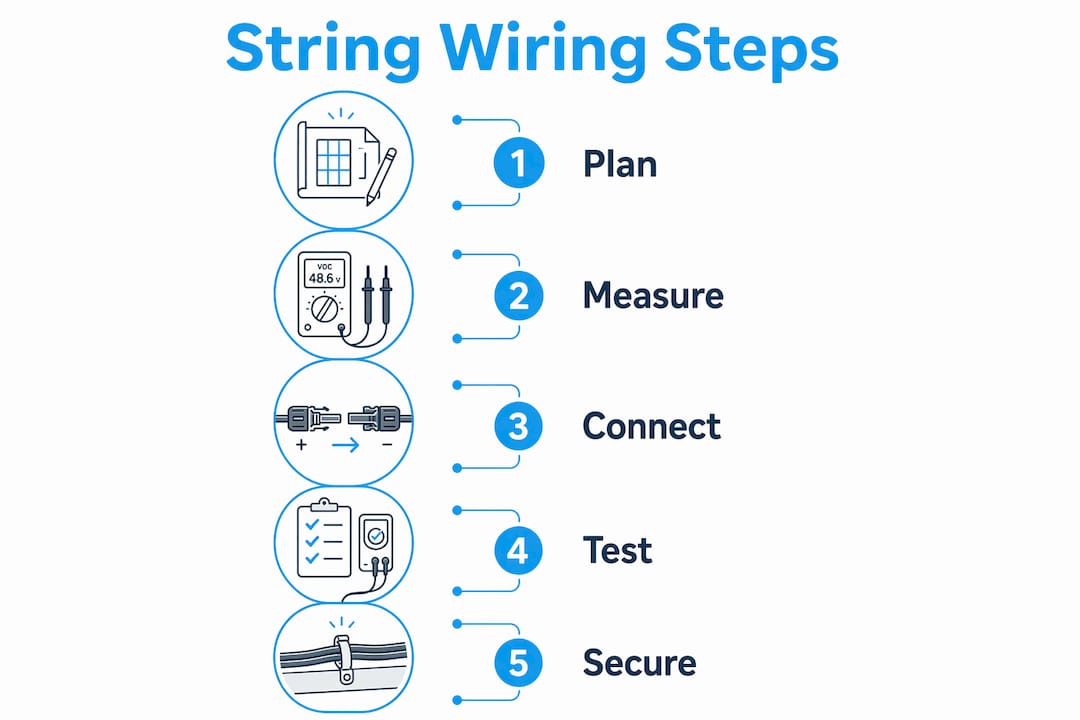
Wiring steps:
- Lay out panels in the planned sequence. Confirm all panels are identical in model and current rating before connecting anything.
- Connect positive to negative in series. Use MC4 connectors to link each panel's positive lead to the next panel's negative lead. Work from one end of the string to the other.
- Leave the final leads disconnected from the inverter. Test the string before connecting it to any live equipment.
- Measure open-circuit voltage. Use a multimeter to check the string's Voc. Compare it to your calculated value. A significant difference signals a wiring error or a faulty panel.
- Check polarity. Confirm positive and negative leads are correctly identified before connecting to the inverter.
- Connect to the inverter and monitor startup. Watch the inverter's display for voltage and power readings on first startup.
Common problems to check:
- Lower-than-expected voltage. One panel may be wired in reverse polarity, effectively subtracting its voltage from the string.
- Zero output on a clear day. Check for a tripped rapid shutdown device or a disconnected MC4 connector.
- Intermittent output. A loose MC4 connection is the most common cause. Inspect every connector in the string.
- Inverter fault codes. Cross-reference the inverter manual. Most fault codes point directly to overvoltage, undervoltage, or ground faults.
Knowing when to call a licensed electrician matters. If you measure unexpected voltages, see burn marks near connectors, or cannot identify the source of a fault, stop and get professional help. DC string voltage can exceed 600 volts on a standard residential system. That level is lethal.
Key Takeaways
Solar panel string wiring connects panels in series to sum voltage while holding current constant, and correct sizing within NEC 690 limits is the single most important factor for safe, efficient system operation.
| Point | Details |
|---|---|
| Series wiring sums voltage | Each panel's voltage adds to the string total; current stays at the weakest panel's level. |
| Temperature drives string sizing | Calculate cold-weather Voc and hot-weather Vmp to keep voltage inside the inverter's window year-round. |
| NEC 690 compliance is mandatory | Size conductors at 125% of Isc and install rapid shutdown equipment per NEC 690.12. |
| Matched panels protect output | Never mix panels with different Imp ratings in one string; mismatches cut the whole string's power. |
| MC4 connectors need calibrated crimpers | Improperly crimped connectors are the leading cause of arcing and fire risk in string wiring. |
String wiring gets the details right or it gets expensive
String wiring looks simple on paper. Connect positive to negative, repeat, done. The reality is that the details buried in that process, temperature coefficients, MPPT windows, conductor ampacity, connector crimping, determine whether a system runs at full power for 25 years or trips an inverter on the first cold morning.
I have seen DIY installations where the homeowner did everything right except the cold-weather Voc calculation. The system worked fine from april through october. Then a cold snap in november pushed the string voltage above the inverter's maximum, and the inverter shut down with a fault code. The fix was removing one panel from the string. An hour of math before installation would have prevented weeks of confusion.
The other mistake I see constantly is connector quality. Installers buy off-brand MC4 connectors to save a few dollars per connection, then wonder why the system underperforms six months later. A loose or corroded connection adds resistance, generates heat, and eventually fails. The right tools for MC4 connections are not optional equipment. They are the difference between a connection that lasts and one that becomes a fire hazard.
My honest advice: treat string design as a two-step calculation, not a single check. Verify the cold-weather voltage ceiling and the hot-weather voltage floor separately. Then verify them again. If the numbers are close to either limit, adjust the string length before you buy wire. Changing a design on paper costs nothing. Changing it on a roof costs a full day and a lot of frustration.
— Marquis
Keep your panels performing after the wiring is done
Correct string wiring gets your system producing power. Keeping it producing at full capacity requires clean panels. Dirt, pollen, and bird droppings create uneven shading across a string, and as you now know, even one underperforming panel pulls the entire string down. Solaralchemist serves homeowners across Madison, Wisconsin and the surrounding area with professional-grade deionized water cleaning systems that remove buildup without scratching panels or leaving residue. If you are not sure whether your panels need attention, the signs you need a cleaning guide walks through exactly what to look for. Protecting your wiring investment starts with keeping the panels themselves in top condition.
FAQ
What is solar panel string wiring in simple terms?
Solar panel string wiring connects panels in series so their voltages add together while current stays the same. The combined voltage feeds a string inverter, which converts DC power to usable AC electricity.
How many panels can I put in one string?
The number depends on your inverter's maximum DC input voltage and the panel's temperature-corrected Voc. Multiply the corrected Voc by the panel count and confirm the total stays below the inverter's voltage limit.
Does shading one panel affect the whole string?
Yes. In a series string, one shaded or dirty panel limits the current for every other panel in the chain. This is the primary trade-off of string wiring compared to module-level electronics.
What does NEC 690 require for string wiring?
NEC 690 requires conductors sized at 125% of the module's short-circuit current and mandates rapid shutdown equipment per NEC 690.12 to allow safe de-energization of DC circuits during emergencies.
Can I mix different solar panels in the same string?
Mixing panels with different maximum power current ratings in one string reduces the entire string's output to the lowest-rated panel's current. Always use identical panels within a single string.