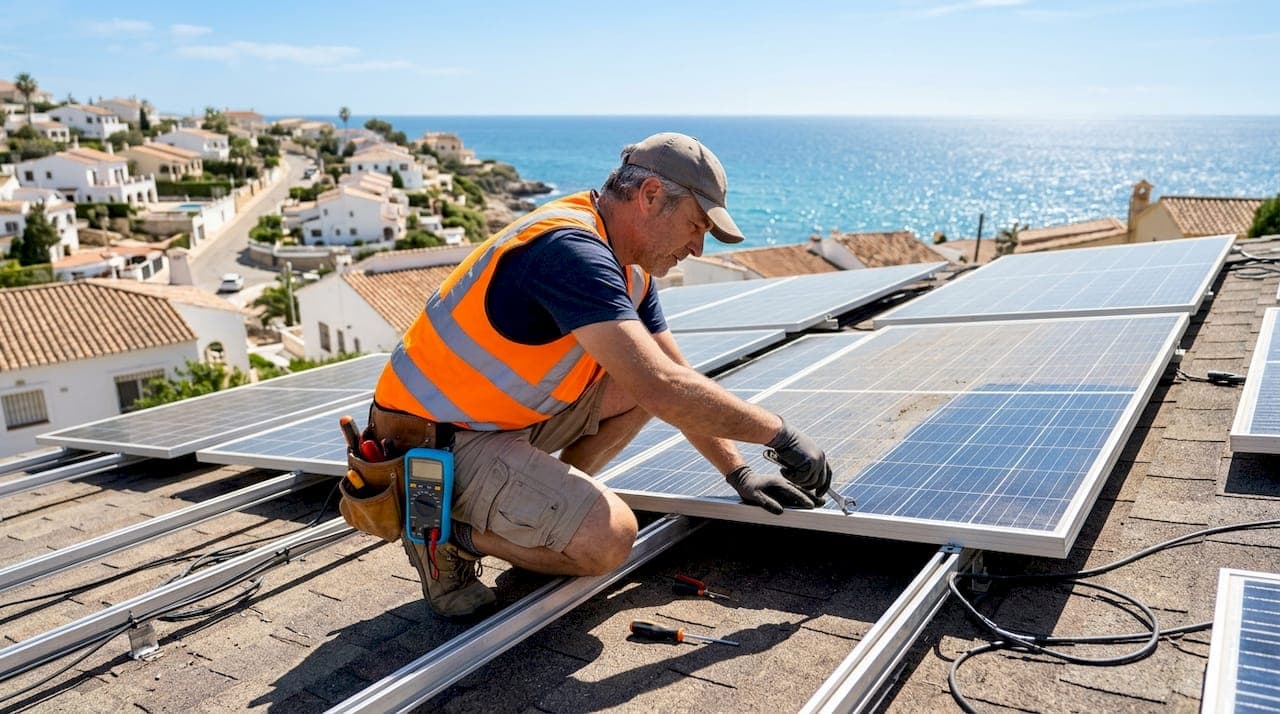
Solar panel output is defined by a set of measurable, controllable factors that determine how much electricity your system actually delivers versus what the manufacturer rated it for. Most homeowners focus on panel brand or wattage, but real-world performance depends far more on sunlight angle, temperature, shading, soiling, and aging. The National Renewable Energy Laboratory (NREL) and the California Energy Commission both recognize that system design and site conditions drive output as much as panel quality. Understanding these factors gives you a direct path to protecting your investment and getting the most from your array.
1. Factors affecting solar panel output: sunlight intensity and angle
Sunlight is the fuel for your system, and its quality matters as much as its quantity. Direct, perpendicular sunlight delivers the highest irradiance to your panels. Diffuse sunlight, the scattered light on cloudy or hazy days, still produces power but at a reduced rate.
Panel orientation and tilt angle are the two variables you can control at installation. South-facing roofs angled 25–35 degrees maximize output across most US regions. East or west-facing roofs typically produce 80–90% of south-facing output, while north-facing roofs fall significantly below that range.
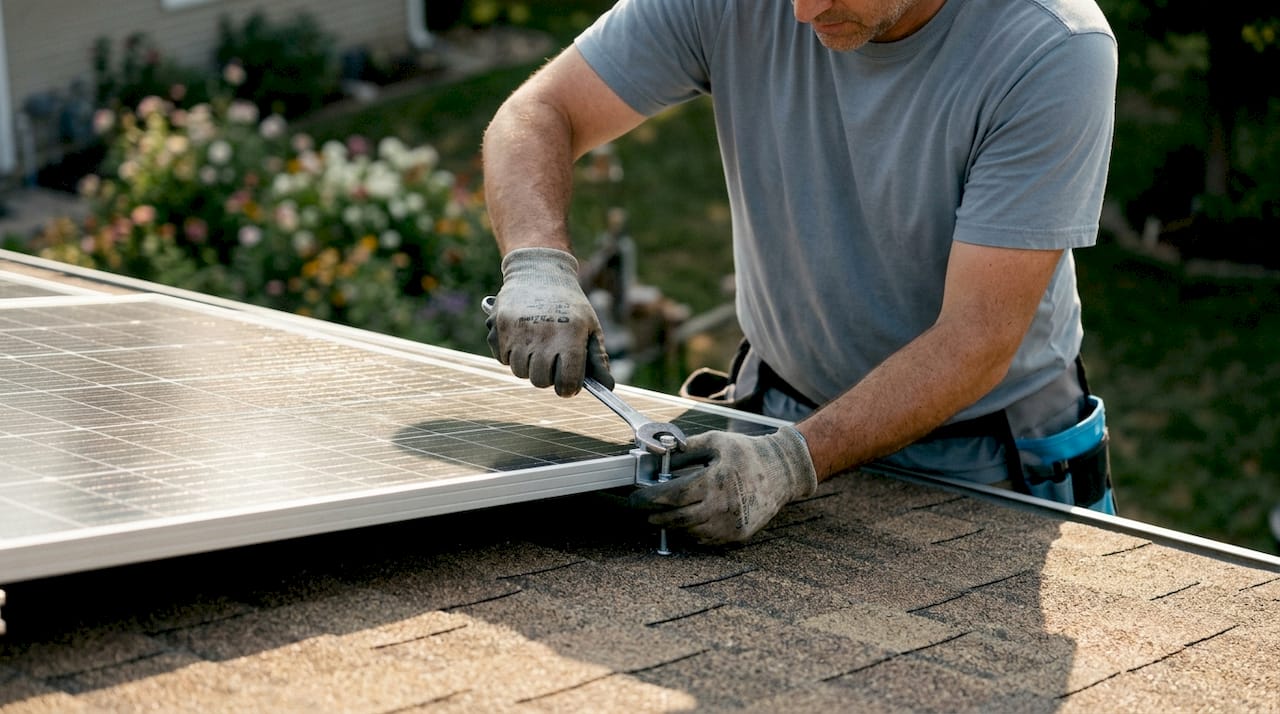
Seasonal sun path changes also shift how much irradiance your panels capture. In Wisconsin, the sun sits much lower in the sky during winter months, reducing the angle of incidence and cutting daily production hours.
Pro Tip: If your mounting system allows it, adjusting tilt by 10–15 degrees between summer and winter can recover meaningful output across the year.
2. Temperature effects on solar panels
Heat is the enemy of solar panel efficiency. This surprises many owners who assume more sun always means more power. The relationship between temperature and output is captured by a panel's temperature coefficient, a rating that tells you how much output drops for every degree Celsius above 25°C (the standard test condition).
A 400W panel at 60°C can lose over 14% of rated power from heat alone. That is a real, measurable loss on any hot summer afternoon, even with clear skies and full sun. Cold, clear days actually produce better efficiency because lower temperatures keep the cells operating closer to their rated conditions.
| Cell Temperature | Approximate Output Loss |
|---|---|
| 25°C (standard) | 0% (baseline) |
| 45°C | ~5–7% |
| 60°C | ~12–14% |
| 70°C+ | ~16–20% |
Long-term thermal stress also accelerates panel degradation. Repeated heat cycles cause microstructural changes inside the cells that compound over years. For a deeper look at how heat affects your specific system, Solaralchemist covers this in detail in their temperature and output guide.
Pro Tip: Panels mounted with an air gap between the panel and the roof surface run cooler than flush-mounted systems. Even a 2-inch gap can reduce cell temperature meaningfully on hot days.
3. Impact of shading on solar output
Shading is one of the most damaging solar panel performance issues you can face, and it is also one of the most underestimated. A shadow covering just one cell in a string of panels can reduce output for the entire string, not just the shaded panel. This happens because panels in a series string are limited by the weakest link.
Common shading sources include:
- Tree branches and seasonal leaf growth
- Neighboring rooftops or chimneys
- Roof vents, satellite dishes, and HVAC equipment
- Bird droppings and debris concentrated in one spot
Power optimizers and microinverters solve the string problem by allowing each panel to operate independently. With these devices installed, a shaded panel only affects its own output, not the whole array. The impact of shading on solar output drops significantly when panel-level electronics are part of the system design.
Shading analysis at the design stage, using tools that map the sun path against your specific roof obstructions, prevents years of avoidable losses.
4. Soiling, dust, and environmental contamination
Dirt on your panels is a slow, silent drain on production. Environmental soiling reduces annual solar output by 1.5% to 6%, costing $100–$200 annually in dry climates for mid-sized systems. In Wisconsin, pollen season in spring and summer adds a particularly heavy soiling load that many owners overlook.
The type of climate shapes how fast soiling builds up and how damaging it becomes:
- Dry climates: Dust accumulates faster with no rain to wash it off, causing higher soiling rates.
- Wet climates: Rain provides natural cleaning but can leave mineral deposits if water quality is poor.
- Mixed climates (like Wisconsin): Pollen, bird droppings, and road dust combine with freeze-thaw cycles to create uneven soiling patterns.
Understanding why panels get dirty is the first step to building a cleaning schedule that matches your local conditions. A professional cleaning with deionized water removes mineral residue that a garden hose cannot touch.
Pro Tip: Inspect your panels after any major storm. Wind-driven debris and heavy rain can deposit concentrated soiling in specific spots, creating uneven shading that standard cleaning schedules miss.
5. Panel aging and long-term degradation
Every solar panel degrades over time. The industry standard degradation rate averages 0.5% per year, meaning a panel rated at 400W today will produce roughly 350W after 25 years under average conditions. Higher-quality panels degrade at 0.3% annually; lower-quality ones can reach 0.7% or more.
Key drivers of accelerated degradation include:
- UV exposure: Prolonged UV radiation breaks down encapsulant materials and causes cell discoloration.
- Thermal cycling: Daily heating and cooling cycles cause expansion and contraction that creates micro-cracks over time.
- Mechanical stress: Wind loading, snow weight, and hail impacts add physical stress to frames and cells.
- Moisture ingress: Water penetrating seals degrades cell connections and reduces output permanently.
Thermal stress in hot climates can push annual degradation to 0.88%, nearly double the average rate. That gap compounds significantly over a 25-year system life. Regular inspections catch early signs of degradation before they become permanent losses. Solaralchemist's guide on panel aging and performance explains what to look for at each stage of a system's life.
6. Cloud cover and diffuse light conditions
Clouds do not shut your system down. Solar panels continue producing power on cloudy days by absorbing diffuse sunlight, though output drops in proportion to cloud thickness. A thin overcast layer might cut production by 20–30%, while heavy storm clouds can reduce it by 70–90%.
This matters for system sizing in Wisconsin, where overcast days are common from november through march. A well-sized system accounts for average irradiance across all weather conditions, not just peak sunny days.
Pro Tip: Track your system's daily production data over a full year. Patterns in your monitoring data reveal whether output drops are weather-related or caused by a fixable issue like soiling or a failing inverter.
7. Snow, ice, and winter weather
Snow cover is the most direct winter performance issue for Wisconsin solar owners. A full snow layer blocks sunlight completely until it slides off or melts. Cold temperatures actually improve panel efficiency, so the goal in winter is simply to keep panels clear of physical obstructions.
Ice accumulation carries a structural risk beyond lost output. Heavy snow and ice loads can cause micro-cracks or warped frames that create permanent efficiency losses. Removing snow safely, without scratching panel surfaces, requires the right tools and technique. Solaralchemist covers safe removal practices in their Wisconsin snow removal guide.
Rain, by contrast, is a net positive. It washes loose dust and pollen off panel surfaces, providing a natural cleaning effect that temporarily boosts output after a dry stretch.
8. System losses beyond the panels
Real-world system efficiency is dictated more by factors like shading, inverter type, and wiring than by nominal panel efficiency alone. Inverters convert DC power from your panels to AC power for your home, and inverter efficiency typically runs 96–99%. That sounds high, but wiring resistance, connection losses, and panel mismatch stack on top of inverter losses.
The combined effect is significant. Realistic system output often lands at 75–85% of the panel nameplate rating after all system losses are accounted for. Choosing a high-efficiency inverter and minimizing wire run lengths at installation reduces these losses from day one.
9. Extreme weather events and recovery
Severe storms, hail, and high winds cause both immediate and lasting damage to solar systems. Extreme weather events cause a median annual production loss of roughly 1% per event, with most systems returning to normal output within 2–4 days after the event passes. The risk is not the temporary dip. The risk is undetected structural damage that causes slow, permanent losses.
Post-storm inspections should check for micro-cracks in cells, damaged junction boxes, and any debris lodged between panels and mounting hardware. A system designed with local climate extremes in mind, including appropriate snow load ratings and hail-resistant glass, recovers faster and loses less over its lifetime.
Key Takeaways
Solar panel output depends on a combination of environmental, physical, and maintenance factors, and controlling the ones within your reach delivers measurable gains year after year.
| Point | Details |
|---|---|
| Orientation and tilt matter | South-facing panels at 25–35 degrees maximize output across most US regions. |
| Heat reduces efficiency | Cell temperatures above 25°C cut output; a 400W panel can lose 14% at 60°C. |
| Shading hits the whole string | Even partial shading on one panel reduces output for the entire series string. |
| Soiling costs real money | Dust and pollen reduce annual output by 1.5–6%, costing $100–$200 per year in dry climates. |
| Degradation is manageable | Average panels lose 0.5% output per year; regular maintenance slows accelerated decline. |
What I've learned after years of watching systems underperform
Most owners I talk to focus almost entirely on panel brand when they are shopping for a solar system. They spend hours comparing efficiency ratings that differ by 1–2 percentage points, then install the panels on a roof with partial afternoon shading and never clean them. That shading and soiling will cost them far more than the efficiency difference they agonized over.
The factors that move the needle most in real-world performance are the ones that are easiest to address after installation. Cleaning is the clearest example. A professional cleaning twice a year, timed around pollen season and late fall, recovers output that owners are silently losing every month. Temperature management through proper mounting and airflow is the next lever. Panels that run 10°C cooler produce measurably more power over a full year.
I also think the degradation conversation is underserved. Owners sign 25-year warranties and assume the system will take care of itself. It will not. Thermal cycling, UV exposure, and mechanical stress from wind and snow accumulate quietly. An annual inspection that catches micro-cracks or loose connections early prevents what would otherwise become a permanent efficiency loss.
The bottom line is this: the best-performing systems are not the ones with the most expensive panels. They are the ones that are sited well, kept clean, and inspected regularly. Those three things are within every owner's control.
— Marquis
Solaralchemist keeps your system running at full capacity
Knowing what reduces your output is only useful if you act on it. Solaralchemist provides professional solar panel cleaning and maintenance for homeowners and businesses across Madison, Wisconsin and the surrounding area, using deionized water systems that remove mineral deposits, pollen, and soiling without scratching panel surfaces.

If you are not sure whether your panels need attention, the 8 signs you need a cleaning page walks you through the clearest indicators. Solaralchemist also serves communities including DeForest, Watertown, Whitewater, Delavan, and Lake Mills. Scheduling a seasonal cleaning before pollen season or after the first hard frost keeps your system producing at its rated capacity when it matters most.
FAQ
What is the biggest factor affecting solar panel output?
Sunlight intensity and panel orientation are the primary drivers of output, but shading and soiling cause the largest preventable losses in real-world systems.
Do solar panels work on cloudy days?
Yes. Panels absorb diffuse sunlight and continue generating power on overcast days, though output drops in proportion to cloud thickness and coverage.
How much output do solar panels lose from heat?
A panel operating at 60°C can lose over 14% of its rated output due to temperature coefficient effects. Cold, clear days produce better efficiency than hot summer afternoons.
How fast do solar panels degrade?
The average degradation rate is 0.5% per year, meaning most panels retain 86–93% of original output after 25 years. Hot climates with heavy thermal cycling can push that rate closer to 0.88% annually.
Does cleaning solar panels actually improve output?
Yes. Environmental soiling reduces annual output by 1.5–6%. Professional cleaning removes mineral deposits and biological soiling that rain and wind cannot clear on their own.