
Solar panel cleanliness is a direct determinant of audit scores because soiling reduces measurable energy output, distorts performance metrics, and masks true system health. Soiling causes 4–7% annual global energy loss, a figure that IEA-PVPS links to billions in lost revenue across the industry each year. When auditors measure your system's performance ratio or run capacity tests under IEC 61724-1, dirty panels produce readings that reflect dirt, not hardware. Understanding why solar panel cleanliness affects audit scores is the first step toward protecting your investment and your audit results.
Why solar panel cleanliness affects audit scores
Soiling is the industry term for any deposit on a panel surface that reduces light transmission. It includes dust, pollution particulates, bird droppings, pollen, and microbial biofilms. Each type degrades output through a different mechanism, and each one distorts the data your auditor collects.
The most common soiling types and their audit impact:
- Dust and particulates: Block incoming light and reduce short-circuit current, directly lowering the performance ratio your audit measures.
- Bird droppings: Create hard, localized shading that triggers hot spots. Thermographic scans flag these as potential cell failures, producing false positives.
- Pollution films: Industrial and traffic emissions leave a thin, sticky residue that bonds with dust and resists rainfall, compounding losses over time.
- Microbial biofilms: Colonies of bacteria and algae reduce yield by up to 30% in arid zones. Biofilms also shield underlying deposits from rinsing, making standard cleaning less effective.
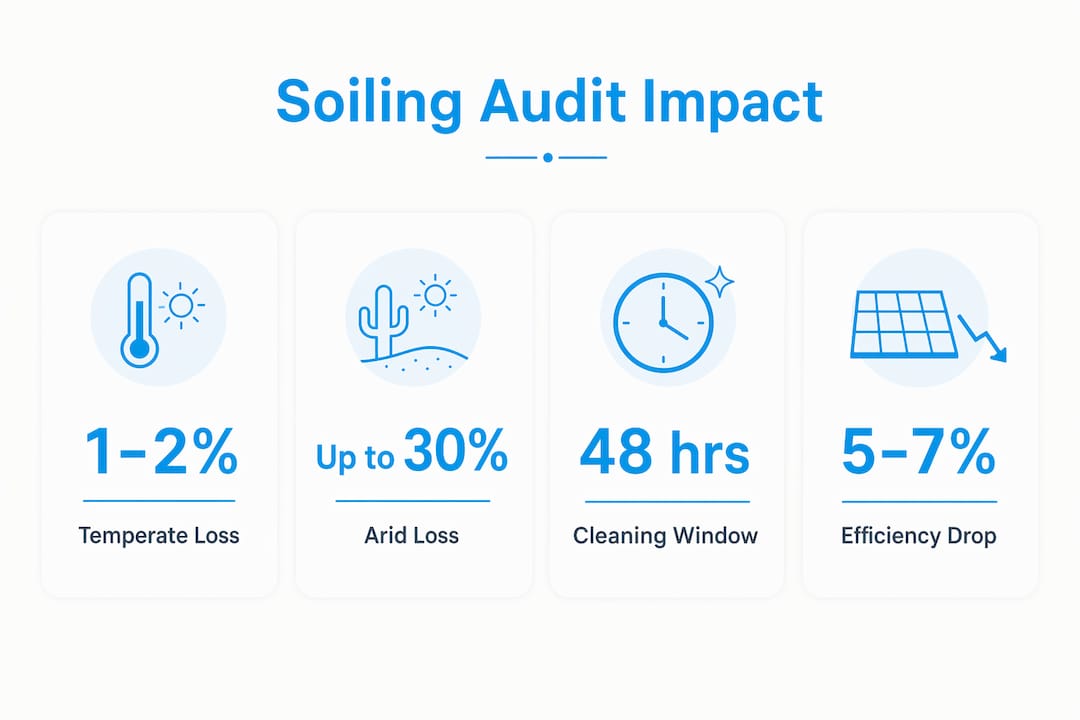
The efficiency losses are not uniform. Temperate climates see 1–2% losses from soiling, while arid and mining environments face weekly losses of 35–45% that can compound to over 30% long-term. That gap matters enormously when an auditor compares your actual output against your system's rated capacity.
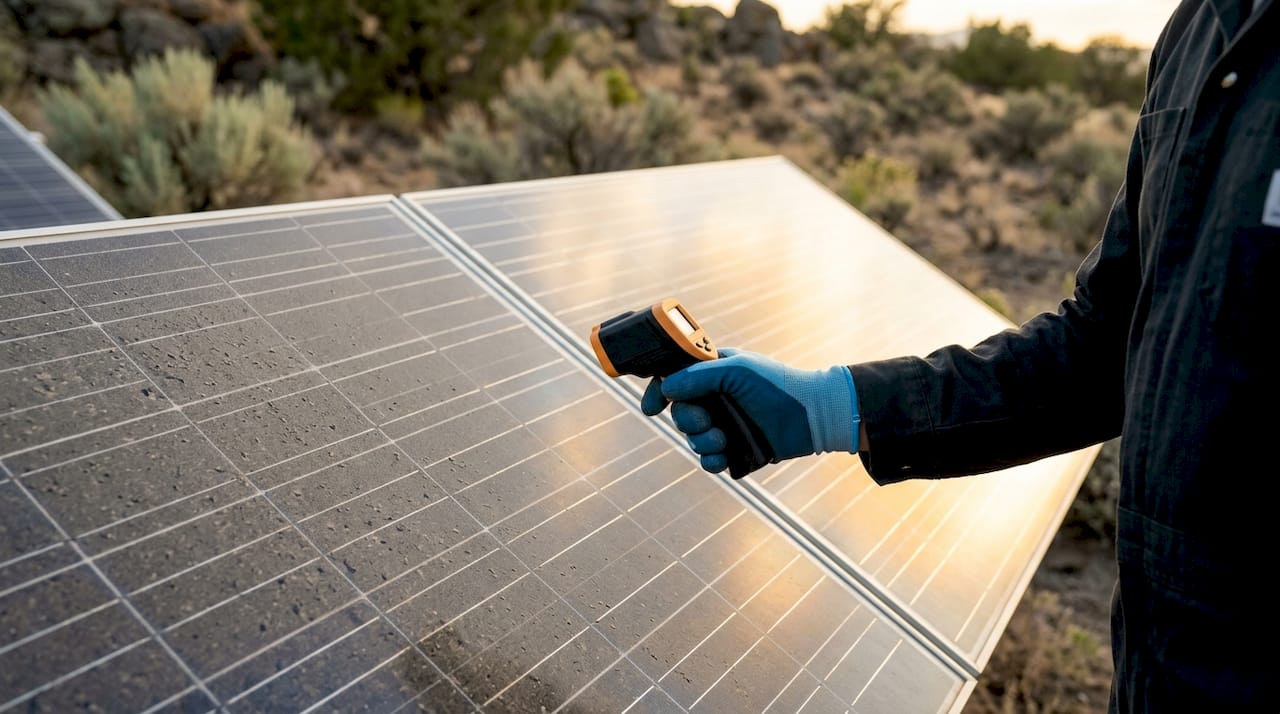
Dust does more than block light. It acts as a thermal insulator, trapping heat on the panel surface and reducing heat dissipation. Research shows 4.5% of annual energy loss from soiling is thermal rather than optical. An audit measuring output on a hot day with dusty panels will record a compounded loss that looks like a hardware problem, not a maintenance issue.
How dirty panels distort performance ratio and capacity tests
Performance ratio is the core metric in most solar maintenance audits. It compares actual output to theoretical output under the same irradiance conditions. When panels are dirty, actual output drops. The auditor records a lower performance ratio and must determine whether the cause is soiling, inverter degradation, cell damage, or wiring faults.
Without clean panels, that determination is guesswork. Unmeasured soiling creates unexplained performance losses that IEC 61724-1 treats as unaccounted degradation. In contractual audits for insurers or investors, that unexplained gap creates disputes and can trigger warranty claim rejections. The standard requires defensible soiling quantification, meaning you need documented, measured soiling data, not just a visual estimate.
Capacity testing carries the same risk. A system tested at full rated capacity with soiled panels will fail to meet its nameplate output. The auditor records a capacity shortfall. Without a clean baseline, there is no way to prove the shortfall is recoverable through cleaning rather than permanent hardware degradation. That distinction is the difference between a maintenance ticket and a warranty claim.
Cleaning panels before thermographic or IV curve testing is not optional. It is the only way to separate recoverable soiling losses from irreversible hardware failures. Auditors who skip this step produce results that neither owners nor insurers can rely on.
Pro Tip: Schedule your professional cleaning at least 48 hours before any planned audit. This gives panels time to dry fully and allows you to document pre-audit and post-cleaning output for a clean baseline comparison.
Clean panels also reveal defects that soiling hides. A layer of dust can mask microcracks, delamination, or discoloration that a thermographic scan would otherwise catch. Cleaning is mandatory for valid audits because it exposes the actual technical condition of each module, not the condition of the dirt on top of it. Solaralchemist uses professional-grade deionized water systems specifically to avoid leaving mineral residue that could interfere with post-cleaning inspections.
How site-specific factors shape soiling severity and audit accuracy
Not every site faces the same soiling challenge. The environment around your array determines how fast panels soil, what type of deposits accumulate, and how difficult those deposits are to remove. Audit scores reflect all of these variables, which is why a one-size-fits-all cleaning schedule produces inconsistent results.
Site conditions and their audit implications:
- Temperate climates (Wisconsin, Midwest): Rainfall provides partial natural cleaning, but pollen seasons and road salt spray create periodic spikes in soiling. Audit scores in these regions are generally stable but can drop sharply after dry summers or heavy pollen events.
- Arid and desert environments: Dust accumulates rapidly with no rainfall to offset it. Weekly losses of 35–45% are documented, and mining environments require cleaning every 3–4 days to maintain efficiency above 70%.
- Urban and industrial zones: Pollution films and particulate matter from traffic create a sticky baseline layer. This layer bonds with pollen and dust, accelerating soiling rates beyond what rainfall can address. Owners in these zones often see urban grime patterns that require more frequent professional cleaning.
- Agricultural areas: Fertilizer dust, crop residue, and pesticide drift create chemically complex deposits that can etch panel surfaces if left too long.
| Environment | Typical soiling loss | Recommended cleaning trigger |
|---|---|---|
| Temperate/Midwest | 1–2% annually | Condition-based or seasonal |
| Arid/desert | 35–45% weekly | Every 3–4 days (mining) |
| Urban/industrial | Moderate, compounding | Monthly or sensor-triggered |
| Agricultural | Variable, chemically complex | Post-harvest and seasonal |
Soiling sensors and real-time monitoring change how you respond to these conditions. Condition-based cleaning triggered by soiling sensors prevents false alarms in audits and tracks true degradation over time. When your asset management software can isolate a soiling event from a hardware failure, your auditor gets clean data. That separation is what produces a defensible, accurate audit score. You can learn more about how surface dirt is measured to understand which monitoring tools fit your site.
What cleaning frequency and method do to your audit results
Cleaning frequency is not a fixed number. It is a function of your local soiling rate, your audit schedule, and your cost tolerance. Getting this balance right directly affects both your audit scores and your operating expenses.
The core trade-offs:
- Too infrequent: Output losses compound, performance ratio drops, and your next audit records degradation that looks permanent. Soiling losses that exceed 5% in a temperate climate are a red flag for any auditor reviewing your maintenance records.
- Too frequent: Over-cleaning increases costs and risks glass damage to panel optical components. Unnecessary cleaning also inflates your operating expenses without improving audit scores beyond a threshold.
- Calendar-based schedules: Fixed monthly or quarterly cleaning ignores actual soiling conditions. A dry August in Wisconsin can soil panels faster than three wet spring months combined. Calendar schedules produce inconsistent audit baselines.
- Condition-based schedules: Cleaning triggered by sensor data or output monitoring targets the moments when soiling actually affects performance. This approach produces consistent, defensible audit baselines and lower total cleaning costs.
Pro Tip: Review your inverter's daily output data against irradiance readings before scheduling a cleaning. A consistent gap between expected and actual output, without a weather explanation, is a reliable signal that soiling has crossed the threshold where cleaning pays for itself.
Manual cleaning with deionized water remains the gold standard for audit preparation. It removes deposits without leaving mineral residue that could interfere with thermographic scans. Waterless and robotic systems work well for routine maintenance between audits but may not achieve the surface cleanliness that pre-audit inspections require. Avoiding common cleaning mistakes during pre-audit preparation is as important as the cleaning itself. Scratches, residue, and improper technique can introduce new variables that complicate audit readings.
Key Takeaways
Solar panel cleanliness directly determines audit score accuracy because soiling losses are indistinguishable from hardware degradation without a clean baseline measurement.
| Point | Details |
|---|---|
| Soiling distorts audit metrics | Dirty panels lower performance ratio and capacity test results, making soiling look like hardware failure. |
| Clean before every audit | Thermographic and IV curve tests require clean panels to produce valid, defensible results. |
| Site conditions set your schedule | Arid and industrial sites need far more frequent cleaning than temperate zones to maintain accurate baselines. |
| Condition-based cleaning wins | Sensor-triggered cleaning outperforms fixed schedules by targeting actual soiling events, not calendar dates. |
| IEC 61724-1 demands documentation | Unmeasured soiling creates contractual risk; defensible soiling quantification protects warranty and insurance claims. |
What I've learned from treating cleanliness as an audit variable
Most operators treat cleaning as a maintenance task. The ones who get the best audit scores treat it as a measurement protocol. That shift in thinking changes everything about how you schedule, document, and execute cleaning.
The biggest mistake I see is calendar-based cleaning without any data behind it. An operator cleans in april and october, the auditor shows up in september, and the panels have been soiling for five months. The audit records a performance ratio that looks like early degradation. The operator disputes it. The auditor stands by the numbers. Nobody wins, and the real cause, a five-month soiling gap before a scheduled audit, never gets addressed.
The second mistake is skipping cleaning before thermographic inspections. I have seen operators pay for full thermographic audits on dirty panels, get a report full of flagged hot spots, and then spend weeks chasing inverter faults and cell failures that turned out to be bird droppings. Cleaning first costs a fraction of a wasted audit.
What actually works is treating your soiling rate as a measurable variable, not an assumption. Use your inverter data. Watch for output gaps that correlate with dry weather or high pollen counts. Clean when the data says to, not when the calendar says to. Document every cleaning with before-and-after output readings. When your auditor arrives, you hand them a maintenance log that explains every performance dip in your history. That is what a clean audit score looks like.
— Marquis
Solaralchemist's approach to audit-ready panel maintenance
Audit scores reflect the condition of your panels on the day the auditor measures them. One dirty cleaning job, or no cleaning at all, can turn a healthy system into a disputed audit.

Solaralchemist uses professional-grade deionized water systems and specialized equipment to clean panels to the surface standard that thermographic and IV curve audits require. Every cleaning removes the soiling layer that distorts your performance ratio and exposes the true condition of your modules. If you are in Madison or the surrounding Wisconsin area, check when to clean your panels to see whether your system is overdue before your next audit. Solaralchemist builds cleaning schedules around your audit calendar and your site's actual soiling rate, not a generic timetable.
FAQ
Why does soiling cause audit scores to drop?
Soiling reduces actual energy output, which lowers the performance ratio auditors measure. Without a clean baseline, auditors cannot distinguish soiling losses from hardware degradation.
How often should I clean panels before an audit?
Clean panels at least 48 hours before any scheduled audit. In high-soiling environments like mining or arid zones, cleaning every 3–4 days may be necessary to maintain a reliable baseline.
What happens if I skip cleaning before a thermographic scan?
Dirty panels produce false hot spots in thermographic scans, flagging bird droppings or dust patches as cell failures. This wastes audit budget and produces unreliable diagnostic results.
What is IEC 61724-1 and why does it matter for audits?
IEC 61724-1 is the international standard for photovoltaic system performance monitoring. It requires defensible soiling quantification, meaning unmeasured soiling can create contractual disputes and warranty claim rejections.
Do biofilms affect audit scores differently than dust?
Yes. Microbial biofilms reduce yield by up to 30% and shield underlying deposits from rinsing, making standard cleaning less effective and audit baselines harder to establish in affected zones.