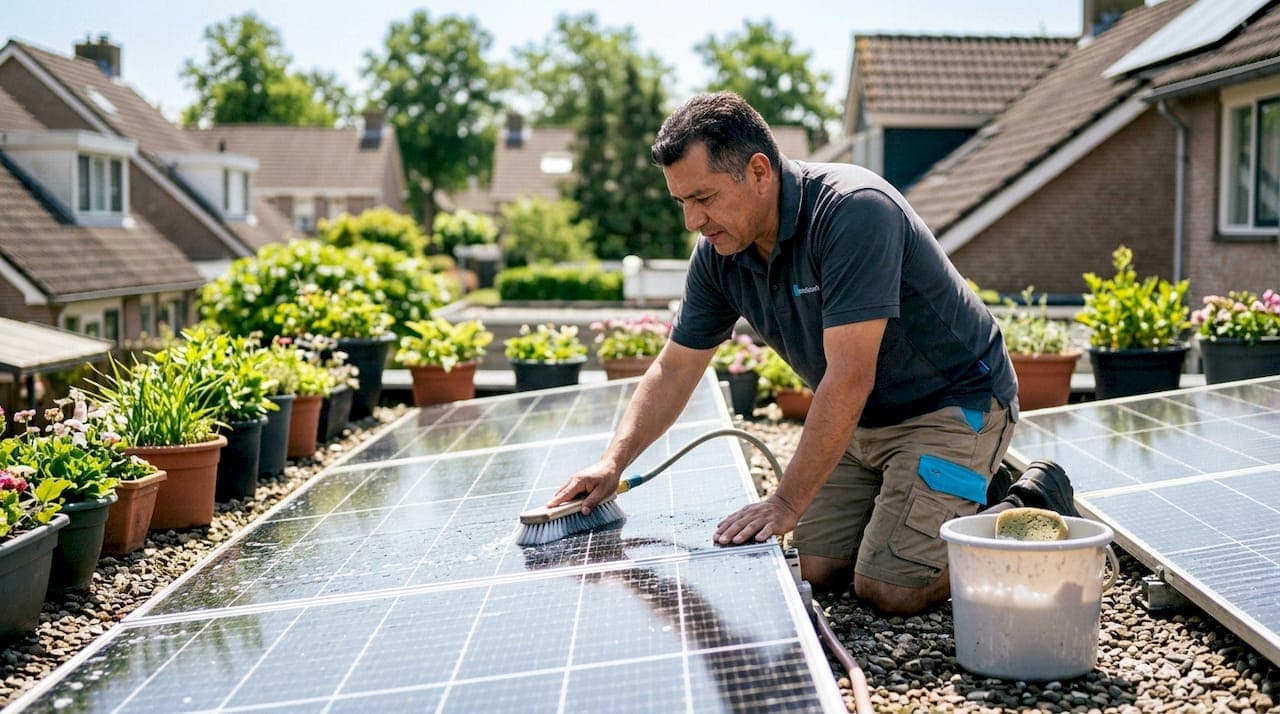
A residential solar wash service is the professional cleaning and maintenance of home solar panels to restore lost energy output and protect the system's long-term value. Dirt, pollen, bird droppings, and mineral deposits block sunlight from reaching the photovoltaic cells, cutting the power your system produces. The benefits of a residential solar wash service go well beyond a clean appearance. Regular professional cleaning restores up to 90–95% of lost power output, supports warranty compliance on systems worth $15,000–$30,000, and extends the working life of your panels. Solaralchemist, based in Madison, Wisconsin, uses professional-grade deionized water systems to deliver exactly these results.
1. How does dirt and debris impact solar panel performance?
Soiling is the single largest cause of preventable energy loss in residential solar systems. Efficiency losses range from 6–7% for moderate soiling to 20–34% for heavy dust accumulation. That means a 10 kW system could be producing as little as 6.6 kW on a dirty day, costing you real money every billing cycle.
Different contaminants cause different types of damage. Dust and pollen create a diffuse film that reduces sunlight absorption across the entire panel surface. Bird droppings and tree sap create concentrated "hot spots" that force individual cells to work harder, raising internal temperatures and stressing the electrical components. Mineral deposits from hard tap water leave a chalky residue that bonds to the glass and becomes harder to remove over time.
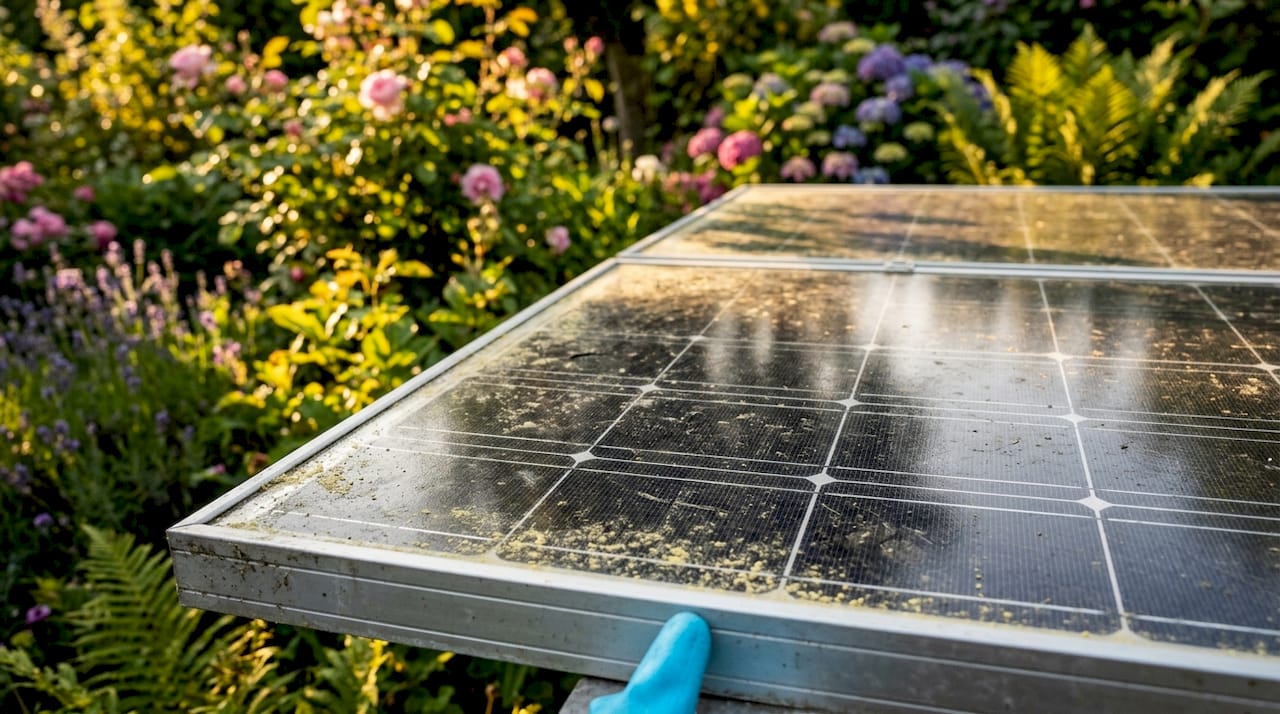
The electrical impact goes deeper than just reduced light. Soiling lowers the maximum power output (Pmax), reduces short-circuit current, and drops open-circuit voltage. All three parameters decline together, which is why a dirty panel underperforms far more than a quick glance at the surface would suggest. Understanding why panels get dirty is the first step toward protecting your output.
| Soiling Level | Efficiency Loss | Common Cause |
|---|---|---|
| Light (film of dust) | 6–7% | Pollen, road dust |
| Moderate (visible buildup) | 10–15% | Bird droppings, sap |
| Heavy (caked deposits) | 20–34% | Desert dust, mineral scale |
2. Professional cleaning restores nearly all lost power
Manual cleaning with pure water restores approximately 90–95% of the power output lost to soiling. That recovery rate is significant. For a homeowner losing 20% of production to heavy soiling, a single professional visit can reclaim the majority of that lost generation.
Professional services do more than rinse panels. Technicians inspect for micro-cracks, loose wiring, and inverter faults that a homeowner would miss from the ground. Catching a failing bypass diode or a cracked cell early prevents a small problem from becoming a $500 repair. The cleaning visit doubles as a system health check.
Pro Tip: Ask your cleaning provider for a before-and-after energy output comparison using your monitoring app. A reputable service will show you the measurable difference, not just hand you a receipt.
3. Warranty protection is a direct financial benefit
Most residential solar systems carry manufacturer warranties that require documented maintenance. Documented professional cleaning preserves warranty coverage and supports resale value. Ignoring this requirement can void coverage on a system worth $15,000–$30,000.
Warranty language varies by manufacturer, but the common thread is "proper maintenance." A professional service provides a dated service record that satisfies that requirement. DIY cleaning with the wrong tools or chemicals gives you no documentation and may actually create a warranty claim rather than prevent one. The manufacturer cleaning guidelines published by Solaralchemist outline exactly what qualifies as compliant maintenance.
4. How often should you clean residential solar panels?
Most residential systems need 1–2 professional cleanings per year in temperate climates. Desert and coastal regions, where dust and salt air accelerate soiling, may need quarterly service. The right frequency depends on your local environment, roof pitch, and whether you have trees or birds nearby.
The most reliable trigger for a cleaning is your monitoring data. Monitoring apps detect a consistent 10% drop in energy output on clear days, which signals that soiling has reached the point where cleaning pays off. Waiting for a visual inspection misses weeks of lost production. Check your app monthly and schedule a cleaning when output drops without a weather explanation.
| Climate / Region | Recommended Cleaning Frequency |
|---|---|
| Temperate (Midwest, Northeast) | 1–2 times per year |
| Desert (Southwest) | Every 3–4 months |
| Coastal (salt air exposure) | Every 3–4 months |
| High pollen / tree canopy | 2–3 times per year |
Timing within the day matters too. Cleaning hot panels causes thermal shock that leads to micro-cracks and permanent efficiency loss. Schedule cleanings in the early morning or late afternoon when panels have cooled. A seasonal maintenance schedule built around your local climate keeps the timing right without guesswork.
Pro Tip: Set a recurring calendar reminder to check your monitoring app on the first of each month. Compare output to the same period last year. A consistent gap on sunny days means it's time to call a professional.
5. DIY vs. professional solar panel cleaning
DIY cleaning is possible, but the margin for error is narrow. High-pressure washers damage the anti-reflective coating and force water into panel electronics, voiding warranties. Harsh chemicals strip the glass coating and leave residue that attracts more dirt. Most homeowners underestimate how much damage a garden hose on the wrong setting can cause.
The water quality matters as much as the technique. Tap water leaves mineral deposits that bond to the glass and attract more dust over time. Professional services use deionized or reverse-osmosis filtered water that evaporates cleanly without residue. Replicating that at home requires equipment most homeowners do not own.
Here is a direct comparison of what each approach delivers:
- DIY cleaning: Low upfront cost, but requires soft brushes, purified water, and safe roof access. No documentation for warranty purposes. Risk of voiding coverage with wrong tools or chemicals.
- Professional cleaning: Costs $150–$500 per visit, with annual contracts ranging $390–$720 and offering 15–30% savings. Includes inspection, documentation, and monitoring-backed output verification.
- Safety: Roof falls are a leading cause of DIY home maintenance injuries. Professional technicians carry insurance and use proper fall protection.
- Effectiveness: Professional results are measurable. DIY results are not verified against actual output data.
For a full breakdown of the economics of each approach, the cost difference narrows quickly when you factor in warranty risk and the value of recovered energy production.
6. Long-term benefits: home value and system longevity
Regular cleaning prevents permanent cell degradation and inverter faults. That matters because panel replacement costs far exceed the cost of a cleaning contract. Keeping cells clean reduces thermal stress, which is the primary driver of micro-cracking and long-term efficiency decline.
The financial case extends to your home's resale value. Clean, well-maintained panels with a documented service history signal to buyers that the system has been cared for. A solar array with no maintenance records raises questions about hidden damage. Documented cleaning increases resale value and gives buyers confidence in the system's remaining lifespan.
Here are the key long-term advantages that regular professional cleaning delivers:
- Prevents micro-cracking caused by thermal stress from soiling-induced hot spots.
- Extends panel lifespan by reducing the degradation rate that accumulates over years of neglect.
- Protects inverter health by keeping electrical parameters within normal operating ranges.
- Maintains warranty coverage with dated service records that satisfy manufacturer requirements.
- Improves curb appeal with clean, reflective panels that look as good as they perform.
- Supports resale value with a documented maintenance history that buyers and appraisers can verify.
Key takeaways
Regular professional solar panel cleaning is the most cost-effective way to protect a $15,000–$30,000 residential solar investment, restore lost energy output, and maintain warranty coverage year after year.
| Point | Details |
|---|---|
| Soiling cuts output significantly | Heavy soiling reduces efficiency by 20–34%, costing real money every billing cycle. |
| Professional cleaning restores output | Expert cleaning with purified water recovers 90–95% of soiling-related power loss. |
| Warranty compliance requires documentation | Manufacturer warranties on $15,000–$30,000 systems require dated professional service records. |
| Cleaning frequency depends on location | Temperate climates need 1–2 cleanings per year; desert and coastal areas need quarterly service. |
| DIY carries hidden risks | Wrong water, tools, or chemicals can void warranties and cause permanent panel damage. |
Why I think most homeowners underestimate this service
Most solar owners I talk to assume their panels are "self-cleaning" because it rains occasionally. Rain helps, but it does not remove the mineral scale, bird droppings, or pollen film that bonds to the glass. Natural wind and rain provide only partial self-cleaning, and in climates like the upper Midwest, spring pollen season alone can coat a panel surface in days.
The ROI question is real, and I want to be honest about it. For a small system in a mild climate with low soiling, the direct financial return from cleaning may be modest. The bigger value is asset protection. A $20,000 solar system that loses its warranty because of undocumented maintenance is a far more expensive problem than a $400 annual cleaning contract.
What I have seen work best is pairing a monitoring app with a professional cleaning schedule. When your app shows a consistent output drop on clear days, that is your signal. You are not cleaning on a calendar. You are cleaning when the data tells you to. That approach gives you the best return on every dollar spent on maintenance.
One thing I would caution against is waiting until panels look visibly dirty. By the time soiling is obvious from the ground, you have already lost weeks of production. The annual maintenance checklist Solaralchemist publishes is a good starting point for building a proactive routine.
— Marquis
Solaralchemist: professional solar care for Wisconsin homeowners
Solaralchemist serves residential solar owners across Dane County and surrounding Wisconsin communities with professional cleaning, system inspections, and annual maintenance contracts. Every visit uses professional-grade deionized water systems that leave no mineral residue, and every service is documented for warranty compliance.
Annual maintenance contracts with Solaralchemist deliver 15–30% savings compared to per-visit pricing, plus priority scheduling and consistent care across every season. If your monitoring app is showing a drop in output, or you simply want to protect a system worth tens of thousands of dollars, find out when your panels need cleaning and schedule a visit with a team that treats your solar investment as seriously as you do.
FAQ
How much does a residential solar wash service cost?
Professional solar panel cleaning costs $150–$500 per visit. Annual maintenance contracts typically range from $390–$720 and include inspection benefits along with 15–30% savings over individual visits.
Can dirty solar panels permanently damage my system?
Yes. Heavy soiling creates hot spots that cause micro-cracking and cell degradation over time. Regular cleaning prevents this permanent efficiency loss and protects inverter health.
What type of water should be used to clean solar panels?
Deionized or reverse-osmosis filtered water is the correct choice. Tap water leaves mineral deposits that bond to the glass and attract more dirt, requiring more frequent cleaning.
Does cleaning solar panels affect their warranty?
Documented professional cleaning supports warranty compliance. Using high-pressure washers or harsh chemicals can void manufacturer warranties on systems valued at $15,000–$30,000.
How do I know when my solar panels need cleaning?
Your monitoring app is the most reliable indicator. A consistent 10% drop in energy output on clear days signals that soiling has reached the point where professional cleaning will deliver a measurable return.